

Daily Dose Of Jazz…
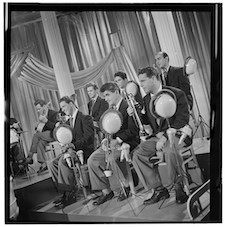
Louis Raphael Mucci was born on December 13, 1909 in Syracuse, New York and began as a baritone horn player. By age ten, he was appearing in professional settings. As a teenager, he switched to trumpet and worked in the late 1930s with Mildred Bailey and Red Norvo before joining Glenn Miller’s ensemble in 1938-1939.
During World War II he played in the bands of Bob Chester, Hal McIntyre, Claude Thornhill, and Benny Goodman. In the first half of the 1950s, he worked as a house musician for CBS and also recorded with Buddy DeFranco and Artie Shaw.
The late 1950s saw him working with Miles Davis, Helen Merrill, and John LaPorta. His association with Davis lasted into the early 1960s and he played with Kenny Burrell in 1964. Trumpeter Lou Mucci passed away on January 4, 2000.

More Posts: history,instrumental,jazz,music,trumpet

Daily Dose Of Jazz…
Rafael Antonio Cortijo was born on December 11, 1928 in Santurce, Puerto Rico and as a child became interested in Caribbean music and enjoyed the works of some of the era’s most successful Bomba y Plena music musicians. Throughout his life, he had a chance to meet and work with some of them and learned how to make his own congas and pleneras, the handheld drums used in bomba y plena music.
He met salsa composer and singer Ismael Rivera when both were youngsters growing up in the Villa Palmeras neighborhood. They became lifelong friends and Rivera impressed with his friend’s conga-playing skills, asked him to join his orchestra, which played at Fiestas patronales all over Puerto Rico.
Becoming well known across Latin America, Rafael attributed his success to the sound of his percussion, as Afro-Caribbean music was known worldwide. As a member of the Conjunto Monterrey, based in Monterrey, Mexico, he later toured with Daniel Santos’ orchestra and worked on radio.
By 1954, as a member of El Combo, Cortijo’s big break came when El Combo’s leader and pianist Mario Román left the band to him. Ismael Rivera, then the lead singer of Lito Peña’s Orquesta Panamericana, joined Cortijo’s orchestra known as Cortijo y su Combo in 1955. From then until 1960, his orchestra played live on Puerto Rican television shows, and sometime during the 60s, they became the house band at La Taberna India.
The orchestra virtually disbanded in 1962 when Ismael Rivera was arrested for drug possession in Panama. Rafael and the other bandmates went on to found Puerto Rico’s salsa group, El Gran Combo. He went on to create another orchestra, El Bonche, where he was joined by his adopted niece, Fe Cortijo, who would become a well-known singer on her own. He and Rivera went on to live in New York City but he soon returned impoverished to Puerto Rico, where he forged a friendship with composer Tite Curet Alonsothe who helped produce a comeback album. In 1974, Coco Records reunited all the former members of “Cortijo y su Combo” orchestra for a one-time-only concert and a subsequent studio recording issued a few months afterward.
Their friendship was so important to Rivera, that when orchestra leader, musician, and composer Rafael Cortijo passed away of pancreatic cancer on October 3, 1982 at his sister Rosa Cortijo’s apartment in the Luis Llorens Torres public housing project in Santurce, Rivera said he would no longer sing.
More Posts: bandleader,conga,history,instrumental,jazz,music
Daily Dose Of Jazz…
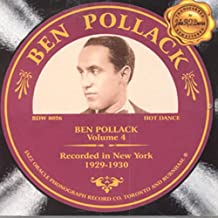
Gil Rodin was born in Russia on December 9, 1906 and studied saxophone, clarinet, flute, and trumpet in his youth. He played in Chicago, Illinois with Art Kahn in the middle of the 1920s. Moving to California and played with Harry Bastin before joining Ben Pollack in 1927, remaining in his band until 1934.
He simultaneously did studio work and played with Red Nichols’s radio band. Making his only recordings as a leader in 1930-31, amounting to four tracks which included Jack Teagarden on vocals, he also enlisted Eddie Miller and Benny Goodman as sidemen.
After Pollack’s band dissolved in 1934, Gil played with some of the players in the group until Bob Crosby regrouped them into his own ensemble. Rodin remained with Crosby through 1942, when he was drafted. While serving in the Army he played in the Artillery Band and after his discharge in 1944 he played with Ray Bauduc for a year, then with Crosby again.
His major composition was Big Noise from Winnetka, for which he wrote the lyrics with Bob Crosby. The music was written by Ray Bauduc and Bob Haggart. The song appeared in the films Raging Bull, Cannery Row, Manhattan Murder Mystery, Saving Mr. Banks, and What If.
Later in his career, Gil worked radio and television production, with Bill Cosby among others. He produced the soundtracks to the films American Graffiti and The Sting. Saxophonist, songwriter, and record producer Gil Rodin passed away on June 10, 1974.
More Posts: history,instrumental,jazz,music,record producer,saxophone,songwriter
Daily Dose Of Jazz…
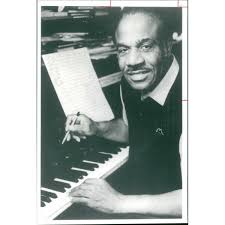
William Moore, Jr., better known as Billy Moore was born on December 7, 1917 in Parkersburg, West Virginia. Chiefly known as an arranger for most of his jazz career, Billy wrote charts for Jimmie Lunceford, Charlie Barnet, Jan Savitt, and Tommy Dorsey in the 1940s. He also worked for publishing companies in New York City.
In the 1950s he relocated to France, where he accompanied and wrote for The Peters Sisters from 1953 to 1960. Following this, he worked from 1960 to 1963 as an arranger for Berliner Rundfunk and then accompanied the Delta Rhythm Boys on tour.
He formed his own music publishing company in order to combat the then prevalent habit of band leaders taking credit for the work of their arrangers and composers. Amongst his uncredited works is the famous countermelody to Barnet’s million-selling hit Skyliner. Moving to Copenhagen, Denmark in the 1970s, he remained active as an arranger. Being friends with Leonard Feather, he sometimes used Moore’s name for songwriting credits.
In his later years in Denmark, he was the administrator of the music foundation established in Ben Webster’s name and for whom he also worked as a business aide. He was also the manager and musical director for the European tours of the Peters Sisters. Pianist and arranger Billy Moore passed away on February 28, 1989 in Copenhagen, Denmark.
Daily Dose Of Jazz…
Francis Dunlop was born on December 6, 1928 in Buffalo, New York and began playing guitar at age nine and drums at ten. He was playing professionally by age 16 and received some classical education in percussion. He toured with Big Jay McNeely and recorded with Moe Koffman in 1950 before serving in the Army during the Korean War.
After his discharge, Frankie played with Sonny Stitt, Charles Mingus, Sonny Rollins, Maynard Ferguson, Lena Horne, Duke Ellington, and Thelonious Monk. It is his recordings with the latter two that he is principally remembered. Later in his life, he recorded with Lionel Hampton, Earl Hines, Ray Crawford, and Joe Zawinul.
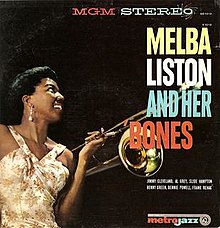
In 1984, he retired, having recorded on over 100 albums with Wilbur Ware, Randy Weston, Melba Liston, Martin Mull, Dodo Greene, Herman Foster, Bill Barron, Richard Davis, Mose Allison and Leo Wright among many others. Drummer Frankie Dunlop passed away on July 7, 2014.
More Posts: drums,history,instrumental,jazz,music