


Daily Dose Of Jazz…
Stanley William Tracey was born on December 30, 1926 in Denmark Hill, South London, England. The Second World War disrupted his formal education, and he became a professional musician at the age of sixteen as a member of an Entertainments National Service Association touring group playing the accordion, his first instrument. He joined Ralph Reader’s Gang Shows at the age of nineteen, while in the RAF and formed a brief acquaintance with the comedian Tony Hancock.
Later, in the early 1950s, he worked in groups on the transatlantic liners Queen Mary and Caronia and toured the UK with Cab Calloway. By the mid-1950s, he had also taken up the vibraphone, but later ceased playing it. During the decade he worked widely with leading British modernists, including drummer Tony Crombie, clarinettist Vic Ash, the saxophonist-arranger Kenny Graham and trumpeter Dizzy Reece.
1957 saw Tracey touring the United States with Ronnie Scott’s group, and then became the pianist with Ted Heath’s Orchestra for two years at the end of the Fifties, including a US tour with singer Carmen McRae. Although he disliked Heath’s music, he gained a regular income and was well featured as a soloist on both piano and vibes. He contributed compositions and arrangements that stayed in the Heath book for many years.
He first recorded in 1952 with the trumpeter Kenny Baker, then recorded his first album as leader in 1958, Showcase, for English Decca label and Little Klunk in 1959. From 1960 until about 1967 Stan was the house pianist at Ronnie Scott’s Jazz Club in Soho, London, which gave him the opportunity to accompany many of the leading musicians from the US who visited the club. It is Tracey on piano that film viewers hear behind Rollins on the soundtrack of the Michael Caine version of Alfie. At the same time, he became active in Michael Horovitz’s New Departures project, mixing poetry performances with jazz, where the musicians interacted spontaneously with the words.
The early 1970s were a bleak time for Tracey. He began to work with musicians of a later generation, who worked in a free or avant-garde style. He continued to work in this idiom with Evan Parker at the UK’s Appleby Jazz Festival for several years, but this was always more of a sideline for Tracey, lasting 18 years that the festival existed. Stan formed his own label In the mid-1970s titled Steam, and a number of commissioned suites. These included The Salisbury Suite, The Crompton Suite and The Poets Suite.
He led his own octet from 1976 to 1985 and formed a sextet in 1979 and toured widely in the Middle East and India. He had a longstanding performance partnership from 1978 with saxophonist Art Themen, and his own son, drummer Clark Tracey. He shared the billing with arranger Gil Evans, Sal Nistico and Charlie Rouse. He went on to record over four dozen albums as a leader or co~leader, thirty as a sideman and on two soundtracks over the course of his career.
Pianist and composer Stan Tracey, who received the honor of the Officer of the Order of the British Empire (OBE) and appointed Commander of the Order of the British Empire (CBE), transitioned from cancer on December 6,

More Posts: bandleader,composer,history,instrumental,jazz,music,piano
Daily Dose Of Jazz…
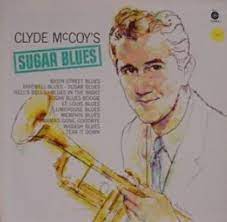
Clyde Lee McCoy was born December 29, 1903 in Ashland, Kentucky to the family that feuded with the Hatfields. He began mastering the trumpet without formal instruction, after the family moved to Portsmouth, Ohio in 1912. This led him to perform regularly at church and school affairs. Five years later he was performing on the Cincinnati riverboats, and on the Mississippi River side-wheelers the Island Queen and the Bernard McSwain. He became one of the youngest musicians on the river at age 14.
In 1920, accepting an invitation for a small band to play at a Knoxville, Tennessee resort, his Chicago Orchestra rehearsed on the train and won the approval of George Whittle and the patrons of the Whittle Springs Hotel and Spa. After a two month engagement the band officially became known as the Clyde McCoy Orchestra.
In the late 1920s McCoy developed the signature “wah-wah” sound by fluttering a Harmon mute in the bell of his trumpet. In 1967, a similar effect was made for electric guitar with the introduction of the Vox Clyde McCoy Wah-Wah Pedal. Having nothing to do with the use or development of the pedal,Clyde’s name was only used for promotion.
Over the course of a seven decade career Clyde was based at various times in New York City, Los Angeles, California and Chicago, Illinois. He is best remembered for his theme song Sugar Blues, written by Clarence Williams and Lucy Fletcher, and also as a co-founder of Down Beat magazine in 1935. The song was performed with vocals by Bob Wills and his Texas Playboys, Fats Waller and Ella Fitzgerald.
Trumpeter and bandleader Clyde McCoy, who has a star on the Holywood Walk of Fame, transitioned on June 11, 1990 in Memphis, Tennessee.
More Posts: bandleader,history,instrumental,jazz,music,trumpet

Daily Dose Of Jazz…
Rupert Theophilus Nurse was born the only child in Port of Spain, Trinidad on December 26, 1910. He spent some of his childhood in Venezuela before returning to the island to complete his education. He absorbed local calypso music traditions, and started working as a teacher in Tobago.
He taught himself piano, and learned arranging skills from a mail order Glenn Miller book, before returning around 1936 to Trinidad where he worked in an electronics business. He also learned to play the tenor saxophone and with Guyanese saxophonist Wally Stewart, formed the Moderneers or Modernaires, the first American-style big band in Trinidad. During the Second World War he played with visiting Americans on the island, and began writing jazz arrangements of calypsos.
Travelling to London, England in 1945, he began playing double bass with guitarist Fitzroy Coleman and pianist Cyril Jones in the Antilles jazz club near Leicester Square. He joined trumpeter Leslie “Jiver” Hutchinson’s mostly-black band, with whom he played on radio and toured in Europe, before working with entertainer Cab Kaye in the Netherlands. He also increasingly worked with musicians newly arriving in Britain from the West Indies, including popular pianist Winifred Atwell, and Lord Kitchener and his band. He began experimenting with electronic instruments along with Lauderic Caton.
By 1953, Nurse was appointed as musical director of the Melodisc record label, which increasingly sought to release records to appeal to Britain’s growing Afro-Caribbean community. He led the label’s house band, arranged and produced Kitchener’s recordings, and recorded many other musicians of Caribbean origin, including jazz saxophonist Joe Harriott. He continued to perform as a pianist, and became bandleader at the Sunset Club in Carnaby Street and then at the more upscale Sugar Hill club in St James’s, where he met and later recorded with pianist Mary Lou Williams.
He increasingly used an electric piano and organ, and worked widely in clubs and restaurants in London as a solo performer and with other musicians including steel pan player Hugo Gunning, bassist Coleridge Goode, and pianists Iggy Quail and Russ Henderson. He taught, devised arrangements for other musicians, and worked as a library cataloguer in London until 1976.
Retiring to Arima, Trinidad he continued to mentor musicians and write arrangements for them. Pianist, tenor saxophonist and double bassist Rupert Nurse, who was influential in developing jazz and Caribbean music in Britain, particularly in the 1950s, transitioned there on March 18, 2001 at the age of 90.
More Posts: bandleader,bass,history,instrumental,jazz,music,piano,saxophone
Daily Dose Of Jazz…
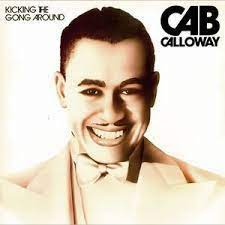
Cabell Calloway III was born on December 25, 1907 in Rochester, New York, on December 25, 1907 to two college graduates, his mother a teacher and church organist, and his father who worked as a lawyer and in real estate. The family moved to Baltimore, Maryland, in 1919 but soon after, his father died and his mother remarried.
Growing up in West Baltimore’s Druid Hill neighborhood Cab often skipped school to earn money by selling newspapers, shining shoes, and cooling down horses at the Pimlico racetrack where he developed an interest in racing and gambling on horse races. He ended up in Downingtown Industrial and Agricultural School, a Pennsylvania reform school run by his mother’s uncle.
Returning to Baltimore he resumed hustling, worked as a caterer while he improved his studies in school, and his mentors included drummer Chick Webb and pianist Johnny Jones. After graduating high school Calloway joined his older sister Blanche on tour for the popular black musical revue Plantation Days. He spent most of his nights in Chicago, Illinois clubs performing as a singer, drummer, master of ceremonies and as an understudy for singer Adelaide Hall. There he met and performed with Louis Armstrong, who taught him to sing in the scat style.
He established himself as a vocalist singing Ain’t Misbehavin’ by Fats Waller. The Thirties saw Cab’s orchestra permanently at the Cotton Club in Harlem, performed twice a week for radio broadcasts on NBC, and appeared on radio programs with Walter Winchell and Bing Crosby. He was the first Black American to have a nationally syndicated radio show and during the depths of the Great Depression he was earning $50,000 a year at 23 years old.
During the decade he recorded his most famous song, Minnie the Moocher, and became the first single record by a Black American to sell a million copies. He performed the song along with St. James Infirmary Blues and The Old Man of the Mountain, in Betty Boop cartoons of the same name.
His success with Minnie the Moocher and his relationship to the chorus earned him the nickname, The Hi De Ho Man. He performed a gliding backstep dance move called The Buzz, which some observers have described as the precursor to Michael Jackson’s moonwalk. He would go on to be featured in several films, and made his first Hollywood feature film appearance opposite Al Jolson in The Singing Kid in 1936.
His band included Ben Webster, Illinois Jacquet, Milt Hinton, Danny Barker, Doc Cheatham, Ed Swayze, Cozy Cole, Eddie Barefield, and Dizzy Gillespie. He entertained troops during World War II, hosted a weekly radio quiz show called The Cab Calloway Quizzicale and recorded songs full of social commentary. He appeared in the film Stormy Weather, one of the first mainstream Hollywood films with a black cast. Then he played the prominent role of Sportin’ Life in a stage production of Porgy and Bess. He continued to perform in movies and on stage throughout his career.
He published an autobiography and Cab Calloway’s Cat-ologue: A “Hepster’s” Dictionary, the first dictionary published by a Black American. It became the official jive language reference book of the New York Public Library.
Suffering a stroke at his home, vocalist, bandleader and actor Cab Calloway transitioned from pneumonia on November 18, 1994, at the age of 86, at a nursing home in Hockessin, Delaware.
More Posts: actor,bandleader,history,instrumental,jazz,music,vocal

Daily Dose Of Jazz…
David Louis Bartholomew was born Davis Bartholomew on December 24, 1918 in Edgard, Louisiana and initially learned to play the tuba, then took up the trumpet with lessons from Peter Davis, who also tutored Louis Armstrong. Around 1933 he moved with his parents to New Orleans, Louisiana where he played in local jazz and brass bands, including Papa Celestin’s. He played in Fats Pichon’s band on a Mississippi riverboat and took charge of his band in 1941. After a stint in Jimmie Lunceford’s band he joined the US Army during World War II and developed writing and arranging skills as a member of the 196th Army Ground Forces Band.
At the end of the war he returned to New Orleans and towards the end of 1945 he started leading his own dance band, Dave Bartholomew and the Dew Droppers, named after a now-defunct local hotel and nightclub, the Dew Drop Inn. Their popularity was a model for early rock ‘n’ roll bands the world over. In 1947, they were invited by club owner Don Robey to perform in Houston, Texas, where Bartholomew met Lew Chudd, the founder of Imperial Records.
His band made their first recordings for De Luxe Records in 1947 and their first hit was Country Boy, reached No. 14 in the national Billboard R&B chart in early 1950. Prominent members of the band, besides Bartholomew on trumpet and occasional vocals, were the saxophonists Alvin Tyler, Herb Hardesty, and Clarence Hall, the bass player Frank Fields, the guitarist Ernest McLean, the pianist Salvador Doucette, and the drummer Earl Palmer. They were later joined by the saxophonist Lee Allen.
Two years after their first meeting in Houston, Texas he was asked by Lew Chudd to become Imperial’s A&R man in New Orleans. Dave went on to produce singer Jewel King, and a young pianist Fats Domino, who went on to have great success with their collaboration. He went on to work at several labels including his own Broadmoor Records.
The 1970s and 1980s had Bartholomew leading a traditional Dixieland jazz band in New Orleans, releasing an album, Dave Bartholomew’s New Orleans Jazz Band in 1981. He produced numerous hit songs and was inducted into the Songwriters Hall of Fame, the Rock and Roll Hall of Fame, and the Louisiana Music Hall of Fame.
Trumpeter, bandleader, composer, arranger and record producer Dave Bartholomew, who was prominent in the New Orleans music scene and active in rhythm and blues, big band, swing music, rock and roll, New Orleans jazz, and Dixieland, transitioned from a heart attack in Metarie, Louisiana on June 23, 2019.
More Posts: aranger,bandleader,composer,history,instrumental,jazz,music,record producer,trumpet