

Daily Dose Of Jazz…
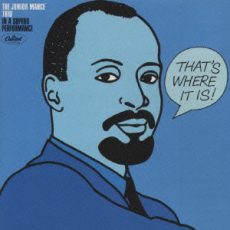
Junior Mance was born Julian Clifford Mance, Jr. on October 10, 1928 in Evanston, Illinois. When he was five years old, he started playing piano on an upright where his father taught him to play stride piano and boogie-woogie. With his father’s permission, he had his first professional gig in Chicago, Illinois at the age of ten when his upstairs neighbor, a saxophone player, needed a replacement for a pianist who was ill.
At Roosevelt College in Chicago he signed up for music classes but discovered jazz was forbidden and left before the school year was finished. Mance first played and recorded with Gene Ammons in Chicago in 1947 while he was enrolled at Roosevelt. While on tour in Chicago, Lester Young saw him playing with Ammons and had him sit in. He ended up recording with Young for Savoy Records that year, and reunited with Ammons to record with Sonny Stitt for Prestige Records in 1950.
Drafted into the Army in 1951, two weeks before shipping out to Korea from basic training, Cannonball Adderley helped Mance score a position in the 36th Army Band at Fort Knox, Kentucky, where he remained as the company clerk. Back in Chicago after being discharged two years later, Junior immediately started working at the Bee Hive Jazz Club in Chicago. He backed Charlie Parker, Coleman Hawkins, Eddie “Lockjaw” Davis, and Sonny Stitt among others.
Parker encouraged Mance to move to New York, and in 1954, he recorded with Dinah Washington, touring with her over the next two years and learning accompaniment technique from her arranger, Jimmy Jones. From a live session recorded in 1954 in Los Angeles, California that included him, Washington, Clifford Brown, Clark Terry, Maynard Ferguson, Herb Geller, Harold Land, Richie Powell, Keter Betts, George Morrow, and Max Roach, EmArcy released two LPs, Dinah Jams and Jam Session.
The Fifties saw Junior joining Cannonball Adderley’s first civilian band, making several recordings for EmArcy/Mercury and supported Dinah Washington on her In the Land of Hi-Fi album. He would go on torecord with Johnny Griffin, James Moody, and Wilbur Ware. Then he joined Dizzy Gillespie’s band. By the end of the decade he recorded his debut as a leader on the Verve label.
Over the course of his career he would record with Capitol and Atlantic, and Sackville record labels. He continued to record and perform during the next three decades. As an educator he taught at The New School for Jazz and Contemporary Music for 23 years, counting Brad Mehldau and Larry Goldings among his students before retiring in 2011.
From 1990 to 2009 Mance was part of the all-star group called “100 Gold Fingers” which frequently toured Japan. The rotating lineup included Toshiko Akiyoshi, Monty Alexander, Geri Allen, Lynne Arriale, Kenny Barron, Joanne Brackeen, Ray Bryant, Bill Charlap, Cyrus Chestnut, Gerald Clayton, Eric Reed, and twenty-two others with bassist Bob Cranshaw and either Alan Dawson or Grady Tate on drums.
Pianist and composer Junior Mance, who suffered from Alzheimer’s and a fall, died on January 17, 2021 from a brain hemorrhage at the age of 92 in New York.Acquaint an inquisitive mind with a dose of an Evanston pianist who is in the company of musical genius around the world as a member of the jazz canon…Acquaint an inquisitive mind with a dose of an Evanston pianist who is in the company of musical genius around the world as a member of the jazz canon…Acquaint an inquisitive mind with a dose of an Evanston pianist who is in the company of musical genius around the world as a member of the jazz canon…Acquaint an inquisitive mind with a dose of an Evanston pianist who is in the company of musical genius around the world as a member of the jazz canon…

More Posts: bandleader,composer,history,instrumental,jazz,music,piano

Daily Dose Of Jazz…
Mark Finkin was born to deaf parents in New York City on October 9, 1949 and has been making music since he was five. He started playing at Carnegie Hall at the age of seven and went on to study at Music and Art High School in New York City and later went on to the Midwest to study at The College of Emporia for music. He moved to Maui, Hawaii where he studied composition and piano at The Atlantic University.
Returning to New York City after several years on the island, he recorded with Boris Midney, a Soviet alto saxophonist who took Mark and his group Windmill under his wing. Performing in the New York, New Jersey area he relocated to Florida. While in Florida he honed his craft and recorded and performed with Music of the Spheres who fused laser light and sound to the Miami Space and Transit Planetarium.
Once again Mark returned to New York to settle in Saratoga Springs where he has been performing in and around the Capital district. He has played with Barry Manilow, Alexis Cole, Sherry Saba, Michael Panza, Larry Levine, Mike Wick, Sharron Edwards and Ron Mayfield to name a few.
Finkin’s talent lies beyond jazz as he has written the music for the local production of Popeye Canfield, is the pianist for the inspirational Christian group Revealer, and has played piano at The Lodge in Saratoga Springs for the last six years during the Saratoga, New York racing season.
Pianist Mark Finkin continues to perform, compose and record with Las Manos and his daughter Alexis Cole.

Daily Dose Of Jazz…
Clarence Williams was born on October 8, 1898 in Plaquemine, Louisiana to Dennis, a bassist, and Sally Williams. He ran away from home at age 12 to join Billy Kersands’ Traveling Minstrel Show, then moved to New Orleans, Louisiana. He first worked shining shoes and doing odd jobs, but soon became known as a singer and master of ceremonies.
By the early 1910s, he was a well-regarded local entertainer also playing piano, and was composing new tunes by 1913. Williams was a good businessman, working arranging and managing entertainment at the local Black vaudeville theater. He played at various saloons and dance halls around Rampart Street, and in the clubs and houses in Storyville.
He started a music publishing business with violinist/bandleader Armand J. Piron in 1915, which by the Twenties was the leading Black owned music publisher in the country. He toured briefly with W. C. Handy, and set up a publishing office in Chicago, Illinois before settling in New York City in the early 1920s. During the decade he and his blues singer/actress wife Eva Taylor moved to the borough of Queens with the intention of creating a community of black artists.
He was one of the primary pianists on scores of blues records recorded in New York during the 1920s. He supervised the 8000 race series recordings for the New York offices of Okeh phonograph company in the 1920s. He also recorded extensively, leading studio bands for OKeh, Columbia, Vocalion, Bluebird and occasionally other record labels.
As a producer he participated in early recordings by Louis Armstrong, Sidney Bechet, Bessie Smith, Virginia Liston, Irene Scruggs, his niece Katherine Henderson, and others. Most of his recordings were songs from his publishing house.
In 1943, he sold his extensive back-catalogue of tunes to Decca Records for $50,000 and retired. He bought a bargain used-goods store, the Harlem Thrift Shop.
Pianist, composer, promoter, vocalist, theatrical producer, and publisher Clarence Williams, died on November 6, 1965 in Queens, New York.
More Posts: bandleader,composer,history,instrumental,jazz,music,piano,producer,promoter,publisher,vocal
Daily Dose Of Jazz…
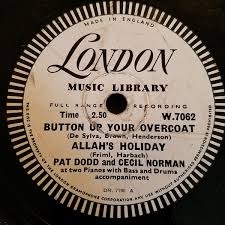
Cecil Norman was born on September 29, 1897 in Oldham, Lancashire, United Kingdom. Considered a child prodigy, by the age of 11 he was playing concertos, at 15 he appeared at London’s Aeolian Hall. He was the son of music hall artists, billed as Olga and Otto, with his mother playing trumpet, trombone, concertina and piano.
Cecil stayed in London during World War II, with many engagements to entertain the troops, accompanying Vera Lynn as well as Inga Anderson, who sang with the George Melachrino Orchestra. After serving in World War I, he switched from classical to popular music, partly due to developing neuritis in the right hand, which forced him to give up the piano for a couple of years. Thereafter Cecil specialised in dance music, it being less likely to aggravate his condition.
He played in so many popular bands it’s hard to list them all, however in 1924 along with his alto saxophonist brother Leslie began their own band at the Savoy Hotel for tea dances and the Bekeley Hotel in the evenings. They soon moved to the Empress Rooms where they played seven days a week plus tea dances. At times, either he or his brother were in charge and arranging for the Savoy Plaza Band and Savoy Dance Band. In 1927, the Norman Brothers Band moved to Carlton Hotel. In 1928, Cecil went to America and had Rudy Vallee introduce him around, including to Bert Lown, whom he joined in New York.
Moving back to London in 1929, Cecil played and recorded with Fred Elizalde Band in 1930 before moving to Jerry Hoey’s band and Melville Gideon’s band in 1931. He went on to join several other bands in London and Australia, including the BBC Dance Orchestra. He stayed in London during World War II, with many engagements to entertain the troops, accompanying Vera Lynn as well as Inga Anderson, who sang with the George Melachrino Orchestra.
After the war, Norman formed the Rhythm Players that became the cornerstone of the BBC’s Music While You Work program in the 1950’s. Over the course of his career he composed several instrumental numbers. He retired in 1962 when he was 65 after suffering an accident. He returned one last time for a 15-minute spot in 1970, ending his more than sixty years in music.
Dance pianist & composer Cecil Norman, who used the pseudonym Norman Sissel for some Norman Sissel And His Rhythm Twisters recordings, died February 8, 1988 aged 91 in East Sussex, England.
 </p
</p
More Posts: bandleader,history,instrumental,jazz,music,piano

Daily Dose Of Jazz…
Guido Basso was born on September 27, 1937 in Montreal, Quebec, Canada. He grew up in the Little Italy neighbourhood of Montreal, in an Italian-Canadian family. He began playing the trumpet at the age of nine and studied at the Conservatoire de musique du Québec à Montréal.
His professional music career started in his teens, under the name Stubby Basso. During his early twenties he performed regularly at the El Morocco in Montreal, and played in bands led by Maury Kaye. Singer Vic Damone discovered Basso playing at El Morocco, then included him on a tour from 1957 to 1958.
He had a professional career as a composer, conductor, arranger, trumpeter, flugelhornist, and harmonica player. In 1958, Guido joined singer Pearl Bailey and her husband, drummer Louis Bellson, touring North America with them and their orchestra. Returning to Canada Guido settled in Toronto, Canada in 1961, during that time he studied at The Royal Conservatory of Music.
In 1963, he became music director for CBLT’s Nightcap, a tv station job he held for four years, then on to music director for the Canadian Broadcasting Corporation. He organized and led big band concerts featuring Dizzy Gillespie, Quincy Jones, Woody Herman, Benny Goodman, Count Basie and Duke Ellington. Basso was a charter member of Rob McConnell’s Boss Brass, playing with the band for over twenty years and also played in big bands led by Ron Collier, and Phil Nimmons.
Trumpeter, flugelhornist, arranger, composer, and conductor Guido Basso, who won two Juno awards, was a member of the Order of Canada, died in Toronto, Canada on February 13, 2023, at age 85.
More Posts: bandleader,history,instrumental,jazz,music