

Daily Dose Of Jazz…
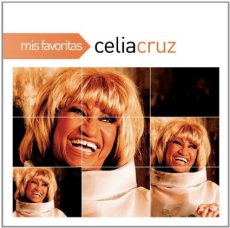
Celia Cruz was born Úrsula Hilaria Celia de la Caridad Cruz Alfonso on October 21, 1925 in Havana, Cuba, the second of fourteen children. Growing up in Cuba’s diverse 1930s musical climate, she listened to many musicians that later influenced her adult career, such as Paulina Alvarez, Fernando Collazo and Abelardo Barroso. She started singing backup on many recordings by santaria singers.
As a teenager she sang in cabarets contrary to her father’s wishes of her becoming a teacher. Ironically one of her teachers told her she could make in one day what a teacher made in a month. Cruz began singing in Havana’s radio station Radio Garcia-Serra’s popular “Hora del Té” daily broadcast, won 1st prize, entered and won more contests, recorded for radio stations and made her debut album in Venezuela in 1948.
In 1950, Cruz made her first major breakthrough when she filled in with the Sonora Matacera and was hired permanently. Soon she was famous throughout Cuba and during her 15-year tenure toured throughout Latin America. Leaving Cuba upon Castro assumption of control she emigrated and became a U.S. citizen where she would team with Tito Puente and an eight record deal with Tico Records in the ‘60s that eventually led to joining pianist Larry Harlow and a headlining concert at Carnegie Hall.
Her 1974 album with Johnny Pacheco, Celia y Johnny, was very successful, and Cruz found herself in the Fania all-Stars and toured Europe, the Congo and Latin America. She went on to record in the film Soul Power, Eastern Airlines commercials, radio spots, star in the films Salsa and Mambo Kings, received the National Medal of Arts from President Clinton, and won a Grammy Award for Best Tropical Latin Performance.
On July 16, 2003, Celia Cruz, one of the most successful and influential Salsa performers of the 20th century, earning twenty-three gold albums, internationally renowned as the “Queen of Salsa” as well as “La Guarachera de Cuba” and worked predominately in the U.S and Latin America, died of a cancerous brain tumor. She has posthumously been honored with an exhibit celebrating her life in the National Museum of American History in Washington, D.C. and an off-Broadway play titled Celia at the New World Stages that won four 2008 HOLA awards from the Hispanic Organization of Latin Actors.

Dose A Day – Blues Away
More Posts: vocal
Daily Dose Of Jazz…
Dave Samuels was born on October 9, 1948 in Illinois. He started his musical career on the drums at age six, attended the New Trier High school in Winnetka, Illinois, known for its superb arts and music programs. He graduated from Boston University with a psychology degree but by this time he was studying mallet instruments.
Samuels next matriculated through Berklee College of Music where he studied under Gary Burton. The vibraphonist first worked with guitarist Pat Metheny and John Scofield while in Boston, then toured with Gerry Mulligan and played with various groups early in his career such as Timepiece, Double Image and Frank Zappa.
In 1979 Dave began recording with Spyro Gyra but it wasn’t until seven years later that he became a member of the group and one of the soloists. His recordings as a leader have been commercial but since leaving Spyro Gyra in the 90s and taking a slot in the Grammy-winning Latin jazz music group Caribbean Jazz Project, one can witness some very impressive output.
Vibraphonist Dave Samuels has worked with Eddie Palmieri in tribute to Cal Tjader, Andy Narrell and Paquito D’Rivera among others. He has taught at his alma mater, Berklee School of Music and continues to perform, record and tour.
Give The Gift Of Knowledge
More Posts: vibraphone
Daily Dose Of Jazz…
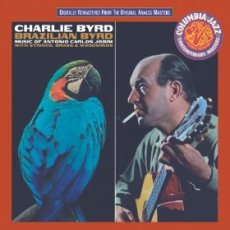
Charlie Lee Byrd was born on September 16, 1925 in Suffolk, Virginia but grew up in Chuckatuck, Virginia and his father taught him to play the acoustic steel guitar at age 10. He went on to Virginia Polytechnic Institute, served in the Army and played in the Special Services band in Paris. Returning to New York he studied composition at Hamett National Music School, taking up classical guitar.
Charlie moved to Washington, D.C. in 1950 and studied classical guitar with Sophocles Papas, then with Andre Segovia. By 1957 he teamed up with bassist Keter Betts and started gigging around D.C. for two years, joined Woody Herman for a State Department goodwill tour.
Byrd was first introduced to Brazilian music by his friend radio host Felix Grant who was well known in Brazil in 1960. A subsequent tour of Brazil and he returned home with recordings from Joao Gilberto and Antonio Carlos Jobim. He met with Stan Getz who convinced Creed Taylor, then at Verve Records to produce the album, recording “Jazz Samba” in 1962 in a building adjacent to All Souls Unitarian Church because of the excellent acoustics found there. And his love affair with Brazilian music began.
Over the course of his career he has toured the world, performed at numerous festivals, played with such jazz legends as Les McCann, Zoot Sims, Vince Guaraldi, his brother bassist Joe Byrd, Chuck Redd, Herb Ellis, Barney Kessel and the list goes on.
Charlie Byrd died of lung cancer on December 2, 1999 at his home in Annapolis, Maryland. He was deemed a Maryland Art Treasure in 1997 and knighted by the government of Brazil as the Knight of the Rio Branco.
Take A Dose On The Road
More Posts: guitar
Daily Dose Of Jazz…
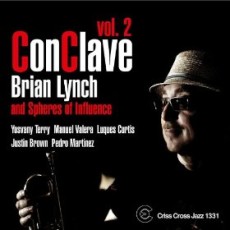
Brian Lynch was born September 12, 1956 in Urbana, Illinois but grew up in Milwaukee, Wisconsin. The young trumpeter apprenticed with pianist Buddy Montgomery and organist Melvin Rhyne while earning a degree from the Wisconsin Conservatory of Music. While living in San Diego 1980-81, he gained further valuable experience in the group of alto master Charles McPherson.
Moving to New York in late 1981 Brian was soon hired by Bill Kirchner, performing and recording with Kirchner’s nonet, then Horace Silver, and the Toshiko Akiyoshi Jazz Orchestra while simultaneously on the Latin scene with salsa bandleader Angel Canales, Hector LaVoe and Eddie Palmieri. By 1988 he was a part of the final edition of Art Blakey’s Jazz Messengers followed by Phil Woods and Benny Golson.
In recent years Lynch has worked with the Buena Vista Social Club, co-led bands and Latin sessions with Conrad Herwig, with Eddie Palmieri won best Latin Jazz Album of the Year Grammy for Simpatico, has immersed himself in the Afro-Cuban culture with “Spheres of Influence” collaborating with the likes of Edsel Gomez, Luis Perdomo, Robby Ameen, Ernesto Simpson, Richie Flores and Pedro Martinez to name a few.
As an educator he is a faculty member at the University of Miami, New York University and the North Netherlands Conservatory, has taught at the Stanford Jazz Workshop, Eastman School of Music, Dartmouth College, University of North Texas and Columbia University among others. Trumpeter Brian Lynch continues to perform, record and tour worldwide.
Jazz Is Global – Share
More Posts: trumpet
Daily Dose Of Jazz…
John Anthony Pompeo, better known as Johnny Rae or John Rae was born on August 11, 1934 in Saugus, Massachusetts and grew up in music, as his mother played piano in night clubs in the Boston area. His area of musical study in jazz led him to become a drummer and vibraphonist. Graduating from East Boston High School in 1952, he went on to study piano at the New England Conservatory and timpani at Berklee College of Music.
Johnny joined Herb Lee’s R&B band right out of high school, gigged with Slim Gaillard and Milt Buckner, played drums and vibes with Al Vega and Jay Migliori. Upon the recommendation of MJQ’s John Lewis, he teamed up with to play with George Shearing, alongside Toots Thielemans, Al McKibbon on bass and three Latin percussionists that included conguero Armando Peraza. It was during this period that Peraza taught him to play timbales.
He played with Johnny Smith, Ralph Sharon, Cozy Cole and Herbie Mann throughout the Fifties. The next couple of decades were equally commanding of his talents by Cal Tjader, Stan Getz, Gabor Szabo, Charlie Byrd, Earl Hines, Art Van Damme, Anita O’Day and Barney Kessel among many others. Though mainly concentrating in the context modern jazz, he never wandered far from Latin music and the Latin jazz percussion he played.
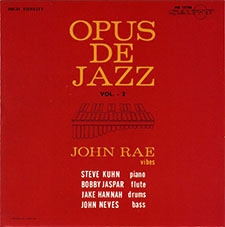
Though he was on more than three-dozen recording sessions, Johnny only recorded one as a leader, “Opus De Jazz, Volume 2” in 1960 for Savoy. A second release under his name was in actuality him fronting Herbie Mann’s band for contractual reasons.
Since the 1980s Rae has worked in music education, has authored several instruction books and was a disc jockey in San Francisco for many years. He assembled a tribute band to Tjader called Radcliff (Tjader’s middle name) and led the band until his death. Johnny Rae, drummer and vibraphonist passed away in 1993 in San Francisco, California.
Dose A Day – Blues Away
More Posts: drums,percussion,timbales,vibraphone