

Daily Dose Of Jazz…
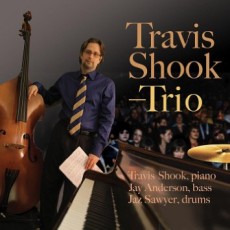
Travis Shook was born on March 10, 1969 in Oroville, California and started learning to play the piano at age seven. His family moved to Olympia, Washington when he was ten, spending his adolescent years in the Pacific Northwest. For a period of time he played rock guitar but soon realized jazz improvisation was his passion. At eighteen he enrolled at William Patterson College and studied under Mabern. After graduating he returned to Washington and joined bassist Buddy Catlett’s band where he learned a lot about the history of jazz.
In 1991 he won the Jacksonville Festival’s Great American Piano Competition that led to a contract with Columbia Records/Sony Music. Two years later he moved to New York City and recorded his debut with a quartet that included tony Williams and Bunky Green. Though receiving critical acclaim both in the U.S. and France for this first effort, it was a short-lived relationship when Sony purged a large percentage of the Columbia jazz roster upon acquiring the label in 1993.
After spending some time in obscurity after being attacked by New York Times critic Peter Watrous who criticized one of his performances, he entered a dark period in his life: alcoholism. A year later he got picked up by Betty Carter and went on tour through Europe, but he sunk deeper and added drugs to his plate of demons. Unemployable, he dropped out of the public eye for a number of years. Travis met, moved in with and ultimately married jazz singer Veronica Nunn who helped him overcome his demons and since 1998 he has been sober.
In 1999 Shook and his wife started their own record label, Dead Horse Records, which has released four recordings to date. Over the years he has performed with Reggie Workman, Eddie Harris, Joe Lovano, toots Thielemans, Rufus Reid, Chuck Israels, Ernestine Anderson, Branford Marsalis, Benny Golson and Clifford Jordan as well as Sonny Simmons, Michael Franks, Gino Vanelli, Bob Hope and Chris Botti among others.
His influences were Ahmad Jamal, McCoy Tyner, Duke Ellington, Harold Mabern, Herbie Hancock and Bill Evans but also John Coltrane, Miles Davis and Elvin Jones.Pianist Travis Shook continues to perform and record while building the catalogue of Dead Horse Records.

Jazz Is Global – Share
More Posts: piano
Daily Dose Of Jazz…
Nigel Hitchcock was born in Rustington, England on January 4, 1971 and began to play alto sax at the age of eight. In 1982 he and his elder brother Clive joined the National Youth Jazz Orchestra and after one year he took the lead alto chair, holding it for five years. During this time the orchestra toured with different musicians such as Vic Damone, Buddy Greco and Al Martino.
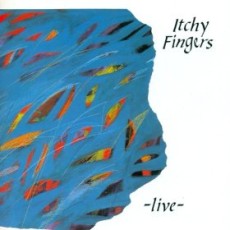
By 16, Hitchcock moved to London and began his career as a session musician and also had recorded TV jingles, movie soundtracks and pop solos. 1989 saw him joining the contemporary saxophone quartet Itchy Fingers and touring throughout Europe and Southeast Asia for 18 months. While with the group he received three jazz awards: the Schlitz Awar for Rising Star; the Cleo Laine Personal Award for Best Young Musician; and the Pat Smythe Trust Award.
With that behind him Nigel left the band and returned to continue working as a pop and session musician. This has given him the opportunity to work with many artists, among other, Tom Jones, Wet Wet Wet, Beverly Craven, Ray Charles, Swing Out Sister, Joe Cocker, Cher, Robbie Williams, Claire Martin, Mark Isham, Mark Knopfler and the London Symphony Orchestra. He has also released his debut solo album “Snake Ranch Sessions”.
Give A Gift Of Jazz – Share
More Posts: saxophone
Daily Dose Of Jazz…
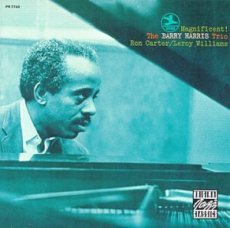
Barry Doyle Harris was born in Detroit, Michigan on December 15, 1929 and learned to play piano as a child. Mainly influenced by Art Tatum, Coleman Hawkins, Charlie Parker and Thelonious Monk, his playing style is similar to Bud Powell.
Moving to New York City in 1960, Harris played with Cannonball Adderley, Sonny Stitt, Coleman Hawkins, Illinois Jacquet, Dexter Gordon and Max Roach. During the 1970s, Harris lived with Monk and his family at the Weehawken, New Jersey home of the jazz patroness Baroness Pannonica de Koenigswarter. He performed piano duets with Tommy Flanagan in the 1989 Clint Eastwood documentary Thelonious Monk: Straight No Chaser and in 2000, he was profiled in the film Barry Harris – Spirit of Bebop.
As an educator Barry established the Jazz Cultural Theater teaching group music and piano lessons and hosting performances. Since 1991 he has collaborated with Toronto-based pianist and teacher Howard Rees in creating a series of videos and workbooks documenting his unique harmonic and improvisational systems and teaching process.
Barry Harris continues to perform and teach worldwide and holds weekly music workshop sessions in New York City for vocalists, students of piano and other instruments when not on the road.
Dose A Day – Blues Away
More Posts: piano
Daily Dose Of Jazz…
Jackie Davis was born on December 13, 1920 in Jacksonville, Florida. He first learned to play by spending hours poking at his grandmother’s piano. By the age of eight, he was playing with a local dance band. By the age of eleven, he’d earned enough from playing to buy his own piano, and music enabled him to pay his way through Florida A&M College, graduating in 1943.
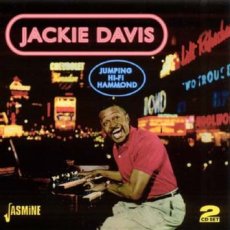
After serving time in the Army, he worked as a pianist, usually as an accompanist for singers such as Dinah Washington, Sarah Vaughan, and Billy Daniels. Although he was attracted to the organ, he was intimidated at the prospect of playing jazz on it, particularly when his idol at the time was the lightning-fast Art Tatum. However, the Hammond Organ Company began selling electric organs in the late 40s, and in 1951 he bought his first organ. He appeared at Club Harlem in Philadelphia, and a two-week gig turned into nearly five months. Jackie became the first musician to popularize jazz on the Hammond organ, years before Jimmy Smith’s name became synonymous with organ jazz.
Davis signed with RCA to record a couple of 45s but no album so he went to Trend Records in Los Angeles and released a 10” album. He joined Louis Jordan’s outfit and learned stage presentation and in 1956 signed with Capitol Records, became their leading performer on the organ at a time when relatively few mainstream labels were willing to put a black musician on the cover of an album and released a total of nine albums. He went on to sign with Warner but that proved to be the end of his recording career.
Over the next thirty years of his career he performed in clubs from Vegas to Atlantic City, jazz festivals and restaurants, produced Ella Fitzgerald records, and was hired by Norman Granz for her Lady Time session, and was a regular fixture at a Hilton Head, South Carolina club. He worked with the likes of Paul Quinichette, Junior Mance, Eddie “Lockjaw” Davis, Clark Terry, Ray Brown, Keter Betts, Max Roach and many others.
In 1992 Hurricane Andrew wiped out his home in Florida causing a financial and physical strain on his health and he suffered a series of strokes. He attempted to perform but his health didn’t hold up and on November 15, 1999 pianist and organist Jackie Davis passed away in his hometown of Jacksonville.
Give A Gift Of Jazz – Share
Daily Dose Of Jazz…
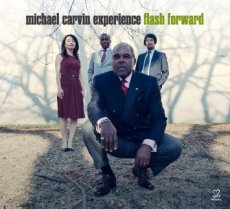
Michael Carvin was born December 12, 1944 in Houston, Texas. He began his drumming education at age six with his father, a top drummer in the city. By 12 he began playing professionally and won the first of five consecutive Texas rudimental championships.
By the Sixties he joined Earl Grant’s big band, then served a tour of duty during the Vietnam incursion. After his discharge he joined Freddie Hubbard in 1973, moved to New York and became a formidable drummer on the jazz scene. Carvin has worked with Pharoah Sanders, Lonnie Liston Smith, McCoy Tyner, Abbey Lincoln, Johnny Hartman, Jimmy Smith, Alice Coltrane, Hampton Hawes, Mickey Bass, Charles Davis and Jackie McLean among numerous others.
In addition to being a sought after sideman Michael led his own groups and recording sessions for Muse and Steeplechase for more than three decades and has recorded over 250 albums over the course of his career. A prolific contributor to the contemporary jazz scene with outstanding technique and sensitive accompanying skills he has been a staff drummer at Motown Records and has performed extensively as a studio musician and in television.
As an educator he is a world-class clinician and teacher, attracting students from all over the U.S., Europe, South America, Australia, Japan and India to study at the Michael Carvin School of Drumming in New York, graduating the likes of Victor Jones, Ralph Peterson Jr., Woody Shaw III, Babatunde Lea and Nasheet Waits.
Jazz Is Global – Share
More Posts: drums