

Daily Dose Of Jazz…
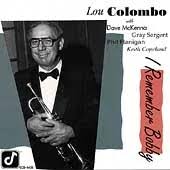
Lou Colombo was born in Brockton, Massachusetts on August 22, 1927 and started playing the trumpet when he was twelve. At seventeen he turned his attention to professional baseball and was signed with the Brooklyn Dodgers for seven years until a knee injury ended his career at 24.
Turning his attention to music Lou dove in full-time, mostly as an ensemble player and studio musician, playing and recording in the big bands of Dizzy Gillespie, Artie Shaw, Benny Goodman, Buddy Morrow, and Pérez Prado. He also worked sessions with Meredith D’Ambrosio on the 1989 recording South to a Warmer Place, George Masso on That Old Gang of Mine, 1996) and Jerry Jerome’s Something Borrowed, Something Blue.
Under his own name, Colombo recorded some albums one, including 1,990 at Concord Records, a tribute album for Bobby Hackett, one with Dave McKenna and Keith Copeland. Active on the Cape Cod jazz scene for five decades, trumpeter Lou Colombo passed away due to a traffic accident on March 3, 2012 at the age of 84.

More Posts: bandleader,cornet,flugelhorn,history,instrumental,jazz,music,trumpet
DAily Dose Of Jazz…
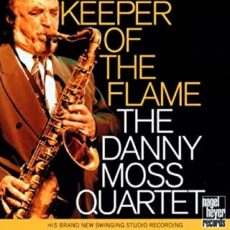
Dennis Moss MBE, known as Danny in the professional world, was born on August 16, 1927 in Redhill, Surrey, England. The son of a toolmaker, his childhood was spent on the south coast, in the Brighton-Worthing area, where he attended Steyning Grammar School. At the age of thirteen, he saw a jazz band appear briefly in a Bowery Boys film, and was so inspired by the clarinet playing that he swapped his most valued possession, his ice skates, for a second-hand instrument of his own. He was self-taught on both this and the tenor saxophone, which he took up at school,
A spell of National Service at the age of eighteen saw Moss performing for three years in a Royal Air Force regional band. After leaving the forces he joined the Vic Lewis Orchestra, then moved around various bands, especially ones with the potential for a soloist. In 1952, he joined Ted Heath’s band, soon discovering novelty numbers and musical reproductions were limiting his skills as an improviser, and he left after three years.
In 1957 Moss joined John Dankworth’s orchestra. Here, with the band’s encouragement, he began to develop his characteristic saxophone sound. He left Dankworth’s band in 1962, and from here, he joined Humphrey Lyttelton’s group, continuing to hone his style for another two years. He formed his own quartet, playing a mix of club gigs, festival appearances and radio broadcasts for the BBC and continued to tour with this quartet throughout the 1970s and 1980s. He also playing and recording with high-profile singers like Tony Bennett, Ella Fitzgerald, Bing Crosby, Sarah Vaughan, and Rosemary Clooney, and appearing with Buck Clayton in the mid-’60s and Louis Armstrong on his last British tour.
Diagnosed in 2005 with pleural mesothelioma, a rare form of lung cancer caused by exposure to asbestos. Saxophonist Danny Moss passed away on May 28, 2008, aged 80.
More Posts: bandleader,clarinet,history,instrumental,jazz,music,saxophone
Daily Dose Of Jazz…
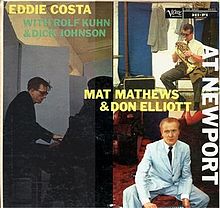
Edwin James Costa was born on August 14, 1930 in Atlas, Pennsylvania, near Mount Carmel, in Northumberland County. He was taught and influenced on piano by his older, musically trained brother, Bill, and a local piano teacher. He took paid jobs as a pianist from the age of 15, and in contrast to his piano training, he was self-taught on vibes.
In 1949 he played and toured for a few months with violinist Joe Venuti. He then worked for his brother in New York until 1951, when Eddie was drafted into the army. During this time in the armed forces, he performed in Japan and Korea. After his discharge, he returned home and worked around the New York area, including for bands led by Kai Winding, Johnny Smith, and Don Elliott.
n 1957 he was chosen as Down Beat jazz critics’ new star on piano and vibes – the first time that one artist won two categories in the same year. He became known for his percussive, driving piano style that concentrated on the lower octaves of the keyboard.
Costa had an eight-year recording career, during which he appeared on more than 100 albums, with five of them were under his own leadership. As a sideman, he appeared in orchestras led by Manny Albam, Gil Evans, Woody Herman, and others; played in smaller groups led by musicians including Tal Farlow, Coleman Hawkins, Gunther Schuller, and Phil Woods; and accompanied vocalists including Tony Bennett and Chris Connor. Costa died, aged 31, in a car accident in New York City.
His first recording as a leader was in 1956, with his trio featuring bassist Vinnie Burke and drummer Nick Stabulas. Around this time, he was nicknamed The Bear by Burke for his powerful playing. He and Burke joined Tal Farlow and became the resident trio at the Composer Club. In 1957 Costa was again leader, recording Eddie Costa Quintet with Woods, Art Farmer, Teddy Kotick, and Paul Motian. He would go on to record 1958’s Guys and Dolls Like Vibes with Bill Evans, Wendell Marshall, and Motian.
Late at night on July 28, 1962, pianist, vibraphonist, composer, and arranger Eddie Costa passed away in a car crash, involving no other vehicles, on New York’s Westside Highway at 72nd Street in New York City.
More Posts: arranger,composer,history,instrumental,jazz,music,piano,vibraphone
Daily Dose Of Jazz…
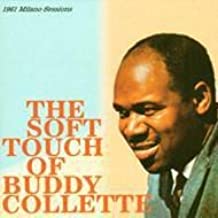
William Marcel “Buddy” Collette was born in Los Angeles, California on August 6, 1921. Raised in the Central Gardens area of Watts in a house his father built, he was surrounded by people of all different ethnicities. His father played piano, his mother sang and the melting pot of Watts framed the way he saw his position as a black man in the future.
He began playing piano at age ten, in middle school, the saxophone. That same year, he formed his first band with Charlie Martin, Vernon Slater, Crosby Lewis, and Minor Robinson. The following year, Collette started a band with Ralph Bledsoe and Raleigh Bledsoe, then started a third group which eventually included bassist Charles Mingus. Becoming very good friends, Collette helped Mingus find his less wild, more reserved side. When he was fifteen, Collette became a part of the Woodman brothers’ band, along with Joe Comfort, George Reed, and Jessie Sailes.
While in high school, Buddy began traveling to Los Angeles, competed in a battle of the band and lost to a band that included Jackie Kelson, Chico Hamilton, and Al Adams. However, afterward, he was asked to join the winning band, and later, Charles Mingus joined this band. By 19, he started taking music lessons from Lloyd Reese, who taught him and the other musicians how to manage themselves in the music world.
After serving as a U.S. Navy band leader, he played with the Stars of Swing with Woodman, Mingus, Lucky Thompson, Louis Jordan, and Benny Carter. In 1949, he was the only black member of the band for You Bet Your Life, a TV and radio show hosted by Groucho Marx. In the 1950s, he worked as a studio musician with Frank Sinatra, Ella Fitzgerald, Duke Ellington, Count Basie, Nat King Cole, and Nelson Riddle.
In 1955 he was a founding member of the Chico Hamilton Quintet, playing chamber jazz flute with guitarist Jim Hall, cellist Fred Katz, and bassist Carson Smith. He was also an educator teaching Mingus, James Newton, Eric Dolphy, Charles Lloyd, and Frank Morgan. He helped merge an all-black musicians’ union with an all-white musicians’ union.
Flutist, saxophonist, and clarinetist Buddy Collette, 1994 co-founder of the JazzAmerica program, a non-profit organization that aims at bringing jazz into classrooms in middle school and high schools in the greater Los Angeles area tuition-free, passed away in his beloved hometown on September 19, 2010.
More Posts: bandleader,history,instrumental,jazz,music,trumpet
Daily Dose Of Jazz…
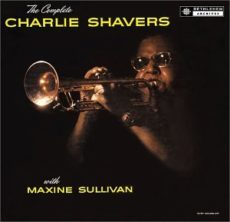
Charles James Shavers was born on August 3, 1920 in New York City and took up piano and banjo before switching to trumpet. In the mid-Thirties he performed with Tiny Bradshaw and Lucky Millinder. In 1935 he joined the trumpet section with Dizzy Gillespie and Carl “Bama” Warwick in Frankie Fairfax’s Campus Club Orchestra.
1936 saw him as a member of John Kirby’s Sextet as trumpet soloist and arranger. Only 16 at the time he gave his birth date as 1917 to avoid child labor laws, Charlie’s arrangements and solos helped make the band one of the most commercially successful and imitated of its day. In 1937, he performed with Midge Williams and her Jazz Jesters. By 1944 he began playing sessions in Raymond Scott’s CBS staff orchestra.
Leaving John Kirby’s band In 1945 he joined Tommy Dorsey’s Orchestra, with whom he toured and recorded, off and on, until Dorsey’s passing in 1956. In 1949, he sang and played the hit The Hucklebuck with Dorsey. He was a member of Dorsey’s Orchestra on numerous Stage Show telecasts for CBS, including early Elvis Presley appearances. During this time he continued to play at CBS while also appearing with the Metronome All-Stars and making a number of recordings as trumpet soloist with Billie Holiday.
From 1953 to 1954 he worked with Benny Goodman and toured Europe with Norman Granz’s popular Jazz at the Philharmonic series, where he was a crowd favorite. He formed his own band with Terry Gibbs and Louie Bellson.
Swing era trumpeter Charlie Shavers passed away from throat cancer in New York City on July 8, 1971 at the age of 50. While on his deathbed his close friend Louis Armstrong passed away, and his last request was that his trumpet mouthpiece be buried with Armstrong.
More Posts: bandleader,composer,history,instrumental,jazz,music,trumpet