

Daily Dose Of Jazz…
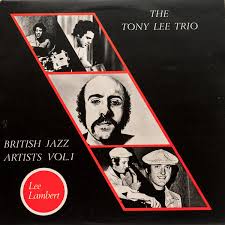
Tony Lee, born Anthony Leedham Lee on July 23, 1934 in Whitechapel, London, England. He learned the rudiments of the piano from his elder brother, Arthur, who was self-taught and preferred to use the black keys rather than the white. As a consequence, he became fluent in keys such as G flat and B natural, before moving on to more standard keys, leaving him with the ability to transpose effortlessly his entire repertoire into any key.
He played as a regular for many years with his trio comprising bassist Tony Archer and drummer Martin Drew or Terry Jenkins at The Bull’s Head in Barnes, South West London, a few miles from his home in Kingston upon Thames, Surrey.
During a visit by tenor saxophonist Billy Mitchell who came to play at the Bull’s Head, both Mitchell and Lee got on so well together that the Bull’s Dan Fleming organized for both of them a 1984 U.S. tour. Despite his sketchy knowledge of musical theory, he was a complete master of his instrument, and blessed with large hands, stretching an 11th with ease, all played in a lyrical style, and swinging like a garden gate. He was arguably the greatest British exponent of the Erroll Garner piano style, though his playing embraced a much wider compass.
He appeared on at least two recordings with Phil Seamen, a live recording featuring U.S. bassist Eddie Gómez, and a solo debut, Electric Piano, earned many comparisons to the works of Burt Bacharach. Lee led at least four other album sessions, including Tony Lee Trio, probably the quintessential album of his career.
His 40-year association with bassist Tony Archer in the Tony Lee Trio, also had them playing together in the sextet The Best of British Jazz formed in the early 1970s with drummer Jack Parnell, trumpeter Kenny Baker, trombonist Don Lusher and tenor saxophonist Betty Smith.
Pianist Tony Lee, influenced by Errol Garner, Oscar Peterson, and Art Tatum, passed away on March 2, 2004 in Esher, Surrey, England.

More Posts: bandleader,history,instrumental,jazz,music,piano

Daily Dose Of Jazz…
Paul Moer was born Paul Moerschbacher on July 22, 1916 in Meadville, Pennsylvania. He attended the University of Miami, graduating in 1951, and following this moved to the West Coast. There he frequently played on the jazz scene with Benny Carter, Vido Musso, Zoot Sims, Stan Getz, Bill Holman, and Shorty Rogers.
He did extensive work in Los Angeles, California studios as a pianist and an arranger. In the late 1950s, Paul led his own trio with Jimmy Bond and Frank Butler. In 1960 he toured Australia with Benny Carter and also recorded with Charles Mingus, Jack Montrose, John Graas, Paul Horn from 1960 to ‘63, then with Ruth Price, and Buddy DeFranco.
As a sideman he recorded with Jack Montrose, John Graas, Paul Horn, Jimmy Witherspoon, Dave Pell, Jack Sheldon, Emil Richards, Paul Whiteman, Rosemary Clooney, and Maynard Ferguson. Playing little after the 1960s, he made a comeback with a release in 1991 of Elmo Hope tunes and released his final album, Get Swinging, in 2005. Pianist Paul Moer passed away on June 9, 2010.
More Posts: bandleader,history,instrumental,jazz,music,piano
Daily Dose Of Jazz…
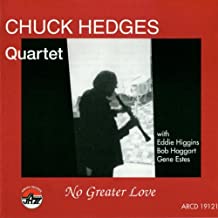
Chuck Hedges was born in Chicago, Illinois on July 21, 1932 and began playing clarinet while attending a military school. He received formal training under Claude Bordy and learned to play jazz on his own.
After studying at Northwestern University, Chuck joined George Brunis’s ensemble in 1953, remaining with Brunis through the end of the decade. He was active on the Dixieland revival scene in the 1960s, playing regularly at clubs in Chicago and Milwaukee, Wisconsin into the 1990s.
Working with Wild Bill Davison for most of the 1980s, he also worked with Alan Vaché and Johnny Varro. He with Ray Leatherwood, Gene Estes, Eddie Higgins, Bob Haggart, Duane Thamm, John Bany, Dave Baney, Charles Braugham, Howard Elkins, Jack Wyatt, Jim Vaughn, John Sheridan, Henry “Bucky” Buckwalter, Gary Meisner, Dave Sullivan, Mike Britz, and Andy LoDuca.
Clarinetist Chuck Hedges released several albums as a leader in the 1990s and 2000s before passing away on June 24, 2010.
More Posts: bandleader,clarinet,history,instrumental,jazz,music
Daily Dose Of Jazz…
Annie Whitehead was born on July 16, 1955 in Oldham, Lancashire, England and learned the trombone in high school and participated in rock and jazz bands. At 16, she left school and became a member of a female big band led by Ivy Benson, playing with the band for two years before moving to Jersey.
Unhappy with the life of a musician, she quit music for almost six years, only to return in 1979 and start a ska band. Taking an interest in jazz again after moving to London two years later, Whitehead began performing in pubs. During the 1980s she toured with Brotherhood of Breath, a big band led by South African pianist Chris McGregor.
Over the course of her career, Annie has worked with …And the Native Hipsters, Blur, Carla Bley, Charlie Watts Orchestra, Jah Wobble, Jamiroquai, John Stevens, Penguin Cafe Orchestra, Smiley Culture, Spice Girls, and Working Week. She was a member of The Zappatistas, a Frank Zappa tribute band led by guitarist John Etheridge.
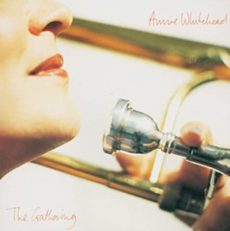
Trombonist Annie Whitehead, who has recorded five albums, her first, Mix Up in 1984 to The Gathering, her last in 2000, continues to compose and perform.
More Posts: bandleader,composer,history,instrumental,jazz,music,trombone
Daily Dose Of Jazz…
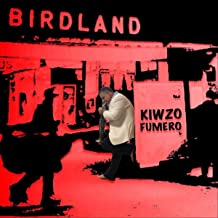
Kiwzo Fumero was born on July 12, 1972 in Marianao, Havana, Cuba. A trumpeter from his youth, he began his professional career in 1991 with the creation of the first youth mariachi band in Cuba, of which he was its creator and director, and who is currently El Mariachi Real Jalisco De La Habana.
In 2000 Kiwzo settled in Miami, Florida. where he has participated with several orchestras and has accompanied Gilberto Sta Rosa, Huey Dumbar, Thalia, Tito Nieves, Rey Ruiz, Jose Jose, and many more. He has performed with the Willy Chirino Orchestra, La Sonora Carruseles, the tour “Embrace Me Very Strong”, Tropicana All-Stars, Celia Cruz, and Cachao.
As an educator Fumero has also had the honor of sharing a lectern with world-class musicians such as Arturo Sandoval, Paquito D’Rivera, John Fadis, Israel López Cachao, Jimmy Bosch, Andy García, Chocolate Armenteros, Patato Valdez among many others.
Winner of 2 Grammy Awards with 6 nominations, he has performed for President Bush in 2007, and has recorded nine albums. Kiwzo Fumero, one of the most recognized and influential Cuban trumpeters of his generation, continues to perform, record and tour.
More Posts: bandleader,history,instrumental,jazz,music,trumpet