

Daily Dose Of Jazz…
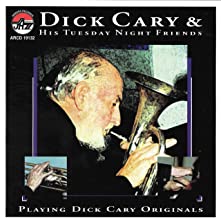
Dick Cary was born in Hartford, Connecticut on July 10, 1916 and earned a bachelor’s degree in music from Wesleyan University in 1938. He began performing in Connecticut and New York and landed a two-year full-time solo gig at Nick’s in Greenwich Village in New York City in 1941. The early 1940s saw him playing with Joe Marsala, the Casa Loma Orchestra, Brad Gowans, and as a staff arranger for Benny Goodman.
During a stint in the Army in 1944-46 while stationed on Long Island, Cary managed to continue recording with Muggsy Spanier and Wild Bill Davison among others. After his discharge, he worked with Billy Butterfield, then the pianist in the initial formation of Louis Armstrong’s All-Stars in 1947–48. In 1949–50 he was in Jimmy Dorsey’s orchestra, and throughout the 1950s worked with Eddie Condon, Pee Wee Russell, Max Kaminsky, Bud Freeman, Jimmy McPartland, and Bobby Hackett.
A move to Los Angeles, California in 1959 saw him becoming an active freelance, touring, and studio musician. Dick began writing and arranging music for the Tuesday Night Friends, who only performed annually at the Los Angeles Classic Jazz Festival and Sacramento Jazz Jubilee.
Trumpeter, composer, and arranger Dick Cary, who recorded eight albums asa leader and two-dozen as a sideman, passed away on April 6, 1994 in Glendale, California.

More Posts: arranger,composer,history,instrumental,jazz,music,trumpet
Daily Dose Of Jazz…
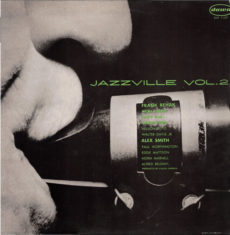
Frank Rehak was born on July 6, 1926, in New York City and started on piano and cello before switching to trombone. He was a member of the Gil Evans band and worked with Miles Davis, appearing with Davis on the broadcast The Sounds of Miles Davis.
As a leader he recorded Jazzville Vol. 2 on the Dawn label but as a sideman he had a prolific career. He recorded with Tony Bennett, Al Cohn, Dizzy Gillespie, Woody Herman, Quincy Jones, Gene Krupa, Hugo Montenegro, Cat Anderson, Ernestine Anderson, Charlie Barnet, Big Maybelle, Art Blakey, Bob Brookmeyer, Ruth Brown, Cándido Camero, Chris Connor, Urbie Green, Johnny Hartman, Michel Legrand, Melba Liston, Mundell Lowe, Teo Macero, Carmen McRae, Red Mitchell, Whitey Mitchell, Blue Mitchell, André Previn, Gerry Mulligan, Kai Winding and the list goes on.
Along with a failed marriage to nightclub dancer Jerri Gray, he also had a heroin addiction, which combined with other financial problems led to his withdrawal from music. With that, he lapsed into relative obscurity.
In an effort to deal with these issues he spent time at Synanon, which led to his mention in Art Pepper’s autobiography. Trombonist Frank Rehak passed away on June 22, 1987 in Badger, California.
More Posts: bandleader,cello,history,instrumental,jazz,music,piano,trombone
Daily Dose Of Jazz…
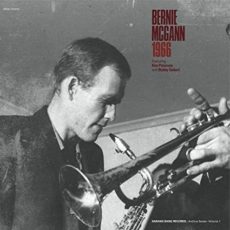
Bernard Francis “Bernie” McGann was born June 22, 1937 in Granville, New South Wales, Australia. He began his career in the late 1950s and remained active as a performer, composer, and recording artist until near the end of his life.
Bernie first came to prominence as part of a loose alliance of modern jazz musicians who performed at the El Rocco Jazz Cellar in Kings Cross, Sydney in the late 1950s and early 1960s. He had an enduring collaboration with drummer John Pochee.
During the 1960s and early 1970s, McGann also performed with rock and pop groups as a session musician. Around 1970 he was a member of the Sydney rock-soul band Southern Comfort.
He led the Bernie McGann Trio and Bernie McGann Quartet through his career. The most well-known lineup of the trio was McGann on alto saxophone, John Pochee on drums, Lloyd Swanton on bass, with the addition of Warwick Alder on trumpet in the quartet.
Alto saxophonist Bernie McGann passed away on September 17, 2013 following complications from heart surgery. He was 76.

More Posts: bandleader,history,instrumental,jazz,music,saxophone
Daily Dose Of Jazz…
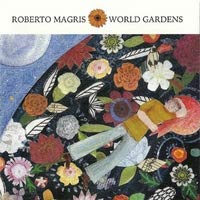
Roberto Magris was born June 19, 1959 in Trieste, Italy. By the 1980s he was leading the jazz trio Gruppo Jazz Marca with whom he recorded three albums, Comunicazione Sonora, Aria di Città and Mitteleuropa. In 1987 he put together an Italian quartet that stayed together for nearly 20 years, touring Europe, Asia, Australia, and South America and recording two albums, Life in Israel and Maliblues.
In the 1990s he founded the acid-jazz groups DMA Urban Jazz Funk and Alfabeats Nu Jazz, performing in Europe and in America. In 1998 Magris formed the Europlane Orchestra that included several jazz musicians from various European countries. With the Europlane Orchestra he recorded three albums Live At Zooest, Plays Kurt Weill, and Current Views.
2005 saw Magris partnering with Hungarian saxophonist Tony Lakatos on the album Check-In in 2005 he went on to collaborate with bassist Art Davis and drummer Jimmy “Junebug” Jackson on the album Kansas City Outbound issued by JMood. That same year, he hooked up with alto saxophonist Herb Geller on the album Il Bello del Jazz and some years later, JMood released another album with Herb Geller titled An Evening with Herb Geller & The Roberto Magris Trio – Live in Europe 2009.
During his time in the United States, Magris has become the musical director of JMood and has also recorded two albums in tribute to the trumpeter Lee Morgan, two trio albums with Elisa Pruett and Albert “Tootie” Heath devoted to the music of pianist Elmo Hope, and another to the legacy of alto saxophonist Julian “Cannonball” Adderley.
While in Los Angeles, California he recorded with Idris Muhammad and saxmen Paul Carr and Michael O’Neill, one album with Sam Reed, a double CD set in tribute to the bebop era, three albums with his trio from Kansas City and performed with his sextet that included trumpeter Brian Lynch at the WDNA Jazz Gallery in Miami, Florida. In Chicago, Illinois he recorded with a group including trumpeter Eric Jacobson and tenor saxophonist Mark Colby.
His influences have been Wynton Kelly, Tommy Flanagan, Bill Evans, Kenny Drew, Jaki Byard, Randy Weston, McCoy Tyner, Andrew Hill, Paul Bley, Don Pullen, and Steve Kuhn. He has recorded nearly three dozen albums as a leader or as a member of groups he has founded. Pianist, composer and arranger Roberto Magris continues to perform, record and tour.
More Posts: bandleader,history,instrumental,jazz,music,piano
Daily Dose Of Jazz…
Rudy Rutherford was born Elmer H. Rutherford on June 18, 1924 in Huachuca City, Arizona. He began performing in the early 1940s with Lionel Hampton and Count Basie. Initially taking Jack Washington’s place in Basie’s orchestra as a baritone saxophonist, once Washington returned from military service, he switched to alto saxophone.
1947 saw Rudy moving to Teddy Buckner’s band, though he continued working with Basie into the early 1950s. He worked with Wilbur De Paris late in the 1950s and appeared with Chuck Berry at the Newport Jazz Festival in 1958. He would record with Dicky Wells, Dinah Washington and Lurlean Hunter.
In the 1960s he worked with Buddy Tate and spent several years with Earl Hines in the mid-1970s. Saxophonist and clarinetist Rudy Rutherford, who worked with Illinois Jacquet in the 1980s and was active in performance until his death, passed away on March 31, 1995 in New York City.
More Posts: clarinet,history,instrumental,jazz,music,saxophone