

Daily Dose Of Jazz…
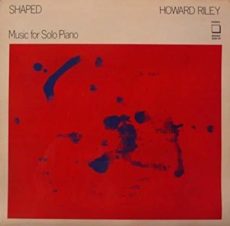
Howard Riley was born on John Howard Riley on February 16, 1943 in Huddersfield, Yorkshire, England. He began learning the piano at the age of six and started playing jazz as early as the age of 13. He studied at the University of Wales from 1961 to 1966, then Indiana University, and finishing up at York University in 1970). While studying he played jazz professionally, with Evan Parker (1966) and then with his own trio (1967–76), with Barry Guy on bass and Alan Jackson, Jon Hiseman, and Tony Oxley for periods on drums.
He worked with John McLaughlin in the late Sixties, the London Jazz Composers Orchestra and Oxley’s ensemble through the Seventies to 1981. He and Guy worked in a trio with Phil Wachsmann from 1976 well into the 1980s and played solo piano throughout North America and Europe. He played in a quartet, with Guy, Trevor Watts, and John Stevens, did duo work with Keith Tippett, with Jaki Byard, and with Elton Dean. From 1985 he worked in a trio with Jeff Clyne and Tony Levin.
Pianist and composer Howard Riley who worked in jazz and experimental music idioms continues to teach at the Guildhall School of Music and Drama and Goldsmiths, University of London, where he has taught since the 1970s.

More Posts: bandleader,educator,history,instrumental,jazz,music,piano
Daily Dose Of Jazz…
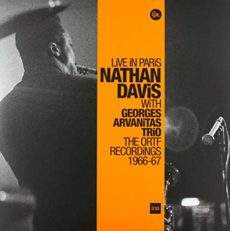
Nathan Tate Davis was born on February 15, 1937 in Kansas City, Kansas and eventually would travel extensively around Europe after World War II. He moved to Paris in 1962 but would return to the U.S. by 1969, holding a Ph.D. in Ethnomusicology from Wesleyan University and was a professor of music and director of jazz studies at the University of Pittsburgh, an academic program that he helped initiate.
He was the founder and director of the University of Pittsburgh Annual Jazz Seminar and Concert, the first academic jazz event of its kind in the United States. He also helped to found the university’s William Robinson Recording Studio as well as establish the International Academy of Jazz Hall of Fame located in the school’s William Pitt Union and the University of Pittsburgh-Sonny Rollins International Jazz Archives.
One of Davis’ best known musical associations was heading the Paris Reunion Band from 1985 to1989, which at different times included Nat Adderley, Kenny Drew, Johnny Griffin, Slide Hampton, Joe Henderson, Idris Muhammad, Dizzy Reece, Woody Shaw, and Jimmy Woode. He also toured and recorded with the post-bop ensemble leading Roots which he formed in 1991. He composed various pieces, including a 2004 opera entitled Just Above My Head.
He retired as director of the Jazz Studies Program at Pitt in 2013. Davis also served as the editor of the International Jazz Archives Journal. Over the course of his career, he recorded eighteen albums as a leader.
Multi-instrumentalist Nathan Davis, who played the tenor saxophone, soprano saxophone, bass clarinet, and flute, and was awarded the Mid-Atlantic Arts Foundation’s BNY Mellon Jazz Living Legacy Award at the Kennedy Center for the Performing Arts, passed away in Palm Beach, Florida on April 8, 2018 at the age of 81.
More Posts: clarinet,educator,flute,history,instrumental,jazz,music,saxophone
Daily Dose Of Jazz…
Dwike Mitchell was born Ivory Mitchell Jr. on February 14, 1930 and raised in Dunedin, Florida. He began playing piano around the age of three after his father, who had a job driving a garbage truck, brought home an old piano discarded by its owner. With the help of his mother, who made him play exercises and scales, and a cousin, who had been taking piano lessons herself, he soon displayed an exceptional aptitude for the instrument. He began performing in public at the age of five. His mother, a soloist in her church choir, needed an accompanist and gave the job to her young son. Before long he was playing for the entire Sunday morning service, a role he would continue to perform through the age of seventeen while attending Pinellas High School.
In 1946, Mitchell enlisted and was stationed at Lockbourne Air Force Base, at that time an all-black facility renowned for its excellent music program, where he was assigned to the band. It was here that he heard the music of Rachmaninoff that impacted his piano style development. Post-discharge from the Army, he went to the Philadelphia Musical Academy, where he studied under pianist Agi Jambor. After graduation, he joined Lionel Hampton and changed his name from Ivory to Dwike, at his mother’s suggestion, based on several family names.
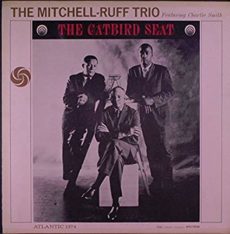
By the mid-Fifties, he reunited with French horn player Willie Ruff, when he joined the Hampton orchestra. In 1955 the two men left the orchestra to form the Mitchell-Ruff jazz duo. The duo placed an emphasis on introducing American jazz music in parts of the world unfamiliar with the idiom. Among these, were visits to the Soviet Union in 1959 and to China in 1981. Throughout his duo and trio career they recorded fourteen albums, he also taught piano. In 2012, after becoming ill, he returned to his native South, spending his last months in Jacksonville, Florida. On April 7, 2013 pianist Dwike Mitchell passed away from pancreatic disease.
More Posts: bandleader,educator,history,instrumental,jazz,music,piano

Daily Dose Of Jazz…
Mel Powell was born Melvin Epstein on February 12, 1923 in The Bronx, New York City to Russian Jewish parents. He began playing piano at age four, taking lessons from, among others, Nadia Reisenberg. His passion for baseball was shattered with a hand injury that turned him to music. His dream of being a concert pianist was also shattered when his older brother took him to see jazz pianist Teddy Wilson play and later to a concert featuring Benny Goodman. By 14, he was performing jazz professionally around New York City.
As early as 1939, he was working with Bobby Hackett, George Brunies, and Zutty Singleton, as well as writing arrangements for Earl Hines. In 1941 he changed his last name from Epstein to Powell, shortly before joining the Benny Goodman band. His style was rooted in the stride style that was the direct precursor to swing piano. His composition The Earl, dedicated to Earl Fatha Hines, one of hi’s piano heroes, was recorded sans drums. Two years with Goodman, led to a brief stint with the CBS radio band before Uncle Sam came calling in 1943 for World War II where he played with Glenn Miller’s Army Air Force Band to the end.
In Paris, France he played with Django Reinhardt, returned briefly to Goodman, then moved to Hollywood and ventured into providing music for movies and cartoons, played himself in the movie A Song Is Born, appearing along with many other famous jazz players, including Louis Armstrong. After developing muscular dystrophy his traveling musician career ended, so he devoted himself to composing.
During the Fifties, he enrolled at the Yale School of Music, recorded the jazz album Thigamigig, became an educator, and was a founding dean of the California Institute of the Arts in Valencia, California. After serving as Provost of the Institute from 1972 to 1976, he was appointed the Roy O. Disney Professor of Music and taught at the institute until shortly before his death. The Pulitzer Prize-winning American composer, pianist, and educator Mel Powell passed away on April 24, 1998 in Sherman Oaks, California.
More Posts: composer,educator,history,instrumental,jazz,music,piano

Daily Dose Of Jazz…
Brian Lemon was born on February 11, 1937 in Nottingham, England to parents who were semi-professional dance-band violinists who both worked for the cigarette manufacturer John Player & Sons. Inspired by Fats Waller and later by Art Tatum and Teddy Wilson, he studied the piano with Reg Conroy, a local teacher, and was soon proficient enough to perform in palais bands in his home city.
By the mid-1950s, at 19, he moved to London and joined Freddy Randall’s group. After that, he worked with George Chisholm and Kenny Baker. Over the years, Brian worked with Benny Goodman, Charlie Watts, Scott Hamilton, Buddy Tate, Milt Jackson, Ben Webster, and Digby Fairweather. He led an octet that played songs by Billy Strayhorn.
For 10 years from 1994 Lemon recorded a sequence of 27 albums for Zephyr, with seven as leader. Zephyr was set up by retired businessman John Bune to record Lemon’s work. Adelaide Hall recorded an album with The Brian Lemon Half-Dozen. A rare copy is at the British Library.
After the development of severe osteoarthritis in his handsLemon retired from music around 2005. Pianist and arranger Brian Lemon passed away on October 11, 2014.
More Posts: bandleader,history,instrumental,jazz,music,piano