

Daily Dose Of Jazz…
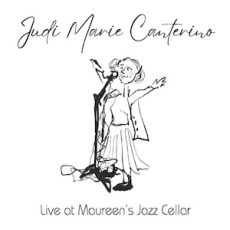
Judi Marie Canterino was born on December 18, 1942 in New York City, New York. She began her musical training at the age of seven with classical piano and performed at the Juilliard School of Music through her thirteenth year. Then she turned her studies to voice, training classically through high school.
At 19 she turned her attention to jazz singing and was introduced to Lennie Tristano, with whom she began studying. As part of my jazz training, she would listen to Lennie Tristano perform at the Half Note. Early in her career she sat-in at the club with Zoot Sims, Al Cohen, Wes Montgomery, Buddy Tate, Bud Johnson, Jimmy Rushing, Van Dickenson, Major Holly, Milt Hinten, Doc Cheatham, Roy Eldridge, Ross Thompkins, Bobby Hackett and others.
Her style came from mentorship of those previously mentioned and the influences of singers Jimmy Rushing, Billie Holiday, Maxine Sullivan, Rosemary Clooney, Anita O’Day and Frank Sinatra. She took time off from performing to raise a family but remained active in the jazz world, resuming her career with guitarist Joe Puma. She’s appeared around New York and New Jersey.
I have been working with jazz greats Warren Vache, Scott Hamilton, Norman Simmons, Chuck Folds, Clark Terry, Mark Shane, Rio Clemente, Joe Cocuzzo, Phil Bodner, Spanky Davis, Bucky Pizzarelli, Kenny Daverne, Kenny Asher and before their deaths, the great Doc Cheatham and Red Richards.
Her debut as a leader was titled Gee Baby and her sophomore project is Live At Maureen’s jazz Cellar. Vocalist Judi Marie Canterino, the Swing Jazz Singer, is still taking the stage to this day.

More Posts: bandleader,history,instrumental,jazz,music,vocal

Daily Dose Of Jazz…
Nicole Rampersaud was born on December 17, 1981 in Toronto,Canada. Studying trumpet through high school she then went to earn an undergraduate degree from the University of Toronto in Jazz Performance. From there a scholarship led her studies to the New England Conservatory, where she earned her Master’s Degree in Jazz Studies. While at the Conservatory, Nicole studied with Danilo Perez, John McNeil, Jerry Bergonzi, Joe Morris, Herb Pomeroy, Joe Maneri, and Bob Moses. She also studied composition with Michael Gandolfi and Ken Schaphorst.
Developing her singular voice that intersects with a broad range of musical practices and traditions, Nicole has become a sought-after collaborator with a host of artists. A few of his contemporary musicians are Anthony Braxton, Joe Morris, Ra-kalam Bob Moses, Sandro Perri, and many more.
Rampersaud’s primary groups include Brass Knuckle Sandwich with pianist Marilyn Lerner, a duo with guitarist Joel LeBlanc, and she is a founding member of the trio c_RL alongside Allison Cameron and Germaine Liu. She has performed with AIMToronto Orchestra, Eucalyptus, Michael Vlatkovich 5 Winds, and Montreal-Toronto Art Orchestra.
Since 2008, she has been building a catalogue of solo compositions that deconstruct the trumpet’s sonic possibilities and co-founded the improvisation-driven series, Understory. Trumpeter and composer Nicole Rampersaud continues to relentlessly seek out and create spaces to work with a diverse and expanding group of music-makers.
More Posts: bandleader,composeer,history,instrumental,jazz,music,trumpet

Daily Dose Of Jazz…
Jeremy Bacon was born in New York City, New York on December 16, 1959 into a musical family that were big jazz fans. His father sang with the New York Choral Society and The Occasional Singers, an avant-garde group led by folk singer Gil Robbins. Her uncle designed album covers for Thelonious Monk, Cannonball Adderley and numerous others for Riverside Records.
Taking piano lessons as a child he went on to study in high school at the Center for Open Education and then jazz improvisation and composition at Oberlin. After college, Jeremy became the protégé of pianist Don Pullen. He worked regularly in a trio led by bassist Charles Fambrough, which rotated drummer Jeff “Tain” Watts, trumpeters Johnny Coles and Michael Philip Mossman, saxophonists Joe Ford and Ralph Bowen, and guitarist Pat Martino.
He was musical director for Joey Arias’ Billie Holiday show at Carnegie Hall and accompanied many vocalists, including Kristin Chenoweth and Jeanie Bryson, daughter of Dizzy Gillespie. He recorded two albums as a leader Cloud Hands and Cage Free: Free Range, and Travels with the band Big Train. Bacon lent his talents to three recordings with saxophonist Joey Cavaseno, and one with vocalist Queen Esther.
Having established himself on the East Coast, a move to the Pacific Northwest in 2018 opened a new audience, performing regularly as a leader and accompanist. He taught piano on the faculty of Cornish College of the Arts, accompanied dance classes in the theater department, and performed with Seattle JazzED at many regional elementary schools.
Jazz pianist Jeremy Bacon died at Franciscan Hospice House in Tacoma, Washington on July 8, 2024, after months of treatment for metastatic colon cancer. He was 64 years old.
More Posts: bandleader,history,instrumental,jazz,music,piano
Daily Dose Of Jazz…
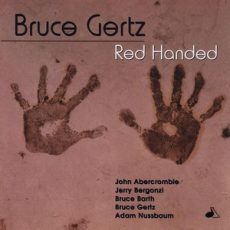
Bruce David Gertz was born on December 15, 1952 in Providence, Rhode Island. He first learned to play guitar, then switched to bass guitar as a teenager, playing with local blues and rock groups.
He studied music formally at New England College and Berklee College of Music in the 1970s. After graduating from Berklee in 1976 he taught music there; he is now a professor of music. He worked with George Garzone in the Overtones in the late Seventies and was a co-leader of ensembles with Jerry Bergonzi from 1978 to 1989.
He has worked with Mike Stern both in the Bergonzi ensembles and with Stern’s own quartet. From 1982 to 1985 he was house bassist for the Willow Jazz Cafe in Somerville, Massachusetts. In the 1990s he worked with John Abercrombie, Joey Calderazzo, Ken Cervenka, Adam Nussbaum, Danilo Perez, Dan Reiser, Kurt Rosenwinkel, George Schuller, and others.
Double and electric bassist Bruce Gertz continues to perform.
Daily Dose Of Jazz…
Chuck Gentry was born Charles T. Gentry on December 14, 1911 in Belgrade, Nebraska. He learned to play clarinet while growing up in Sterling, Colorado and attended Colorado State Teachers College before moving to Los Angeles, California to pursue a career in music.
He played with Vido Musso in 1939, then with Harry James in the first years of the Forties. During World War II he worked with Benny Goodman, the Army band of Glenn Miller, and Artie Shaw. Gentry then worked with Jan Savitt before returning to Goodman’s employ in 1946.
After 1947 Chuck worked as a session musician with June Christy, Louis Armstrong, Georgie Auld, Charlie Barnet, Ralph Burns, Benny Carter, Sammy Davis Jr., Ella Fitzgerald, Pete Fountain, The Four Freshmen, Erroll Garner, Woody Herman, Stan Kenton, Spud Murphy, Anita O’Day, Patti Page, Mel Powell, Della Reese, Shorty Rogers, Pete Rugolo, Mel Torme, and Nancy Wilson.
Saxophonist Chuck Gentry died on January 1, 1988 in California.
More Posts: history,instrumental,jazz,music,saxophone