

Daily Dose Of Jazz…
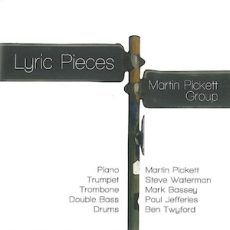
Martin Pickett was born on August 2, 1969 in Bristol, United Kingdom. His love of music took shape in his early teens, writing songs and playing guitar. He studied classical guitar through to Bristol University, while having piano as a second instrument and exploring compositional approaches.
After graduating Pickett received a Postgraduate Certificate in Education (PGCE) in secondary music education, then moved to Oxford, UK to teach music in a secondary school. It was during this period that his interest in jazz piano dominated his musical activities.
In 1998 Martin left his teaching post to work as a freelance jazz pianist and teacher. Since this time he has worked in a variety of settings and worked with a wide array of Britain’s most talented musicians.
He has recorded his own compact disc, I’ll Be With You Again in 2005 and played on albums by Diane Nalini, Tim Wilson, 3BPM, and Frank Hockney. He was featured as a composer on all of these apart from Frank’s project.
Pianist Martin Pickett has been a teacher in Oxford since 1998 and continues to focus his attention to being a freelance jazz pianist, performing with the group 3BPM, and songwriting collaboration with Tony Isaacs..

More Posts: bandleader,history,instrumental,jazz,music,piano,songwriter

Daily Dose Of Jazz…
Ian Davis was born on August 1, 1953 in South Carolina and started drumming at fifteen as an R&B drummer with The Barons, playing gigs on the South Carolina chittlin’ circuit with Earl Davis, George McCauley, Craig Washington, Phil Griffin, and Cool John Ferguson. He played folk and fusion in the Seventies, alt-pop, improvisational, and big band music in the 80’s, and played with Blue Chair, Mind Sirens, Bicentennial Quarters, Trailer Bride, and Chris Stamey/Kirk Ross in the 90’s. He went on to become the host drummer for six years at the Carrboro Arts Center monthly jazz jam.
Moving to the Bay area of San Francisco, California in 1995 Davis played with the Mills College based large improvising ensemble Micro Collective Orchestra along with Scott Rosenberg, Matt Ingalls, Morgan Guberman, Brian Pearson, Brian Kane, and many others. Following his 1997 return to North Carolina he organized the structured improvisational orchestra Micro-East Collective, similar in design to Micro.
He and composer, performer, producer and engineer Chris Stamey have recorded and produced three compact discs for Micro-East. Ian also manages Umbrella Records. He currently plays in improvisational duos with guitarist Jason Bivins, soprano and tenor saxophonist Mahlon Hoard, Onomata, a pulse-based improvising quartet, Unstable Ensemble, a Bloomington based improvisation ensemble, and The Dave Fox Quartet out of Greensboro, North Carolina.
Davis has been invited to play gigs with Eugene Chadbourne, he toured with Andrew Voigt, Morgan Guberman, and Toshi Makihara as part of the music and dance group Corpus Ludens. Drummer Ian Davis continues to record improvisational performers during house concerts sponsored by the Triangle’s Alliance for Improvised Music.
More Posts: bandleader,drums,history,instrumental,jazz,music
Daily Dose Of Jazz…
Gordon “Gordy” Johnson was born July 31, 1952 in Minneapolis, Minnesota, and was quickly immersed in the world of music as his father Clifford was in the bass section of the Minnesota Orchestra for 47 years and his mother Thelma taught piano. His main instrument growing up was the flute, however, he also played bass, keyboards and guitar, and sang rock and roll.
Graduating in 1974 from Eastman School of Music at the University of Rochester in New York, Gordy played flute in the Eastman Wind Ensemble and bass in the Eastman Jazz Ensemble, Studio Orchestra and Arrangers Workshop Orchestra.
Johnson spent a year breaking into the New York City music scene often playing with pianist and college classmate Phil Markowitz. In 1975, Gordy hit the road for a three-year stint with the Maynard Ferguson Orchestra, alongside drummer Peter Erskine. World tours followed with Gene Bertoncini, Roy Buchanan, the Paul Winter Consort and Chuck Mangione. He was also busy with studio recordings.
Moving back to the Twin Cities in 1989 where he became one of the most in-demand bass players in town ever since. He has performed, toured and/or recorded with Joanne Brackeen, Herb Ellis, Rosemary Clooney, Scott Hamilton, Michael Johnson, Jay McShann, Dewey Redman, Jim Rotondi, Diane Schuur, Marlena Shaw, Stacey Kent and Toots Thielemans, among others.
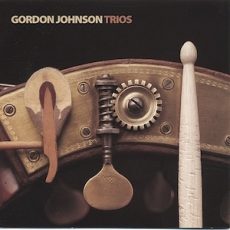
Double bassist and bass guitarist Gordy Johnson, who has recorded five albums as a leader and fourteen as a sideman, continues to play an average of 250 gigs a year, which keeps quite busy.

More Posts: bandleader,bass,guitar,history,instrumental,jazz,music
Daily Dose Of Jazz…
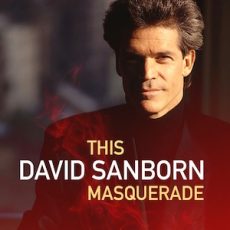
David William Sanborn was born July 30, 1945 in Tampa, Florida where his father was stationed in the US Air Force, and grew up in Kirkwood, a suburb of St. Louis, Missouri. Contracting polio at the age of three and confined to an iron lung for a year, the polio left him with impaired respiration and his left arm shorter than the right.
While confined to bed he was inspired by the saxophone breaks in songs he heard on the radio by Fats Domino’s Ain’t That a Shame and Little Richard’s Tutti Frutti. At the age of eleven David changed to saxophone from piano lessons when doctors recommended that he take up a wind instrument to improve his breathing and strengthen his chest muscles. By 14 he was good enough to play with blues Albert King and Little Milton in local clubs. Alto saxophonist Hank Crawford was an early and lasting influence.
Sanborn studied free jazz in his youth with saxophonists Roscoe Mitchell and Julius Hemphill. He continued his education at Northwestern University and transferred to the University of Iowa, where he played and studied with saxophonist J.R. Monterose. In 1967 he took a Greyhound bus to San Francisco, California to join the Summer of Love, and was invited to sit in on a session with The Paul Butterfield Blues Band and stayed with the band for five years. He went on to play with the Brecker Brothers, Al Jarreau, and Tim Berne.
Finding life on the road increasingly difficult he continued to tour, was active as a session musician, and played on numerous albums by artists including Stevie Wonder, Bruce Springsteen, Aretha Franklin, Sting, the Eagles, Rickie Lee Jones, James Brown, George Benson, Carly Simon, Elton John, Bryan Ferry and the Rolling Stones.
As a leader he recorded twenty-five albums and his discography as composer and sideman is extensive and includes videos, television and film. Sanborn won six Grammy Awards and had eight gold albums and one platinum album and was inducted into the St. Louis Walk of Fame.
Alto saxophonist David Sanborn, who was known primarily as a smooth jazz musician, died of complications from prostate cancer in Tarrytown, New York on May 12, 2024.
More Posts: bandleader,history,instrumental,jazz,music,saxophone
Daily Dose Of Jazz…
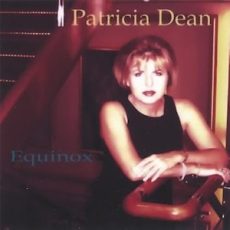
Patricia Dean was born on July 29th in Tampa, Florida and was surrounded by music while growing up. Her brother played bass and father played lead alto saxophonist in the big band of guitarist Bobby Sherwood, and was also a pianist, composer and clarinetist. Her greatest influence was singer/drummer Karen Carpenter.
She got her first drum set and began studying privately and really playing, at the age of 11. She played her first professional job with her father and brother when she was 14. Citing Sarah Vaughan, Shirley Horn, Nancy Wilson and Julie London as among her singing influences, and names Ed Thigpen, Jack DeJohnette, Tony Williams and Sonny Payne for her drumming.
Through the years she has worked with Nat Adderley, Ira Sullivan, Whitey Mitchell, Bobby Militello and the late John LaPorta. Vocalist and drummer Patricia Dean continues to pursue her career in southwest Florida.
More Posts: bandleader,drums,history,instrumental,jazz,music,vocal