

Daily Dose Of Jazz…
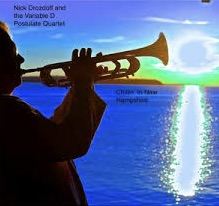
Nick Drozdoff was born on June 28, 1953 in Glencoe, Illinois. Holding degrees in music, engineering and physics, in 1978 he began his professional career in Maynard Ferguson’s band. Leaving the band in 1981 he ran his own contracting business and after completing his masters in classical trumpet, he began leading a double life in 1991 when he took on a day gig as a high school physics teacher at Winnetka’s New Trier High School.
After leading a double career existence and garnering awards as a high school science teacher, Nick developed endorsement deals as a jazz trumpeter at night. Retiring from teaching he pursued his musical passion. Now he spends time in Door County, Wisconsin and in the Northern Suburbs of Chicago where he regularly performs in both locations. He lives equal time in both places, depending on his performance and lecture/masterclass schedule.
His latest project centers on his new band, The Variable D Postulate Ensemble. This band is minimally a quartet of drums, guitar, keybaord and trumpet. It is primarily jazz driven but not exclusively. Drozdoff built a studio where he does his recording and has built connections as a trumpeter all over the world.
He has recorded with Grilly Brothers, Marshall Vente, Doug Lofstrom, Chuchito Valdes, and Guy Fricano. He is currently on call as solo trumpet with the Chicago Grandstand Big Band, The Jazz Consortium Big Band and the Starfall Big Band. Trumpeter Nick Drozdoff frequently appears as a classical soloist for churches, recitals andleads one of the Chicago area’s finest brass quintets.

More Posts: bandleader,history,instrumental,jazz,music,trumpet
Daily Dose Of Jazz…
Ronald “Ronnie” Hughes was born in Aberystwyth, Wales on June 27, 1925 and took up the trumpet at the age of eleven. The following year he was playing local semi-pro gigs. At nineteen he was in the RAF until 1947, spending part of his service in India. After returning to Wales to study photography, he then moved to London, England to join the Trinidadian clarinettist Carl Barriteau band. He worked for a year with the Teddy Foster Band from 1948 until 1949, and was a member of the Ted Heath band from 1949 until 1954.
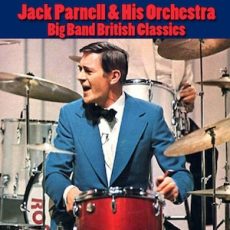
In the late fifties, Ronnie was in the bands of Geraldo and Jack Parnell, and after his marriage broke up had a spell working on ocean liners. A fluent jazz improviser and reliable and ubiquitous session player during the heyday of TV work, he was one of the original members of the BBC Big Band. He was a member of the Sinatra band and a long-term friend of fellow trumpeter Mannie Klein.
He would go on to appear in the film Quartet directed by Dustin Hoffman, who was captivated by his playing. Throughout his career he worked with Nat Allen, Lesle Holmes’ Londonairs, Harry Parry, Teddy Foster, Cyril Stapleton, Johnny Evans, BBC Radio Orchestra and led own quintet in 1958. He was a member of the Berlin Big Band, Eric Winston & His Orchestra, Johnny Keating and 27 Men, The Pride of London Big Band, and the Ray Davies Orchestra.
Trumpeter Ronnie Hughes died on April 1, 2020 in Banstead, Surrey at the age of 94.
More Posts: history,instrumental,jazz,music,trumpet
Daily Dose Of Jazz…
Arthur Doyle was born June 26, 1944 in Birmingham, Alabama and was inspired to play music as a child after watching Louis Armstrong and Duke Ellington on television. During his high school years, he began listening to Miles Davis, John Coltrane and Sonny Rollins, and picked up gigs as a saxophonist. While still a teenager, he played with saxophonist Otto Ford, trumpeter Walter Miller and in R&B and blues groups.
After graduating high school, Doyle attended Tennessee State University in Nashville, receiving a degree in Music Education. While there he played with trumpeter Louis Smith and singers Gladys Knight and Donny Hathaway. He briefly went to Detroit, Michigan to play with hard bop trumpeter Charles Moore. He gravitated toward free jazz after playing at a Black Panthers festival.
Moving to New York City in 1968, Doyle worked with Sun Ra and Bill Dixon, and met and befriended saxophonist Pharoah Sanders and guitarist Sonny Sharrock. The following year, he recorded with Noah Howard and while in the city he met drummer Milford Graves, who encouraged him to pursue his natural affinity for pure sound. In 1977 he recorded his debut album Alabama Feeling, his first as a leader. He began playing with guitarist Rudolph Grey, and in 1980 along with Grey and drummer Beaver Harris, they became known as The Blue Humans and recorded Live NY 1980.
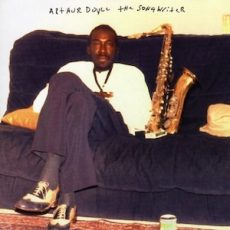
At around this time, Arthur began struggling with anxiety issues, and moved to Endicott, New York, where he worked as a counselor. In 1981, he moved to Paris, France where he began an association with multi-instrumentalist Alan Silva and his Celestrial Communication Orchestra, and participated in the recording of the album Desert Mirage in 1982. The following year, while in France, he was accused of rape and imprisoned. Maintaining his innocence he was pardoned and released in 1988 and during his time in prison, he wrote over 150 songs and assembled what he called the Arthur Doyle Songbook.
In the early Nineties Doyle returned to the United States, moving back to Endicott, and restarted his involvement in music. He resumed his association with Grey, playing at CBGB and releasing Arthur Doyle Plays and Sings from the Songbook Volume One on Grey’s Audible Hiss label. Over the next decade, he played and recorded with drummers Hamid Drake, Sabu Toyozumi, and Sunny Murray, among others, and formed The Arthur Doyle Electro-Acoustic Ensemble.
Saxophonist, bass clarinetist, flutist, and vocalist Arthur Doyle, who was best known for playing what he called free jazz soul music, died on January 25, 2014 in his hometown.
More Posts: bandleader,clarinet,flute,history,instrumental,jazz,music,saxophone,vocal
Daily Dose Of Jazz…
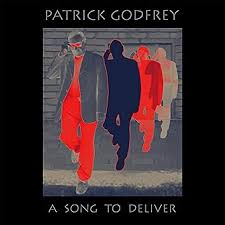
Patrick Godfrey was born in Toronto, Canada on June 25, 1948 and began playing piano for church dances at age 12. HIs early influences were Fats Domino, Henry Mancini, Leonard Bernstein and Bach. He played and sang in a number of Toronto rock bands, which led to session work with many well known Canadian musicians Bruce Cockburn, Murray McLaughlan, Raffi, Marc Jordan, Shirley Eikhard, Ben Mink, and Mendelson Joe among others.
Around 1970 he worked with singer Len Udow in Winnipeg, Canada and met Richard Condie and wrote the music for Richard’s first animation. The subsequent friendship resulted in him scoring all of his animations. Godfrey has worked with many other animators, including David Fine and Alison Snowden for whom he scored the Oscar winner Bob’s Birthday and all 52 episodes of the TV series Bob and Margaret.
In demand as a producer, Patrick has produced albums featuring artists such as Holly Cole, The Flying Bulgar Klezmer Band, The Lafayette String Quartet, and Michael Jones. His personal recording career includes eighteen albums.
Pianist Patrick Godfrey continues to perform in concert and teaches improvisation, composition and songwriting at the Victoria Conservatory of Music, Victoria BC.
More Posts: bandleader,history,instrumental,jazz,music,piano
Daily Dose Of Jazz…
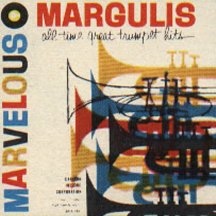
Charlie Margulis was born on July 24, 1903 in Minneapolis, Minnesota into a family of accomplished theater music performers in the 1920s. That was his introduction to the professional musician’s life which led to him working with territory bands led by Eddie Elkins and Paul Specht among others. Heading to Detroit, Michigan in 1924 he joined Jean Goldkette’s Book-Cadillac Hotel Orchestra under violinist Joe Venuti. His next move was to work with bandleader Ray Miller during a period when the trumpeter roamed back and forth between Detroit and Chicago, Illinois.
By 1927 Charlie began working with Paul Whiteman, the relationship lasting nearly three years and concluding in a traditional manner for progressive jazz bands, with various sidemen stranded on the West coast. He managed to straggle back to New York City, bad luck perched on his shoulder. He got so sick that he had to return to California in order to recover but by the middle of the ’30s was well enough to log in for a New York City recording session with the Dorsey Brothers.
Caught up in the excitement of the new swing style, Margulis tried out life as a bandleader as well as spending a year on tour with Glenn Miller. His role as a bandleader was offset with work in the recording studios embracing doo-wop and r&b styles. He would go on to freelance, sometimes under the name Charlie Marlowe in California, under his own name in New York City during the Forties and Fifties.
Trumpeter Charlie Margulis died on April 24, 1967 at the age of 63 in Little Falls, Minnesota.
More Posts: history,instrumental,jazz,music,trumpet