

Daily Dose Of Jazz…
Ron Collier was born on July 3, 1930 in Coleman, Alberta, Canada and began his musical training in Vancouver, British Columbia, Canada. He was a member of the Kitsilano Boys’ Band. He studied music privately in Toronto with Gordon Delamont and was the first jazz musician to receive a Canada Council grant that led him to study orchestration in New York in 1961 and 1962.
He formed the Ron Collier Jazz Quartet, which performed in the 1950s at the Stratford Festival and on CBC’s Tabloid with Portia White, and in 1963 with the Winnipeg Symphony Orchestra.
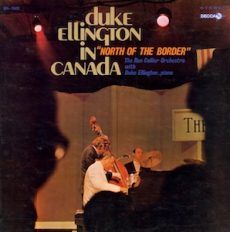
Duke Ellington performed with the Ron Collier Orchestra on the 1969 album North of the Border in Canada. The album included his compositions and those by several Canadian composers. He also created orchestrations for a number of Ellington’s concerts and recordings.
He composed the scores to three films in the 1970s and began directing a student orchestra at Toronto’s Humber College. His band won the Big Band Open Class at the Canadian Stage Band Festival in 1982. He would go on to perform in and lead a number of jazz groups.
Trombonist, composer, and arranger Ron Collier, who was made an Officer of the Order of Canada, died on October 22, 2003 in Toronto, Canada at the age of 73.

More Posts: arranger,composer,history,instrumental,jazz,music,trombone
Daily Dose Of Jazz…
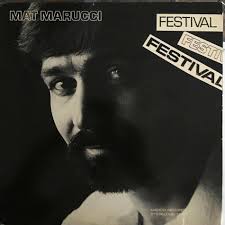
Mat Marucci was born Mathew Roger Marucci III on July 2, 1945 in Rome, New York into a musical family with his sister Mena, a concert pianist and his brother Ed, a trumpeter. He was classically trained on the piano and switched to drums at the age of 19.
After graduating high school from St. Aloysius Academy in 1963, Marucci studied drums with Dick Howard in Auburn, New York for two years. Receiving a business management degree at Auburn Community College in 1965, he relocated to the west coast four years later. Attending Sacramento City College in California, he received his associate degree in music, in 1973.
In addition to recording and performing, Marucci has authored several books on drumming for both Ashley Publications and Mel Bay Publications. His recordings and books have garnered four and five star reviews in JazzTimes, Jazziz, Modern Drummer, DownBeat and DRUM! magazines. He also wrote articles for several magazines and jazz websites.
In his role as a jazz educator, Mat has been a professor at several California colleges in Sacramento and Berkeley and an applied drum set instructor at the Sacramento Traditional Jazz Society.
Drummer Mat Marucci, who has lived between New York City, Los Angeles and Sacramento and has recorded seventeen albums as a leader and eight as a sideman, continues to explore and perform.
More Posts: bandleader,drums,educator,history,instrumental,jazz,music

Daily Dose Of Jazz…
Martin Vallely was born in Belfast, Ireland on July 1, 1962. His musical history spans a career working with Cork bands Soon and No Sangoma to working with acclaimed indie oufit Dear Wolf in Germany with whom he recorded.
As a bandleader he put together a quartet that recorded and released three albums beginning in 2008 with Debut, his maiden voyage receiving critical acclaim as a jazz composer. The following year Waltzin and in 2010 he released Gloves Off.
As a singer/songwriter, Martin also released two cds of his own songs as the band Glen River, first 12 in 2009 and After The Fall in 2010 which showcases his songwriting abilities. He is a half of an excellent duo called The Apologists.
Bassist, composer, songwriter, producer and educator Martin Vallely presently resides in Cork, Ireland where he continues to perform and teach.
More Posts: bass,bódhran,guitar,history,instrumental,jazz,music,saxophone

Daily Dose Of Jazz…
Christiaan Herbert “Chris” Hinze was born June 30, 1938 in Hilversum, Netherlands. He initially performed publicly as a pianist until the mid-Sixtiess, when he began studying flute at the Royal Conservatory of The Hague and then came to America and Berklee College of Music.
As a pianist, he played with Boy Edgar until 1966, but by 1967 was playing flute professionally with the bassist Dick van der Capellen. His first releases as a leader were issued in 1969, and in 1970, and was awarded the Best Soloist prize at the Montreux Jazz Festival.
The 1970s saw him forming his own ensemble, the Chris Hinze Combination, which included Gerry Brown and John Lee, which produced some success with arrangements of Baroque music in a jazz setting. He founded the record label Keytone Records in the mid-1970s.
In the 1980s, Hinze played for several years in a duo with Sigi Schwab and continued touring with a new version of his Combination. He began studying the music of Tibet and South Asia in the middle of the decade, forming a world music ensemble which shifted toward more new age and electronic music styles rather than jazz.
Flautist Chris Hinze continues to compose and perform.

More Posts: bandleader,flute,history,instrumental,jazz,music

Daily Dose Of Jazz…
Ike Sturm was born June 29, 1978 and was raised in a musical home in Wisconsin, learning from his father, renowned composer and arranger, Fred Sturm. He studied jazz and classical bass and composition while earning undergraduate and graduate degrees at the Eastman School of Music. In addition, he studied privately with legendary bassist Dave Holland.
Sturm went on to serve as Music Director for the Jazz Ministry from 2004-2021, commissioned him to compose Jazz Mass, a work for voices, strings and soloists that merges diverse musical languages into a powerfully unified aesthetic. The piece was released to critical international acclaim, named Best Albums of the Year by Downbeat and has been performed across the U.S., Scandinavia and Europe.He has performed with Gene Bertoncini, Theo Bleckmann, Ingrid Jensen, Donny McCaslin, Bobby McFerrin, Ben Monder, Maria Schneider and Kenny Wheeler. He has played on four Downbeat award-winning recordings, several Steve Reich releases on Canteloupe and Nonesuch Records and performed with Alarm Will Sound and the International Contemporary Ensemble, along with numerous creative ensembles in New York.
Bassist Ike Sturm currently leads a new worshiping community in New York City called Finding Our Way Home. He was commissioned by Montview Presbyterian Church in Denver, Colorado to write a new large-scale piece called River for 100 voices, string orchestra and the Ike Sturm Ensemble.
More Posts: bandleader,bass,history,instrumental,jazz,music