

Daily Dose Of Jazz…
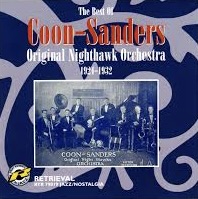
Theodore Gerald Roy, born April 9, 1905 in Du Quoin, Illinois began his musical career playing cornet before switching to piano. He first played in the Coon-Sanders Original Nighthawk Orchestra, and then with Jean Goldkette and Frankie Trumbauer early in his career.
While in Boston, Massachusetts in 1933 he played with Bobby Hackett and Pee Wee Russell, then led his own band around the state in 1934. Following this, he worked in various dance bands in New York City in the late 1930s and early 1940s.
Serving in the Army from 1943 to 1945, Teddy went on to play with Max Kaminsky and the new version of the Original Dixieland Jazz Band with Eddie Edwards and Wild Bill Davison. From 1946 to 1959, he played mostly freelance in New York City and on Long Island, New York. Among those he played with were Russell, Kaminsky, Miff Mole, and Wingy Manone. He also did solo work in the 1950s.
Pianist Teddy Roy died on August 31, 1966 in New York City.
More Posts: bandleader,history,instrumental,jazz,music,piano
Daily Dose Of Jazz…
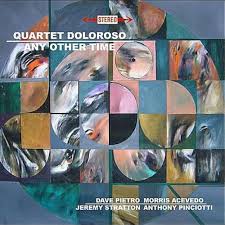
Morris Acevedo was born April 8, 1966 in Texas and started playing guitar in 6th grade. During his high school years he mostly played progressive Rock and Jazz Fusion in high school. After graduating he became a music major at North Texas State University and studied Jazz Performance and Music Education but a move to Boston, Massachusetts set his course to transfer to Berklee College of Music, earning a degree in Jazz Composition and Arranging. After earning his bachelor degree, he played full time in professional bands in Boston, and studied improvisation in New York City with Lee Konitz, Richie Bierach and Jerry Bergonzi before relocating to California in the San Francisco Bay Area.
In addition to his regular jazz and fusion group performances, he became smitten with teaching guitar and improvisation he taught for years in the Bay area. He currently holds the position of music director at Cardinal Newman High School. He has also held positions as the Jazz Guitar and Improvisation at the University of California at Berkeley’s Young Musician’s Program and guitar at his Berklee alma mater during summers.
He has performd with Joshua Redman, Jim Black, Ken Vandermark, the Either Orchestra, the Charlie Kolhase Quintet, organ Trio Be-3, Matt Wilson, Richie Cole’s Alto Madness Orchestra, Dam East, Scott Amendola, among others.
Guitarist and composer of new jazz and electronic ambient music Morris Acevedo, who has twice received a Certificate of Appreciation for Outstanding Service to Jazz, continues to perform, compose and educate.
More Posts: bandleader,composer,educator,guitar,history,instrumental,jazz,music
Daily Dose Of Jazz…
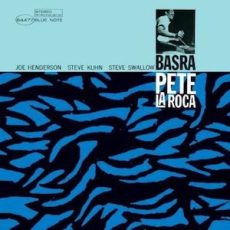
Pete La Roca was born Peter Sims on April 7, 1938 in Harlem, New York to a pianist mother and a stepfather who played trumpet. He was introduced to jazz by his uncle Kenneth Bright, a major shareholder in Circle Records and the manager of rehearsal spaces above the Lafayette Theater. He studied percussion at the High School of Music and Art and at the City College of New York, where he played tympani in the CCNY Orchestra. He adopted the name La Roca early in his musical career, when he played timbales for six years in Latin bands.
During the 1970s, after a hiatus from jazz performance, he resumed using his original surname. When he returned to jazz in the late 1970s, he usually inserted La Roca into his name in quotation marks to help audiences familiar with his early work identify him. In 1957, Max Roach became aware of him while jamming at Birdland and recommended him to Sonny Rollins. On the afternoon set at the Village Vanguard he became part of the important record A Night at the Village Vanguard. In 1959 he recorded with Jackie McLean and in a quartet with Tony Scott, Bill Evans and Jimmy Garrison.
Between the end of the 1950s and 1968, he also played and/or recorded with Slide Hampton, the John Coltrane Quartet, Marian McPartland, Art Farmer, Freddie Hubbard, Mose Allison, and Charles Lloyd, among numerous others. During this period, he led his own group and worked as the house drummer at the Jazz Workshop in Boston, Massachusetts.
In 1968 he enrolled in law school and drove a New York City taxi cab to supplement his income. He returned to jazz part-time in 1979, and recorded one new album as a leader, Swing Time in 1997.
Drummer and attorney Pete La Roca died in New York of lung cancer at the age of 74 on November 20, 2012.
More Posts: bandleader,drums,history,instrumental,jazz,music
Daily Dose Of Jazz…
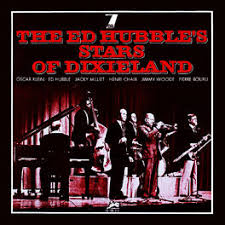
Eddie Hubble was born John Edgar Hubble II on April 6, 1928 in Santa Barbara, California and learned trombone from his father, who was also a professional trombonist in the Los Angeles, California area.
A move to New York City in 1944 and by late in the decade had played with Bob Wilber, Buddy Rich, Doc Evans, Alvino Rey, and Eddie Condon. He played with his own ensemble from the late 1940s, recording for Savoy Records in 1952.
He played with a Dixieland jazz ensemble known as The Six in 1953, and worked with Muggsy Spanier in the 1960s, playing in Ohio and Connecticut. He also worked with the World’s Greatest Jazz Band.
Despite being seriously injured in a car crash in 1979, he was soon back playing, including for international tours.
Trombonist Eddie Hubble died on March 22, 2016, at the age of 91.
More Posts: bandleader,history,instrumental,jazz,music,trombone
Daily Dose Of Jazz…
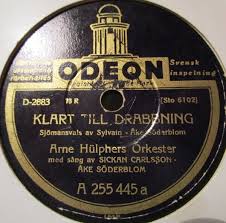
Arne Gunnar Valter Hülphers was born April 4, 1904 in Trollhättan, Sweden. Early in his career he played at the club Felix-Kronprinsen from 1924 to 1927, and played in dance bands into the early 1930s.
He founded his own ensemble in 1934 which became one of Sweden’s most important jazz big bands. They toured Europe and recorded until 1940. Sidemen in his group included Miff Görling, Zilas Görling, and Thore Jederby.
Later in his career, he concentrated more on popular musical styles; he led an orchestra in which Fred Bertelmann played. Pianist and bandleader Arne Hülphers died on July 24, 1978 in Norrköping Municipality, Sweden.
More Posts: bandleader,history,instrumental,jazz,music,piano