

Daily Dose Of Jazz…
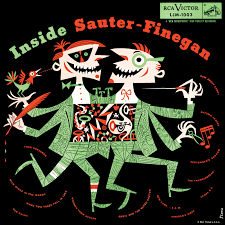
William James Finegan was born on April 3, 1917 in Newark, New Jersey and grew up in a household full of piano players. While growing up in Rumson, New Jersey, he attended Rumson-Fair Haven High School, and taught orchestration to schoolmate Nelson Riddle. He studied piano with Elizabeth Connelly, piano and musicianship with flautist/alto saxophonist Rudolph John Winthrop., and spent time studying at the Paris Conservatory.
He had his first professional experience leading his own piano trio before being offered a job as a staff arranger for Glenn Miller after Tommy Dorsey bought a copy of his Lonesome Road and recommended him. Finegan remained with Miller until 1942 and arranged such hits as Little Brown Jug, Sunrise Serenade, Song of the Volga Boatmen, Stardust, A Nightingale Sang in Berkley Square and Jingle Bells. He arranged these songs in collaboration with Glenn Miller, but also arranged music for films in which the band appeared in the early Forties. He then worked off and on for Tommy Dorsey from 1942 to 1952.
In the late Forties Bill studied in New York City, then lived in Europe from 1948-1950 where he studied with Darius Milhaud and Valérie Soudères. After returning to the States in 1952, along with Eddie Sauter formed an ensemble, the Sauter-Finegan Orchestra, which remained active until 1957.
Following this collaboration, Finegan found work in advertising, writing music for commercials. In the Seventies, he arranged for the Glenn Miller Orchestra and Mel Lewis’s orchestra. He taught jazz at the University of Bridgeport in the 1980s. He wrote arrangements for cornetist Warren Vaché and the vocal group Chanticleer until his death in 2008.
Pianist, composer and arranger Bill Finegan died from pneumonia on June 4, 2008 in Bridgeport, Connecticut at the age 91.
More Posts: arranger,composer,history,instrumental,jazz,music,piano
Daily Dose Of Jazz…
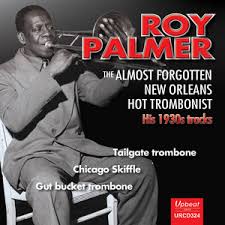
Roy Palmer was born on April 2, 1887 in New Orleans, Louisiana. He began his career in 1906 in New Orleans as a guitarist with the Rozelle Orchestra. He played trumpet and then trombone with Richard M. Jones, Freddie Keppard, Willie Hightower, Tuxedo Brass Band, and Onward Brass Band.
In 1917 he left New Orleans and moved to Chicago, Illinois where he worked with King Oliver, Lawrence Duhe, and Doc Cook. Palmer recorded with Johnny Dodds, Jelly Roll Morton, Ida Cox, the Alabama Rascals, and the State Street Ramblers.
In the 1930s, he was a factory worker and music teacher. Trombonist Roy Palmer died on December 22, 1963 in Chicago.
More Posts: educator,history,instrumental,jazz,music,trombone
Daily Dose Of Jazz…
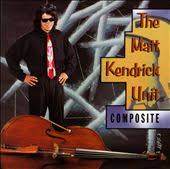
Matt Kendrick, was born in Winston-Salem, North Carolina on April 1, 1957 and attended the University of North Carolina School of the Arts. He moved to New York City in 1977 and for four years performed in numerous avant-garde venues. After studying with jazz educator Jerry Coker at the University of Tennessee, and playing in the Knoxville Symphony, he returned home in 1981.
As a composer, he has released to critical acclaim five compact discs, featuring more than forty of his own compositions. He has scored music for three films, leads the Matt Kendrick Unit,and has performed with Marian McPartland, Tierney Sutton, Archie Shepp and Jaki Byard.
He serves on the board of Music Carolina, is the music director for Carolina Music Ways, and is co-artistic director for Music Carolina, a non-profit arts presenting organization. As an educator Kendrick was on the faculty at Wake Forest University for 25 years.
With four decades under his belt, bassist Matt Kendrick continues to compose, perform, and teach.
More Posts: bandleader,bass,composer,history,instrumental,jazz,music
Daily Dose Of Jazz…
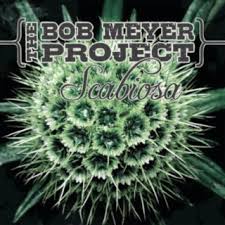
Bob Meyers was born on March 31, 1945 in Courtlandt Manor, New York. His early influences were classical and chamber music. When he was five he first heard the music of Kenny Clarke, Charlie Parker, Dizzy Gillespie and Thelonious Monk. It was at that age he began his music studies.
He attended George Washington University in Washington, DC earning his BA in History with minors in Music and Geology. He went on to study with Jack DeJohnette, Frank Dunlop, Henry Adler and Jim Chapin as well as extensive private study as an adult.
As an educator he has taught on both coasts focusing on technique, mechanics, musical application and interpretation on the drum set. Though specializing in jazz many of his students have gone on to be professionally active in jazz, rock and funk.
He has performed with Joe Lovano, John Abercrombie, Judi Silvano, Sheila Jordan, Ray Nance, Jaki Byard, Julian Priester, Gary Peacock, Diane Schurr, Mal Waldron, Kirk Lightsey, Avishai Cohen, Essiet Essiet, Santi Debriano and Vic Juris among numerous others.
As a leader he has recorded eighteen records. Drummer Bob Meyers continues to teach and perform as a leader and a sideman.

More Posts: bandleader,drums,history,instrumental,jazz,music
Daily Dose Of Jazz…
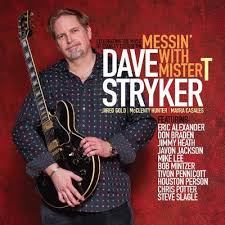
Dave Stryker was born March 30, 1957 and grew up in Omaha, Nebraska. At ten years old he was inspired by the Beatles to start playing guitar. His interest was rock and roll until he heard the albums My Favorite Things by John Coltrane and Beyond the Blue Horizon by George Benson. By seventeen, he was a jazz guitarist in town.
In 1978 he moved to Los Angeles, California where he took lessons from another Omaha native, Billy Rogers, and met organist Jack McDuff. After moving to New York City, he toured with McDuff in 1984 and1985, then spent ten years with saxophonist Stanley Turrentine.
Forming a band with Steve Slagle and a trio with Jared Gold and Tony Reedus he went on to work with Kevin Mahogany as sideman, composer, and arranger. Dave appeared with him at Carnegie Hall, and toured with him in Europe and Japan. He has also worked with Eliane Elias, Javon Jackson, and Andy LaVerne.
As an educator he teaches jazz guitar at Indiana University, Montclair State University, at the Jamey Aebersold Summer Jazz Workshop, the Litchfield Jazz Camp, and the Veneto/New School Workshop in Italy.
He recorded 38 albums as a leader, 5 with the Stryker/Slagle band, 2 with Trio Mundo and as a sideman he recorded 34 albums with Jared Gold, Steve Slagle, Allan Botschinsky, Don Braden, Kendall “Keyz” Carter, Rondi Charleston, Royce Campbell, Mike Freeman, Spellbound, Giacomo Gates, Craig Handy, Javon Jackson, Matthew Kaminski, Andy LaVerne, Pete Levin, Kevin Mahogany, Jorge Nila, Tony Reedus, Larry Schneider, Stanley Turrentine, Charenee Wade, and Matthew Whitaker.
Guitarist Dave Stryker, who has been named Top Ten Guitarists and Rising Star by Down Beat magazine, continues to perform and record.
More Posts: guitar,history,instrumental,jazz,music