

Daily Dose Of Jazz…
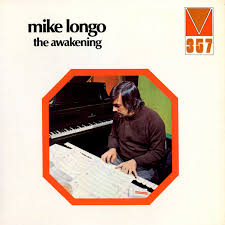
Michael Josef Longo was born in Cincinnati, Ohio on March 19, 1937 to parents who had a musical background. His father played bass, his mother played organ at church, and his music training began at a young age. Around four years old he heard Count Basie and Sugar Chile Mike, and the latter led him to begin researching boogie woogie bass lines. His parents took him for formal lessons at the Cincinnati Conservatory of Music at four. He moved to Fort Lauderdale, Florida soon after and by the age of 12, he won a local talent contest.
He received a scholarship from the Ft. Lauderdale Symphony Orchestra in 1955, a Downbeat Hall of Fame Scholarship in 1959 His career began in his father’s band, then Cannonball Adderley helped him get gigs of his own. Their working relationship pre-dated Adderley’s emergence as a band leader, having approached the white teenager to be the pianist at his black church in a town that was largely segregated. This led to recordings with Cannonball in the mid-1950s but he was too young to go to clubs with him. Longo played at Porky’s which was later portrayed in the movie of the same name. He would go on to receive his Bachelor of Music degree from Western Kentucky University.
He was a fan of Oscar Peterson from a young age and he studied with the pianist from 1961 to 1962. He received a National Endowment for the Arts Grant in 1972. During the 1960s he began to lead the Mike Longo Trio, which would remain active for the next 42 years. He would go on to play with Roy Eldridge, Paul Chambers and Dizzy Gillespie, who first heard him playing with Red Allen at the Metropole. He would become musical director for the Dizzy Gillespie Quintet and later the pianist for the Dizzy Gillespie All-Star Band. From 1966 until 1993 his music career would be linked to Gillespie who he was with on the night he died and later delivered a eulogy at his funeral.
Longo also taught a master class to upcoming jazz musicians, and his big band, the New York State of the Art Jazz Ensemble, would play and provide upcoming musicians a chance to learn on stage. A big part of his mission was to re-establish the apprenticeship relationship in teaching jazz.
He recorded two dozen albums as a leader, four with Dizzy and one with LeeKonitz. In 2002 he was inducted into Western Kentucky University’s Wall of Fame in 2002.
Pianist, composer, educator and author Mike Longo died in Manhattan from complications of Covid~19, three days after his 83 birthday on March 22, 2020.

More Posts: author,composer,educator,history,instrumental,jazz,music,piano
Daily Dose Of Jazz…
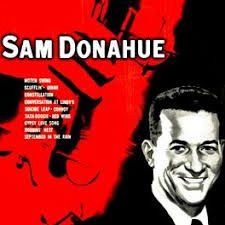
Samuel Koontz Donahue was born on March 18, 1918 in Detroit, Michigan and put together his first band when he was only 15 years old. He played in the bands of Gene Krupa, Harry James, and Benny Goodman. During World War II, he took over the US Navy band of Artie Shaw. After the war, he assembled and led a group that recorded extensively for Capitol Records.
He went on to create a new band enlisting trumpeters Harry Gozzard, Doc Severinsen, Wayne Herdell, arranger Leo Reisman, vocalists Frances Wayne, Jo Stafford and where Frank Sinatra Jr. spent time learning how to sing before it was dissolved in 1951. Then he re-enlisted in the Navy to serve in the Korean War.
His compositions included Quiet and Roll ‘Em with Gene Krupa, Convoy, LST Party, Scuttlin’, Love Scene, Please Get Us Out, Root Toot, Constellation, Conversation at Lindy’s, Saxa-Boogie, and Saxophone Sam. He went on to record with RCA Victor, Acrobat, Arista record labels.
Saxophonist Sam Donahue died from pancreatic cancer on March 22, 1974.
More Posts: bandleader,composer,history,instrumental,jazz,music,saxophone
Daily Dose Of Jazz…
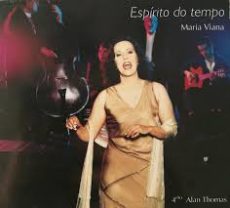
Maria Viana was born on March 17, 1958, Lisbon, Portugal and was the daughter of famous actor and painter, José Viana; and Brazilian singer and actress Jujú Baptista. A meeting with jazz critic and missionary José Carlos Monteiro Costa introduced her Ella Fitzgerald, Billie Holiday, Sarah Vaughan and Anita O’Day. He also introduced her to the producers of Cascais Jazz Festival, Luis Villas-Boas and Duarte Mendonça who took an immediate interest in her, arranging for rehearsals and jam sessions.
It was not until 1983 that she vigorsly pursued her professional ambitions in Jazz, because previously she had been an actress and a famous popsinger. She became the host-singer at the jazz bar, Drogaria Ideal, where dozens of soloists, amateurs and professionals performed. Within months Maria’s career progressed and revealed unquestionable talent and abilities.
She would go on to do television, festivals, record, and work with Al Grey, Bernardo Sasseti, and David Gausden. She created the Maria Viana Quintet, and toured the country for the National Secretary of Culture. 1995 Produces / features in concert, Around the World, Around the Forties, for the celebration of fifty years since the Second World War ending; an initiative of C.M. de Cascais. Tours Portugal with her quintet, and tours with Bill Goodwin quintet.
Maria’s work is rewarded with a Declaration of Manifest Cultural Value, has guested on several recordings and concerts, and became the Artistic Director for Hotels with Jazz. She produced Jazz na Casa da Guia, and Blues for Cascais, benefiting an ecological organization in Cascais.
Through the years vocalist Maria Viana has been featured on over sixty national television shows and concerts and continues to perform and tour.
More Posts: bandleader,history,instrumental,jazz,music,vocal
Daily Dose Of Jazz…
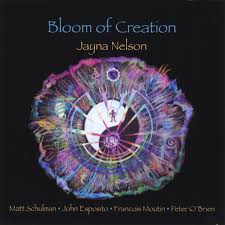
Jayna Nelson was born in Lincoln, Nebraska on March 16, 1958. She began to study piano as soon as she could reach the keyboard. At age 9 she began to study the flute as well and by age 17 had won both the Baldwin Junior Keyboard award and the l Music Teachers’ National Association Competition.
Graduated from the University of Toronto in Flute Performance, for the next two years, she served on the faculty at University of Toronto teaching chamber music. There she also premiered a work by Mario Davidovsky, and was principal flutist with the Union College Orchestra, the Wesleyan College Orchestra, Opera Omaha Orchestra and Symphony Canada. In 1983 she attended the Banff Centre Jazz program headed by Dave Holland and studied and performed with Anthony Braxton, Don Thompson, Dave Liebman and John Abercrombie.
A move to New York City in 1989 saw her continuing to work in the classical and jazz genres as a performer, producer, composer, arranger and educator. She designed and implemented integrated arts curriculum for New York area schools and summer camps. She has lectured and given seminars, maintained a private teaching studio for over 20 years and has been a flute technician and consultant for Anthony Braxton, Dave Liebman, Joe Giardullo, Jeanne Baxtresser, Joannie Maddon, Carlos Malta, Hermeto Pascoal, and James Moody.
Nelson has recorded and performed with a host of musicians including Karl Berger, Hilliard Green, Howard Johnson, Silvana Malta, Francois Moutin, Hermeto Pascoal, Sirius String Quartet, Petula Clark, Ingrid Jensen, Marty Morrell, Dave Valentine, and numerous others.
Flutist Jayna Nelson continues to perform, tour, compose, record and educate.
More Posts: arranger,bandleader,composer,educator,flute,history,instrumental,jazz,music,producer
Daily Dose Of Jazz…
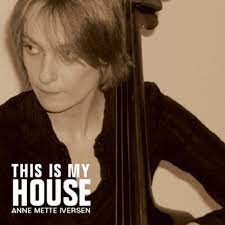
Anne Mette Iversen was born March 15, 1972 in Aarhus, Denmark. She studied classical piano at the Royal Academy of Music in her hometown and bass at the Rhythmic Conservatory of Music in Copenhagen, Denmark and The New School University in New York City.
Living in New York City from 1998 to 2012 Iversen co-founded the Brooklyn Jazz Underground in 2006 and is co-owner of the related record label Brooklyn Jazz Underground Records, which was formed in 2008. She works as a sideperson in various settings and as a freelance composer.
Currently based in Berlin, Germany. Iversen was Composer in Residence for Sweden’s Norrbotten Big Band in 2016. Anne’s composing is recognized for her ability to integrate classical music with jazz ensembles. She is influenced by major classical composers as well as jazz and Brazilian artists and composers.
Bassist Anne Mette Iversen has recorded ten albums between 1998 and 2020 and continues to perform, record and compose.
More Posts: bandleader,bass,composer,history,instrumental,jazz,music