

Daily Dose Of Jazz…
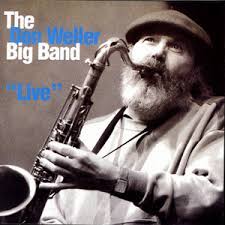
Donald Arthur Albert Weller was born on December 19, 1940 in Thornton Heath, Croydon, England. He began learning clarinet at the age of 14, and was classically educated for four or five years. He played the solo part in Mozart’s Clarinet Concerto at Croydon Town Hall aged 15, and began performing in Dixieland bands around the Croydon area, before switching to tenor saxophone and playing in Kathy Stobart’s rehearsal band.
During the 1970s he formed a jazz-rock group called Major Surgery that played a regular weekly gig at a local pub, the Dog & Bull. They played Weller’s compositions on the album released as The First Cut. This was followed by a quartet with drummer Bryan Spring and at the same time Don worked regularly with pianist Stan Tracey, and also with Harry Beckett and in a quintet with Art Themen. Renowned for his versatility, he has played with artists such as Alan Price, Tina May and Charlie Hearnshaw.
Weller played saxophone for rock records, working with the likes of David Bowie. He was the lead saxophonist with Tower of Power on the instrumental track Nascimento on Cat Stevens’ Back To Earth and also played on the Alex Harvey album The Mafia Stole My Guitar.
In the Eighties he stood in for Michael Brecker when the Gil Evans Orchestra played at the Bracknell Jazz Festival. This gig subsequently led to him touring the UK and recording with one of the band’s trumpeters, Hannibal Marvin Peterson, added on to the Weller–Spring Quartet. He went on to play and record with Evans’ British Orchestra, becoming a regular member of Rocket 88, as well as a first choice for TV and film soundtracks.
He contributed to several films composed for jazz big bands and was commissioned for his Electric Jazz Octet. Tenor saxophonist, and composer Don Weller had a triple bypass in 2012 and eight years later transitioned on May 30, 2020 in Croydon at the age of 79.

More Posts: bandleader,history,instrumental,jazz,music,saxophone
Daily Dose Of Jazz…
Jeanette Kimball was born Jeanette Salvant on December 18, 1906 in Pass Christian, Mississippi, the niece of blues pianist Isadore “Tuts” Washington. When she was seven she began playing the piano and as a teenager she performed as a professional musician with classical string formations, then in the field of jazz.
Moving to New Orleans, Louisiana she played in traditional jazz bands, first in 1926 in a “society” dance band, Papa Celestin’s Original Tuxedo Orchestra, with whom she went on tour in the southern United States. By 1929 she had married Celestin’s banjo and guitar player Narvin Kimball, and six years later left the band to raise their children. Post divorce, she retained Kimball and started her career anew in the mid-1940s. She went on to work with Buddy Charles, Herb Leary and Sidney Desvigne.
The 1950s saw Kimball working again with Papa Celestin, when he reactivated his band, which then was under the guidance of Papa French. She was a member of the Preservation Hall Jazz Band and played with Clive Wilson’s Original Camellia Jazz Band.
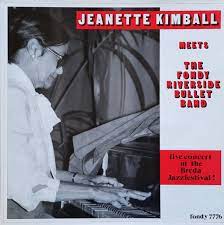
She appeared in 1976 on the Jazz Festival Breda live 1999 album Jeanette Kimball Meets the Fondy Riverside Bullet Band; their album Sophisticated Lady with Frank Fields and Freddie Kohlman. In the field of jazz, Jeanette worked between 1953 and 1991 on 72 recording sessions, among others with Alvin Alcorn, Paul Barbarin, Papa Celestin, Punch Miller and Johnny St. Cyr.
She left New Orleans in the 1990s to live in Ohio and South Carolina. Pianist Jeanette Kimball, received the Black Men of Labor Jazz Legacy Award in 1998, transitioned in Charleston, South Carolina, at the age of 94 on March 28, 2001.
More Posts: history,instrumental,jazz,music,piano
Daily Dose Of Jazz…
Allan Vaché was born December 16, 1953 in San Antonio, Texas but was raised in Rahway, New Jersey. He graduated from Rahway High School in 1971.
Vaché played with the Jim Cullum Jazz Band of San Antonio, Texas, for seventeen years and was a regular on the Riverwalk – Live from the Landing radio show on Public Radio International, which featured the Cullum band. He performed with Cullum on A Prairie Home Companion with Garrison Keillor.
He is a featured performer on Gershwin’s “Porgy & Bess” with the Cullum band, released on CBS Masterworks. Allan toured Mexico for the U.S. State Department with the live show of Porgy & Bess, and has performed at Carnegie Hall, Lincoln Center and The Kennedy Center.
He has performed with or appeared on stage with Benny Goodman, Teddy Wilson, Lionel Hampton, Pete Fountain, Clark Terry, Benny Carter, Milt Hinton, Bob Haggart, Yank Lawson, Bucky Pizzarelli, Gene Krupa, Jake Hanna, Scott Hamilton, Herb Ellis, and many others.
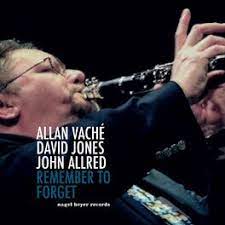
He has several recordings as a soloist on the Arbors, Audiophile, Chesky, and Nagel-Heyer record labels. Vaché has performed in Europe, Asia, Australia, and South America. Clarinetist Allan Vaché continues to perform and record.
Daily Dose Of Jazz…
Carlos Zíngaro or Carlos Zíngaro Alves was born December 15, 1948 in Lisbon, Portugal. He studied classical music at the Lisbon Music Conservatory from 1953 to 1965, and during the years 1967/68 he studied pipe organ at the Sacred Music High School and did studies on musicology and electroacoustic music.
During the 1960s, he was a member of the Lisbon University Chamber Orchestra. In 1967 he formed the musical group Plexus. He has performed at music festivals in Europe, Asia and America. He has recorded more than 50 albums under his name or in collaboration with other musicians and composers.
Zingaro was a founding member and director of the Lisbon art gallery Cómicos from 1984 till 1990, and his work has been exhibited, and he was awarded several prizes for his illustration, comics and paintings. Samples of his work can be seen on a number of CD sleeves. Since 2002 he is the founder and president of experimental arts and music association Granular.
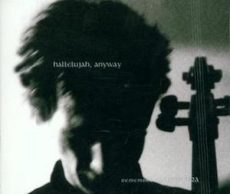
Violinist and electronic musician Carlos Zingaro, who is active in free improvisation, continues to perform and record.
More Posts: adventure,bandleader,history,instrumental,jazz,music
Daily Dose Of Jazz…
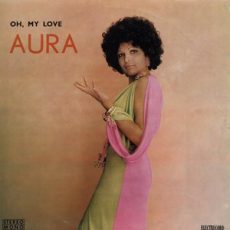
Aura Rully was born Aura Urziceanu in Bucharest, Romania on December 14, 1946. She grew up surrounded by classical music, as her father was a concertmaster with the symphony orchestra. Her vocal talent emerged very early and she sang from the time she was a little girl. She was a natural and a fast learner even though she didn’t take any formal lessons until her late teens. While she likes all kinds of music, jazz is her favourite. She was just over 13 years old when she recorded a big-band song.
She started scatting before she even knew what it was. She was just bored with the lyrics. She found out what scatting was when she heard Ella Fitzgerald do it. Her first appearance was as a guest on the Ray St. Germain Show. Sell-out performances at Club Morocco, the only jazz club in Winnipeg, Manitoba, Canada followed. It was there Ellington spotted her, taking some time out from a concert performance to drop by the club. After jamming together the next day, he sent her a ticket to New York and she performed with him full-time in the U.S. until his death two years later, in 1974. Over the course of her career, Aura has composed her own music and recorded four of her own albums.
She has toured and performed with Bill Evans, Duke Ellington, Ella Fitzgerald, Ahmad Jamal, Hank Jones, Thad Jones, Dizzy Gillespie, Quincy Jones, Paul Desmond, Joe Pass and Mel Lewis.
Vocalist Aura Rully, who has performed as Urziceanu-Rully in America, continues to perform and record.
More Posts: bandleader,history,instrumental,jazz,music,vocal