

Daily Dose Of Jazz…
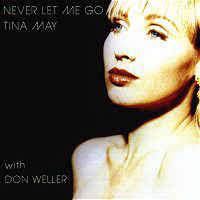
Tina May was born March 30, 1961 in Gloucester, England. She lived in Frampton-on-Severn when she was young and attended Stroud High School.
She has recorded twenty-five albums as a leader and three as a guest artist, of which18 albums are on the 33 Records label. She has worked with Tony Coe, Nikki Iles, Stan Sulzmann, Ray Bryant, Enrico Pieranunzi and Patrick Villanueva.
In 1989 she married jazz drummer and bandleader Clark Tracey and recorded several albums with him in the 1990s. Vocalist Tina May continues to perform, record and explore the azz idiom.

More Posts: bandleader,history,instrumental,jazz,music,vocal
Daily Dose Of Jazz…
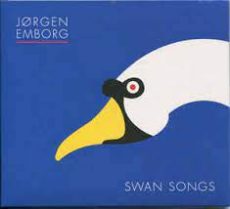
Jørgen Emborg was born in Copenhagen, Denmark on March 29, 1953 and was influenced by Bill Evans, Herbie Hancock and Keith Jarrett.
He has played at international festivals since 1975, releasing his first album, Sargasso in 1979 on the Kong Pære label. In the following years he belonged to Six Winds with Marilyn Mazur, Uffe Markussen and Alex Riel and formed with Palle Mikkelborg, Bjarne Roupé, Bo Stief and Ole Theill the ensemble Alpha Centauri.
By1986 he recorded with Bjarne Rostvold and through the Nineties he performed and/or recorded with Thomas Hass and Tomas Franck. Emborg teamed up with Alex Riel again and recorded Over The Rainbow on the Storyville label, with the saxophonist Fredrik Lundin, the bassist Steve Swallow. He played in the Tolvan Big Band and the Per Carsten Quintet.
Jørgen has also composed music for children, rhythmic choir music, big band, a cappella work, ironworks and piano quizzes. He taught piano, theory and composition at the Rytmisk Conservatory of Music from 1988 to 2016.
In 1981, his LP en 20:33 with Alpha Centauri received an award from Statens Kunstfond, the State Art Foundation. He received the Ben Webster Prize with the Frontline Fusion Group as well as others.
Pianist and composer Jørgen Emborg, who ensures there is a Nordic feel to his compositions, continues to perform and compose.
More Posts: bandleader,composer,history,instrumental,jazz,music,piano
Daily Dose Of Jazz…
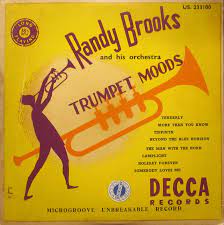
Randolph E. Brooks was born on March 28, 1917 in Sanford, Maine and began on trumpet at age six. By 11 he was discovered by Rudy Vallee and appeared on his Fleischman Hour radio show. He became a permanent member where he played thrilling trumpet solos, but was not allowed to play with the brass section of the band. By the time he was eighteen he was working with Jerry Blane for an entire summer in western New Jersey, followed by Gene Kardos and then Ruby Newman at the Rainbow Room in New York City.
Hired by Hal Kemp, he cut his first records for the Victor label in 1939. After Kemp’s death late in 1940, he stayed with the band when Art Jarrett took leadership. But by 1942 he moved on to a brief relationship with Claude Thornhill, followed by Bob Allen, but within a year he was playing with Les Brown before founding his own band in early 1945.
John Benson Brooks, who was not related, contributed arrangements to the ensemble that included Stan Getz in 1946. Among his hits for Decca Records were Tenderly, Harlem Nocturne, and The Man With The Horn, but unfortunately his swing-based style and large ensemble were out of step with the times, and his success eroded toward the end of the decade.
He married singer and bandleader Ina Ray Hutton and moved to Los Angeles, California where he suffered a stroke and was unable to continue as a musician. Trumpeter and bandleader Randy Brooks transitioned at the age of 49 of smoke inhalation in a fire at his Sanford, Maine apartment.on March 21, 1967.
More Posts: bandleader,history,instrumental,jazz,music,trumpet
Daily Dose Of Jazz…
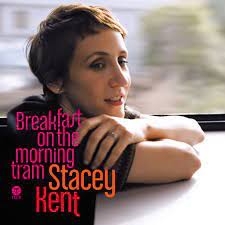
Stacey Kent was born March 27, 1965 in South Orange, New Jersey. After graduating from Sarah Lawrence College, she crossed the pond to study music at the Guildhall School of Music and Drama in London, England where she met and married saxophonist Jim Tomlinson.
In the 1990s, she began her professional career singing at Café Bohème in London’s Soho. After two or three years, she began opening for established acts at Ronnie Scott’s Jazz Club in London. By 1995, she appeared in the film Richard III singing Come Live with Me and Be My Love. Her debut album, Close Your Eyes, was released in 1997.
In 2020, Kent released a series of singles and EPs, including “Christmas in the Rockies”, “Three Little Birds”, “Lovely Day”, “Landslide”, “I Wish I Could Go Travelling Again”, “Bonita” and “Craigie Burn” as a duet with her longtime pianist Art Hirahara. Several of these singles become part of an album released on Sept 17, 2021, called “Songs From Other Places.”
She has received several awards and honors including receiving the Chevalier dans l’Ordre des Arts et des Lettres (Order of Arts and Letters) in 2009. Grammy-nominated vocalist Stacey Kent has recorded nearly two dozen albums and continues to explore the realm of her music.
More Posts: bandleader,history,instrumental,jazz,music,vocal
Daily Dose Of Jazz…
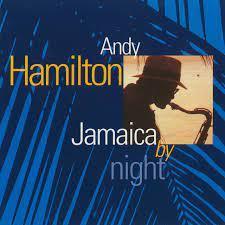
Andy Raphael Thomas Hamilton was born on March 26, 1918 in Port Maria, Jamaica, and learnt to play saxophone on a bamboo instrument. He formed his first band in 1928 with friends who played oil drums and Hamilton a bamboo saxophone. He was influenced by Duke Ellington and Count Basie and by the Kingston-based bands of Redver Cook and Roy Coburn.
Spending some time in the United States Andy worked as a cook and farm labourer, while having short jazz residencies in Buffalo and Syracuse, New York. Returning to Jamaica he worked as musical arranger for Errol Flynn at his hotel The Titchfield, and on his yacht the Zaka.
Emigrated as a stowaway to the United Kingdom in 1949 and eventually lived and worked in Birmingham, England. By day he worked in a factory, by night he played jazz with his own group, the Blue Notes that included fellow Jamaican pianist Sam Brown. Besides playing mainly local gigs, Hamilton booked an early Steel Pulse and numerous Jamaican bands around town before establishing a regular weekly venue in Bearwood. There he invited visiting musicians such as Joe Newman, Al Casey, Teddy Edwards, Art Farmer, Harry Sweets Edison, and David Murray. He fronted weekly gigs on Thursday nights at Bearwood Corks.
Having recovered from a diabetic coma in 1986, he celebrated his 70th birthday in 1988 playing at his regular venue, The Bear. He performed at the Soho Jazz Festival, and in 1991 at the age of 73, Andy made his first ever recording with Nick Gold, Silvershine on World Circuit Records. It became the biggest selling UK Jazz Album of the Year, The Times Jazz Album of the Year, and one of the 50 Sony Recordings of the Year. It was followed two years later by Jamaica at Night.
He continued to play, teach and promote music even as he approached his 94th birthday. Saxophonist Andy Hamilton, who in 2008 was appointed Member of the Order of the British Empire (MBE), transitioned peacefully on June 3, 2012
More Posts: bandleader,history,instrumental,jazz,music,saxophone