

Daily Dose Of Jazz…
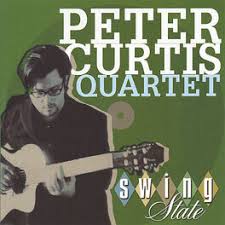
Peter Curtis was born on April 24, 1970. His formal education bestowed a Bachelor of Music from Berklee College of Music, a Masters of Music from Yale University, and a Doctor of Music in Classical Guitar Performance and Literature with minor fields in Ethnomusicology and Music History from Indiana University.
He has performed or recorded with Claudia Acuna, Lynn Arriale, Seamus Blake, Don Braden, James Carter, Freddy Cole, Barbra Morrison, Eldad Tarmu and Ron Westray of the Jazz at Lincoln Center Orchestra. Peter has played the top jazz clubs in Los Angeles, California, New York’s Carnegie Hall, and on Black Entertainment Television.
Having been to Europe, Curtis has been on club stages in Berlin, Brussels, Budapest, Florence, the Hague, Milan, Paris, Prague and Zurich. With his group, the Peter Curtis Quartet, he recently released his debut album Swing State. His classical chops have sent the guitarist recitals throughout the U.S. and Canada and was awarded the Andres Segovia memorial scholarship from the Banff Centre for the Arts.
Guitarist and composer Peter Curtis, a tenured professor of music at Riverside Community College in Riverside, California, continues to compose, perform and record.
More Posts: bandleader,guitar,history,instrumental,jazz,music
Daily Dose Of Jazz…
Beaver Harris was born William Godvin Harris on April 20, 1936 in Pittsburgh, Pennsylvania. Coming from an athletic family, he played baseball as a teenager for the Kansas City Monarchs, which was part of the Negro American League, and was scouted by the Brooklyn Dodgers and New York Giants.
After his Army service, Beaver began playing drums. Moving in 1963 to New York City and was encouraged to pursue a musical career by Max Roach. The city did him quite well as he worked and/or toured with Marion Brown, Dexter Gordon, Albert Ayler, Joe Henderson, Freddie Hubbard, Clifford Jordan, Howard Johnson, Sheila Jordan, Lee Konitz, Thelonious Monk, Roswell Rudd, Sonny Rollins, McCoy Tyner, Sonny Stitt, Clark Terry, Chet Baker, Doc Cheatham and Larry Coryell among other musicians.
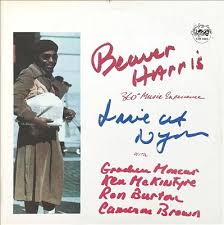
Harris founded a world music band calling it the 360 Degree Music Experience. The band included Buster Williams, Hamiet Bluiett, Don Pullen, Jimmy Garrison, Ron Carter, Ricky Ford, and many others.
Drummer Beaver Harris, who worked extensively with Archie Shepp, died of prostate cancer in New York City at the age of 55 on December 22, 1991.
More Posts: bandleader,drums,history,instrumental,jazz,music
Daily Dose Of Jazz…
Piers Lawrence was born on April 19th in Manhattan, New York and raised in Palo Alto, California and Switzerland. He attended the Conservatoire de Musique de Lausanne. After finishing his studies he made San Diego, California his new home and established himself as a solo guitarist, band leader and session musician.
An alum of the Harlem-based Jazz-Mobile Orchestra he studied with Barry Galbraith and Ted Dunbar. Piers has played Broadway shows including Guys and Dolls, Dancin’, Eubie, and Your Arms Too Short to Box With God. He has toured and recorded with Wilson Picket, The Main Ingredient, Esther Phillips, Phyllis Hyman, The Caribbean All-Stars and Merl Saunders and the Rainforest Band.
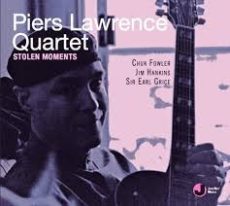
He is the lead guitarist for the San Diego based Soul Jazz AllStars and the Piers Lawrence Quartet. He established a record label, JazzNet Media, which produces independent projects and Ambient Music for film and television.
Guitarist and songwriter Piers Lawrence continues to grace the stages of venues and festivals across the nation, service his corporate clients, and perform and record with Narada Michael Walden, Sammy Figueroa, Jerry Garcia and Tommy Flanagan, to name a few of the many.
More Posts: bandleader,guitar,history,instrumental,jazz,music,songwriter

Daily Dose Of Jazz…
Mika Mimura was born in Osaka, Japan on April 18, 1978. She began to play marimba when she was 6 years old. She studied classical music at Osaka College of Music and finished her Master’s degree at the college. Inspired by pianist Makoto Ozone, she began her study of jazz vibraphone after graduation. She entered Berklee College of Music in 2004 and studied with Dave Samuels, Ed Saindon, Tiger Okoshi, and Ed Tomassi , among others.
Mika became a regular member of Phil Wilson’s Rainbow Big Band and Rainbow All Stars. In 2007 she performed with Greg Osby in 2007. She joined The BandA ecLectics, whose leader, Petros Sakelliou, had won the first prize at Thelonious Monk Institute Composition Competition. Together they played the Kodak Theatre in Los Angeles, California. She has performed many times in concert throughout the Boston, Massachusetts and New York City areas.
Vibraphonist Mika Mimura, who is currently a part of the New York City jazz scene, continues to energetically perform, compose and arrange in jazz or classical.
More Posts: bandleader,history,instrumental,jazz,marimba,music,perccussion,piano,vibraphone
Daily dose Of Jazz…
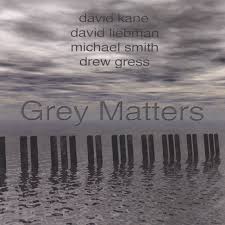
David Kane was born in Glasgow, Scotland on April 13, 1955 and moved to the United States with his family in 1965. He began playing piano and composing music at the age of eight and went on to attend North Texas State University in 1972. Moving to Washington, D.C. in 1975, he studied with Doctor Asher Zlotnik for five years. In addition, he studied with Ludmila Ulehla, Alan Mandel, and Clare Fischer.
He has performed with Woody Shaw, David Liebman, Marlene VerPlanck, Charlie Byrd, Jim Snidero, Mark Murphy, Eddie Daniels, Dizzy Gillespie, Pam Bricker, Maxine Sullivan, Tom Keenlyside, and Michelle Hendricks. In addition, he has led his jazz quartet featuring drummer Michael S. Smith, saxophonist Glenn Cashman, and bassist Drew Gress.
Kane has accompanied many classical artists including the Twentieth Century Consort, the National Symphony Orchestra, Baltimore Symphony Orchestra, Charlotte Church, Joshua Bell, Renée Fleming, Denyce Graves, and James Galway.
Having composed a variety of chamber works, David is also a prolific composer for film and television for over 30 years with over 250 credits to his name. Most notably, he composed music for the National Geographic Channel, the Smithsonian Channel and for Public Radio International.
From 2006 to 2015, he put on his music critic cap and wrote for Cadence Magazine. In 2021 Jamey Aebersold Jazz published his treatise on improvisation, Playing Outside the Chord. Pianist, composer, arranger, author and music critic David Kane continues to expand his endeavors in music.
More Posts: arranger,bandleader,composer,critic,history,instrumental,jazz,music,piano