

Daily Dose Of Jazz…
Rubin “Zeke” Zarchy was born on June 12, 1915 in New York City on June 12, 1915. He first learned the violin, but after a stint as bugler with his Boy Scout troop he switched permanently to trumpet while in his early teens.
Zarchy joined the Joe Haymes Orchestra in 1935, and the following year played with Benny Goodman, and then Artie Shaw. He was there through the end of the decade with Bob Crosby and Red Norvo, Tommy Dorsey, and then with Glenn Miller in 1940.
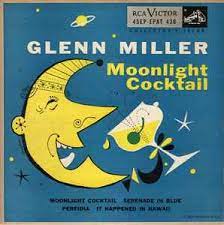
Between 1942 and 1945 he played in US Army bands of what became Miller’s Army Air Force Band, officially the 418th Army Band, playing lead trumpet as Master First Sergeant. Zeke’s trumpet can be heard on recordings as Benny Goodman’s Bugle Call Rag, Glenn Miller’s Moonlight Cocktail, and Bob Crosby’s South Rampart Street Parade.
After the war Frank Sinatra invited Zarchy to move to Los Angeles, California where he became a first-call studio musician. He played on numerous recordings, including those led by Boyd Raeburn, Jerry Gray, Sarah Vaughan, and Frank Capp. He appeared on film in The Glenn Miller Story and through both the 1940s and 1950s swing era, he included occasional doubling on instruments to some degree, the saxophone and trombone.
During the 1960s and 1970s, he played in the house bands of several CBS TV variety shows, including The Smothers Brothers Comedy Hour, The Danny Kaye Show and The Jonathan Winters Show, and was a member of the NBC Staff Orchestras in New York and Los Angeles.
In his later years, Zarchy toured several times in Europe, South America, and Australia, as well as thirty-two concert trips to Japan. He tutored several young trumpet players who became successful performers and studio musicians.
Trumpeter Zeke Zarchy, who was a lead player of the big band and swing eras, transitioned in Irvine, California, on April 11, 2009.

More Posts: history,instrumental,jazz,music,trumpet
Daily Dose Of Jazz…
Don Murray was born on June 7, 1904 in Joliet, Illinois and attended high school in Chicago, Illinois. In his teens he made a name for himself as one of the best young jazz clarinetists and saxophonists in the city. In 1923 he recorded with the New Orleans Rhythm Kings and though he was not a regular member of the band, he was a friend who sometimes sat in with them.
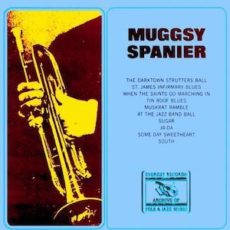
Murray made early recordings with Muggsy Spanier before joining the Detroit, Michigan based band of Jean Goldkette, with whom he remained until 1927. It was here that he mentored the young Jimmy Dorsey.
After a brief stint with Adrian Rollini’s band, during which he contributed to several highly regarded recordings by Bix Beiderbecke, he was hired by Ted Lewis. He can be heard in the 1929 Ted Lewis film Is Everybody Happy?
>Suffering injuries sustained in a freak automobile accident where Don was standing on the running board of a moving roadster and fell, striking the back of his head on the pavement. Immediately hospitalized with serious head injury, clarinetist and saxophonist Don Murray transitioned at the age of 24 on June 2, 1929 in Los Angeles, California.
More Posts: clarinet,history,instrumental,jazz,music,saxophone
Daily Dose Of Jazz…
David Matthews was born on June 6, 1911 in Chagrin Falls, Ohio but was raised in McAlester, Oklahoma. He attended the University of Oklahoma and Chicago College of Music.
He started out as an alto saxophonist with Ben Pollack in 1935, moved to Jimmy Dorsey then Benny Goodman through the rest of the decade. In the Forties Dave went on to play with Harry James, Hal McIntyre, then switched to tenor saxophone with Woody Herman, Stan Kenton and Charlie Barnet.
Matthews arranged for many of these groups, and continued working as an arranger in New York City and California well into the 1960s, with Duke Ellington among others. Occasionally he played with his own bands, including at Lake Tahoe in the 1970s.
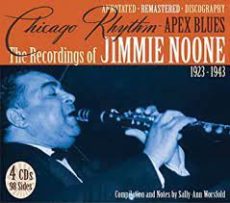
He made recordings with the big bands of Bud Freeman, Lionel Hampton, Jimmy Noone, Jack Teagarden, and Hot Lips Page. Saxophonist Dave Matthews, who was principally playing in the swing era, transitioned in 1997.
More Posts: bandleader,history,instrumental,jazz,music,saxophone
Daily Dose Of Jazz…
Herbie Lovelle was born June 1, 1924 in Brooklyn, New York. His uncle was drummer Arthur Herbert. He began his career in the late 1940s with the trumpeter, singer and bandleader Hot Lips Page. By the 1950s he was playing with the saxophonist Hal Singer, Johnny Moore’s Three Blazers and the pianist Earl Hines.
Through working for both Lucky Thompson and Jimmy Rushing of Count Basie’s Orchestra, he became house drummer at the Savoy Ballroom in New York City for much of the 1950s. He toured with the tenor saxophonist Arnett Cobb and the pianist Teddy Wilson in 1954.
He contributed to the pianist Paul Curry’s album Paul Curry Presents the Friends of Fats in 1959. Then in the early years of television, Herbie performed with the King Guion Orchestra on the Jerry Lester Show and the Ed Sullivan Show. In 1966, he was the lead drummer for the Sammy Davis, Jr. TV show.
During the 1950s Lovelle began playing more R&B and worked as a studio musician recording behind Sam Taylor, Bob Dylan, Pearls Before Swine, Eric Andersen, David Blue, John Denver, Tom Rush, B. B. King, John Martyn, the Strangeloves, the McCoys, and the Monkees. He continued working as a studio musician well into the 1980s.
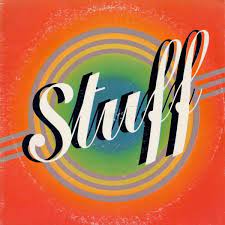
In 1976, he produced the first album by Stuff, which went platinum in Japan. He also played drums in the 1976 revival of Guys and Dolls. From the 1980s on he acted in film and television, on such shows as Law & Order and Third Watch. His film credits ~ A Man Called Adam, Bella, Mitchellville, The Rhythm of the Saints, Don’t Explain, The Curse of the Jade Scorpion, and Down to Earth among others.
His list of recordings as a studio musician extended across genres to some six dozen albums with jazz notables Candido Camero, Buck Clayton , Art Farmer, Herbie Mann, Sonny Stitt, Budd Johnson, Buddy Tate, Chico O’Farrill, Evie Sands, Johnny Hodges, Nat Adderley, Tony Bennett, Illinois Jacquet and numerous others. Drummer, producer and actor Herbie Lovelle transitioned on April 8, 2009 in New York City.
Daily Dose Of Jazz…
Skip Martin was born Lloyd Vernon Martin on May 14, 1916 in Robinson, Illinois. He was an active arranger during the swing jazz band era of the 1930s and 1940s. working with Count Basie, Charlie Barnet, Benny Goodman and Glenn Miller. He doubled as a reedist with the latter three, and recorded with trumpeter Cootie Williams in the early 1940s as well.
Later in the 1940s Skip worked with Les Brown before moving to Los Angeles, California in the 1950s, where he did extensive work as a staff and freelance orchestrator, studio conductor and popular song arranger Tony Martin, The Pied Pipers, the Andrews and De Castro sister groups, and Barbara Ruick.
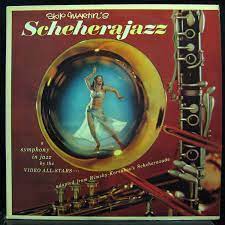
Martin recorded three albums as a leader and produced material for West Coast jazz and swing concept albums such as Scheherajazz in 1959 for Somerset Records. In 1963 he joined Nelson Riddle on a dream team of arrangers working on the Sinatra-Burke compilation albums for the ambitious Reprise Musical Repertory Theatre project, featuring the singing members of the Rat Pack, plus Bing Crosby, Rosemary Clooney and Jo Stafford.
In Hollywood, Skip was one of the team of orchestrators contributing to Singin’ in the Rain, Guys and Dolls, and shared arrangement credits with Conrad Salinger on Summer Stock, Kiss Me Kate and Funny Face, where a few songs of the Great American Songbook came from. He retained sole credit as orchestrator for Judy Garland’s comeback vehicle A Star Is Born, which gave us The Man That Got Away and It’s A New World.
Saxophonist, clarinetist, and music arranger Skip Martin transitioned on February 12, 1976, in Los Angeles, California.

More Posts: bandleader,clarinet,history,instrumental,jazz,music,saxophone