

Daily Dose Of Jazz…
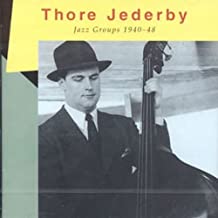
Thore Jederby was born on October 15, 1913 in Stockholm, Sweden, receiving formal training in music at the Royal Swedish Academy of Music. He began playing jazz in the mid-1930s, playing with Arne Hülphers’s band from 1934 to 1938, and then with Thore Ehrling’s ensemble from 1938 through the end of World War II.
He led his own group, the Swing Swingers, for studio recordings in the mid-1930s, and led smaller ensembles for recording sessions well into the 1940s. Later in his life, Thore went on to become active in the capturing of the history of Swedish jazz. He was involved in reissues of early Swedish recordings, curated radio shows devoted to Swedish jazz, and participated in a national commission on the history of jazz in Sweden.
Double bassist Thore Jederby, who was also a record producer and radio broadcaster, passed away on January 10, 1984 in Stockholm.

More Posts: bandleader,bass,history,instrumental,jazz,music
Daily Dose Of Jazz…
Jimmy Archey was born on October 12, 1902 in Norfolk, Virginia. He began playing when he was twelve and was getting professional gigs a year later. He studied at Hampton Institute from 1915 to 1919, played in Atlantic City, New Jersey for a while before moving to New York City in 1923.
During the Roaring Twenties, he played with Edgar Hayes, Most noteworthy for his work was in several prominent jazz orchestras and big bands of his time, including leading one of his own. He performed and recorded with the James P. Johnson Orchestra, King Oliver, Fats Waller, and the Luis Russell Orchestra, among others.
The late 1930s saw Archey participating in big bands that simultaneously featured musicians such as Benny Carter, Coleman Hawkins, Cab Calloway, Duke Ellington, and Claude Hopkins. In the 1940s he toured France with Mezz Mezzrow and in the 1950s, he spent much of his time working with New Orleans revivalist bands with artists such as Bob Wilber and Earl Hines.
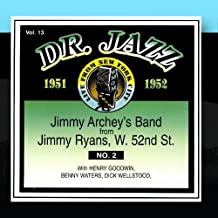
Becoming a bandleader, during the next few years, he headed a sextet, which in 1952 had trumpeter Henry Goodwin, Benny Waters on clarinet and pianist Dick Wellstood. A major yet underrated musician, his only sessions recorded as a leader were for Nec Plus Ultra, the French Barclay and the 77 label. Trombonist Jimmy Archey passed away on November 16, 1967 in Amityville, New York.
More Posts: bandleader,history,instrumental,jazz,music,trombone
Daily Dose Of Jazz…
Fred Norman was born on October 5, 1910 in Leesburg, Florida and started out playing trombone when he was 14. After working with local bands in Florida, until moving to Washington, D.C. in 1930. There he worked with Duke Eglin’s Bell Hops, Booker Coleman, and Elmer Calloway (Cab’s younger brother). When he joined Claude Hopkins’ Orchestra in 1932, he doubled as a singer and contributed many arrangements.
Norman was with the Hopkins Big Band during its key years (1932-37), and when he departed, gave up the trombone and stuck exclusively to writing. Norman wrote arrangements for many big bands including those of Benny Goodman (1938), Bunny Berigan, Gene Krupa, Lionel Hampton, Jack Teagarden, Glenn Miller, Harry James, Artie Shaw, and Tommy Dorsey.
Landing the position of staff arranger for Krupa from 1940 to 1943, he spent periods writing exclusively for Dorsey and Charlie Spivak. In the 1950s, Fred started working closely with MGM and Carlton record labels, among others, and often as a musical director for singers such as Dinah Washington, Sarah Vaughan, and Brook Benton.
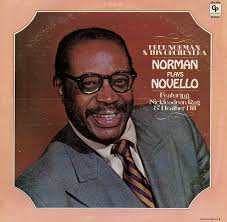
Although his orchestra backed numerous singers, he led his own orchestra record date, producing Norman Plays Novello. Trombonist, vocalist, and arranger Fred Norman, who spent most of the swing era as a busy arranger, passed away on February 19, 1993 in New York City, New York.
More Posts: arranger,bandleader,history,instrumental,jazz,music,trombone,vocal
Daily Dose Of Jazz…
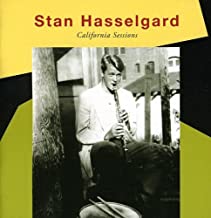
Sten Åke Henry “Stan” Hasselgård was born on October 4, 1922 in Sundsvall, Sweden. His father, John Levin Johansson changed his name to John Hasselgård. Growing up in Bollnäs, Sweden, he began playing clarinet at age 16, attended the University of Uppsala, and played in the Royal Swingers there.
In 1945 he played in a quintet led by Arthur Österwall, and founded a new Royal Swingers group that same year. In 1946-47 he played with Simon Brehm’s sextet alongside pianist Gösta Eriksson, trumpeter Bror Hansson, guitarist Kurt Wärngren, and drummer Bertil Frylmark.
Having achieved international renown, he moved to New York City in 1947, and played on 52nd Street with Jack Teagarden and Max Roach. Under the stage name Stan Hasselgard he made his acclaimed recording of Swedish Pastry. and in 1948 he joined Benny Goodman’s septet, alongside Wardell Gray, Mary Lou Williams and others.
His last recording session took place on November 18th, because five days later he was killed in a car crash. Clarinetist Stan Hasselgard passed away on November 23, 1948 in Decatur, Illinois. He was 26.
More Posts: bandleader,clarinet,history,instrumental,jazz,music
Daily Dose Of Jazz…
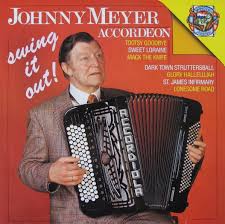
Johnny Meyer or Johnny Meijer was born Jan Cornelis Meijer on October 1, 1912 in Amsterdam, Netherlands. He began playing accordion as a child and before World War II was playing in Dutch big bands. The post-war years were fertile for him and the liberating sound of his swing accordion, opened opportunities for him to record many swing standards from 1952 to 1957.
He toured Europe but mainly performed in the Netherlands and for a time was known as a virtuoso jazz accordionist. Besides the popular songs, Meyer also played fast swing numbers, Romanian music and classical pieces. In 1974 he recorded the Dutch Swing College Band Johnny Goes Dixie LP, which went gold.
Typically seen during performances with a cigar in his mouth, his accordion showed several burn marks as a result of this. In the last years of his life, Johnny Meyer was rarely invited to play large performances, mainly in connection with his short temper and his drinking, and thus the King of the Accordion saw out his final days mostly in silence, reduced to occasionally playing weddings and parties.
Accordionist Johnny Meyer, who played jazz, swing, classical, folk and was the subject of a film, passed away on January 8, 1992 in Amsterdam.
More Posts: accordion,history,instrumental,jazz,music