


Daily Dose Of Jazz…
Harry Dial was born on February 17, 1907 in Birmingham, Alabama who became one of the classic drummers of the early jazz world. His specialty was keeping time behind artists known for their fun and pep. In fact, a glance at Dial’s discography is something like a partial scan of the most entertaining albums of all time, because such a list would surely include sides by two guys named Louis, Armstrong and Jordan, as well as Fats Waller and Ella Fitzgerald.
Harry was a solid, energetic drummer who pushed the beat forward without cluttering the airspace. His use of the sock cymbal and his fat, marching band snare drum sound are often imitated. He was also one of the rare breeds of singing drummers, the vocal side of his talents usually only exposed when he was in charge of the band. He was allowed to make comments on records with Fats Waller, the best example of which is the introduction to the upbeat Don’t Let It Bother You.
Dial’s career as a bandleader included a series of sides for Vocalion beginning in 1930. The group, whose recordings included the deadly “Poison,” was known as Harry Dial’s Blusicians, and included players such as banjoist Eursten Woodfork, trumpeter Shirley Clay, and the fine alto saxophonist Lester Boone. Some of this material has been reissued on the compilation Chicago 1929-1930: That’s My Stuff.
He was already recording with Armstrong around this time and began cutting tracks with Waller as a member of Fats Waller’s Rhythm before the middle of that decade. It might have taken him an additional ten years to master the art of playing the maracas since he seemed to find a way to include the delicate shakers on just about every funny style of music he played with Jordan beginning in the mid-’40s when he joined the Tympany Five.
In the late ’40s, he took another crack at recording under his own name, producing “Prince’s Boogie” for Decca with one of the earliest versions of the catchy “Diddy Wah Diddy” on the flipside. Dial liked to write as well, beginning with a song entitled “Don’t Play Me Cheap,” recorded by the famous Armstrong. His songs were also recorded by the merely infamous, a category that would not exist if it didn’t include a singer named Bea Booze, who cut Dial’s “Catchin’ as Catch Can” for Decca in 1942.
Many years later, the drummer published his All This Jazz About Jazz: The Autobiography of Harry Dial. The dapper, suave musician would have felt it important that he is most certainly not the Harry Dial who made it into the Guinness Book of World Records by claiming to have gone 78 years without bathing. Drummer Harry Dial passed away on January 25, 1987 in New York City.
More Posts: author,bandleader,drums,history,instrumental,jazz,music

Daily Dose Of Jazz…
Erskine Butterfield, born February 9, 1913 in Syracuse, New York and began playing piano at an early age when his family moved to Newark, New Jersey, where he later studied piano. In the 1930s, he regularly appeared on radio, including WOR in New York City, and played with Noble Sissle’s orchestra. He made his first sound recording and reproduction in 1937 on the Variety record label.
In 1938, he signed with Decca Records for which he recorded over forty titles between 1940 and 1942, many of which were released. Butterfield was called the Singing Vagabond of the Keys by the Chicago Defender in 1939. He was innovative in utilizing black and white musicians together in his combo, which included session musicians such as clarinetist Jimmy Lytell, guitarist Carmen Mastren, and Haig Stevens on bass.
1939 saw Butterfield signing with Joe Davis of Beacon Records, with whom he would maintain a long term relationship. However, in 1943 he was drafted but continued to play in a group, recorded eight titles for Joe Davis under the name Erskine Butterfield and his Blue Boys in ‘44 and cutting V-Discs in 1945.
After World War II, Erskine formed a trio and toured extensively, but his music style was less successful commercially. He recorded for a number of small labels in the late 1940s, after which his recording activity dropped off. In 1956, however, he again recorded a number of titles for Joe Davis with a reformed group, Butterfield and his Blue Boys, including musicians such as Sam “The Man” Taylor on saxophone and Panama Francis on drums. He made appearances on The Nat King Cole Show, The Tony Martin Program and The Jo Stafford Show.
His light swing and traditional piano phrases resulted in some of his songs, such as Lovin’ Man and Because Of You, being used in film soundtracks. Pianist, singer, bandleader and composer Eskine Butterfield, credited with helping to invent the style of cocktail piano, passed away on July 11, 1961 in New York City.
More Posts: bandleader,history,instrumental,jazz,music,piano
Daily Dose Of Jazz…
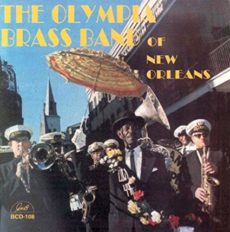
Duke Dejan was born Harold Andrew Dejan into a Creole family in New Orleans, Louisiana on February 4, 1909. He took clarinet lessons as a child before switching to the saxophone, and became a professional musician in his teens, joining the Olympia Serenaders and then the Holy Ghost Brass Band. He played regularly in Storyville, at Mahogany Hall, and on Mississippi riverboats.
During World War Two he played in Navy bands. Afterwards, Duke worked in the mail office of the Lykes Brothers Steamship Company for 23 years while maintaining a parallel musical career, leading his own band, Dejan’s Olympia Brass Band, from 1951. The band often appeared at Preservation Hall, recorded nine albums, and also toured internationally, making 30 concert tours of Europe and one of Africa. The band was featured in the James Bond movie Live and Let Die and in many television commercials.
Suffering a stroke in 1991 left him unable to play the saxophone but he continued as a bandleader and singer until shortly before his death on July 5, 2002 at the age of 93. Alto saxophonist and bandleader Harold Dejan best remembered as the leader of the Olympia Brass Band, including during the 1960s and 1970s when it was considered the top band in the city.
More Posts: bandleader,history,instrumental,jazz,music,saxophone
Daily Dose Of Jazz…
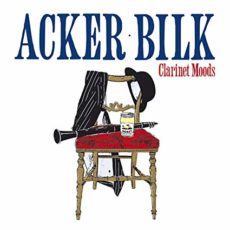
Known professionally as Acker Bilk, Bernard Stanley Bilk MBE was born in Pensford, Somerset on January 28, 1929. He earned the nickname “Acker” from the Somerset slang for friend or mate. His parents tried to teach him the piano but, as a boy, he found it restricted his love of outdoor activities, including football. He lost two front teeth in a school fight and half a finger in a sledding accident, both of which he said affected his eventual clarinet style.
Leaving school Bilk worked at a cigarette factory in Bristol, then three years with the Royal Engineers in the Suez Canal Zone. While there he learned to play the clarinet after his sapper friend, John A. Britten, gave him one bought at a bazaar. He later borrowed a better instrument from the army and kept it after demobilization and played with friends on the Bristol jazz circuit and in 1951 moved to London to play with Ken Colyer’s band. Disliking London he returned west and formed his own band in Pensford called the Chew Valley Jazzmen, which was renamed the Bristol Paramount Jazz Band when they moved to London in 1951. Booked for a six-week gig in Düsseldorf, Germany, the band developed their distinctive style complete with striped-waistcoats and bowler hats.
His return from Germany, Acker based himself in Plaistow, London, and his band played the London jazz clubs. It was here he became part of the late 1950s trad jazz boom in the United Kingdom. They had an eleven chart hit singles in the Sixties, played the Royal Variety Performance, and became an internationally known musician in 1962 when he added a string ensemble on one of his albums that won him an audience outside the UK. His composition Stranger on the Shore was used in a British television series of the same name. He went on to record it as the title track of a new album and the single stayed on the charts for 55 weeks.
He appeared in two theatrical motion pictures, recorded a series of albums in Britain that were also released successfully in the United States on the Atlantic Records subsidiary Atco, however, his success tapered off when British rock and roll made its big international impact beginning in 1964. In the cabaret circuit, he had a couple of more hits, continued to tour, appointed MBE in 2001 and was awarded the BBC Jazz Awards’ Gold Award.
Clarinetist and vocalist Acker Bilk, known for his breathy, vibrato-rich, lower-register style, passed away in Bath, Somerset, on November 2, 2014, at the age of 85.

More Posts: bandleader,clarinet,history,instrumental,jazz,musical,vocal

Daily Dose Of Jazz…
Floyd George Smith was born on January 25, 1917 in St. Louis, Missouri and learned to play the ukulele as a child before taking up guitar. As a teenager he studied music theory and spent his early career in territory bands, playing in groups such as Eddie Johnson’s Crackerjacks, the Jeter-Pillars Orchestra, the Sunset Royal Orchestra, the Brown Skin Models, and Andy Kirk’s 12 Clouds Of Joy. His composition Floyd’s Guitar Blues, recorded with Andy Kirk’s orchestra in 1939, has been claimed as the first hit record to feature a blues solo on electric guitar.
Enlisting during World War II, Floyd was stationed in Britain as a sergeant and he had the fortune to meet and play with Django Reinhardt in Paris. Following the war, he rejoined Andy Kirk’s band before forming his own small ensembles. He went on to play with Wild Bill Davis in the 1950s, recorded occasionally with drummer Chris Columbo’s bands during the late 1950s and early 1960s. He would later settle in Indianapolis, Indiana and formed his own jazz trio.
The 1970s, had Smith moving into writing songs and record production, working with Dakar/Brunswick Records in Chicago, for which he recorded a few singles. He produced two albums with R&B star, Loleatta Holloway for Aware Records of Atlanta, as well as two unreleased with John Edwards, who later became the lead singer of the Detroit Spinners. He produced two Top 10 R&B hits on Aware with Edwards and Holloway.
In the late 1970s, he produced tracks on several albums with Loleatta Holloway for Gold Mine/Salsoul Records, managed and later married her. Guitarist Floyd Smith, sometimes credited as Floyd Guitar Smith passed away in Indianapolis, Indiana on March 29, 1982 at the age of 65.
More Posts: composer,guitar,history,instrumental,jazz,music,producer