

Requisites
Bird Songs ~ Sphere | By Eddie Carter
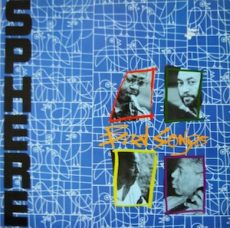
Sphere initially came together to celebrate the music of Thelonious Monk; however, the quartet soon expanded its repertoire to include original albums as well. I first heard “I Didn’t Know What Time It Was” on WNOP, Cincinnati’s then-jazz station, and I immediately purchased the album right after work. Listening to it again a few nights ago inspired me to share my thoughts this morning. Bird Songs (Verve Digital 837 032-1), the quartet’s sixth release, is an excellent showcase of the underrated artistry of tenor saxophonist Charlie Rouse. Also on board are Kenny Barron on piano, Buster Williams on bass, and Ben Riley on drums, as the quartet celebrates the legacy of Charlie Parker. My copy of this album is the 1988 U.S. digital stereo release.
Side One opens with the quartet’s introduction and theme to Red Cross. Kenny sparkles with inventive runs and unexpected turns in the opening statement. Charlie follows, paying homage to Bird’s rhythmic playfulness, driven by Buster and Riley’s groundwork into the group’s rousing closing chorus. I Didn’t Know What Time It Was by Richard Rodgers and Lorenz Hart is a beloved jazz standard that was a staple in Parker’s repertoire. Williams and the rhythm section set the scene elegantly. Rouse enters next with a smoky, reflective melody, before taking flight in the first solo. The trio’s brief, tasteful interlude clears the way for Barron’s swinging interpretation. After a second trio interlude nudges the tempo forward, Rouse returns for the reprise, and the song gently fades out with the trio’s subtle touch.
The ensemble moves into Dewey Square next, with the rhythm section’s introduction paving the way for Charlie todeliver the melody. Buster begins the solos with a delightfully spirited walk, then Charlie steps into the second statement with a passionately frisky tone that’s crisp, well-structured and executed vivaciously. Kenny tackles the closing reading with youthful zest that’s right on the beat. Ben adds a concise comment during the theme’s reprise and exit. Moose The Mooche shifts the energy upward to begin Side Two with the quartet’s brisk introduction and theme. Rouse fires off the first solo with an infectiously cheerful solo. Barron leaves a memorable mark in the second reading, then Riley takes the spotlight next with youthful vigor. Barron places a few inserts during the theme’s restatement.
Barbados showcases Parker’s take on the calypso rhythm, infused with a bebop twist. The quartet’s melody is joyous, setting the stage for Charlie’s opening solo, which captures the tune’s Caribbean sunlight. Buster walks with a buoyant swagger next, then Kenny weaves a zesty spell with uplifting confidence. Ben evokes the gentle ebb and flow of island waves, carrying the quartet to the closing chorus. The ensemble’s brisk, buoyant introduction to Ah-Leu-Cha leads to an exuberant melody. Rouse draws on his robust tone and melodic inventiveness in the first solo. Barron opens the following reading with playful fragments derived from the central theme. Williams steps forward last, threading a stream of flawlessly constructed musical thoughts until the quartet reconvenes for the melody’s return and climax.
The album’s closer, Quasimodo, slows the pace one final time, for the group’s medium theme. First up is Kenny, who unfolds his solo gradually, with lines marked by crisp articulation and a deft touch. The baton then passes to Charlie, who enters with a relaxed warmth and expressiveness. He listens and responds to the rhythm section, ahead of the theme’s restatement and finale. Joanne Klein and Sphere produced the album, with Richard Seidel serving as executive producer. Rudy Van Gelder was behind the recording dials, and the album was recorded directly to two-track digital using the Sony 3402 DASH Reel-to-Reel Recorder. The album’s sound quality possesses a superb soundstage that emerges from your speakers as if the musicians are positioned directly in front of your sweet spot.
Bird Songs was the final recording Charlie Rouse made with the quartet, as he sadly passed away from lung cancer eight months later, on November 30, 1988, at the age of 64. The ensemble delivers a tight and cohesive performance throughout, and this is truly one of those thoughtfully crafted sessions that invites listeners to return again and again. For anyone who treasures bebop, I enthusiastically suggest adding Bird Songs by Sphere to your library during your next visit to the record store. The album serves as a stirring homage to Charlie Parker, with four remarkable musicians breathing new life into his legacy, creating an experience rich in pure joy, surprise, and profound artistry!
~ I Didn’t Know What Time It Was – Source: JazzStandards.com
~ Postscript Excerpt: DASH – The Digital Audio Stationary Head standard is a reel-to-reel digital audio tape format introduced by Sony in early 1982 for high-quality multitrack studio recording and mastering, as an alternative to analog recording methods. Source: Wikipedia.org
© 2025 by Edward Thomas Carter

More Posts: bass,choice,classic,collectible,collector,drums,history,instrumental,jazz,music,piano,saxophone
Requisites
Coltrane ~ John Coltrane | By Eddie Carter
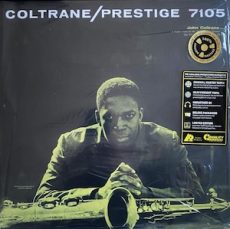
As someone who has enjoyed John Coltrane’s music for years, I’ve revisited this morning’s album from the library countless times, and each time I listen, it reveals something fresh and exciting. Coltrane (Prestige PRLP 7105) is the first chapter in a body of work that continues to challenge, inspire, and uplift listeners. John Coltrane’s path to his debut album was anything but easy. He grappled with addiction and periods of self-doubt, which eventually led to his dismissal from Miles Davis’s quintet. After returning to Philadelphia to end his addiction, John overcame his dependencies and embarked on a profound spiritual journey, allowing him to discover his singular musical voice and ultimately his first Prestige recording session.
Joining the tenor saxophonist are Johnnie Splawn on trumpet (tracks: A1, B1 to B3), Sahib Shihab on baritone sax (A1, B1, B3), Red Garland (A1 to A3), and Mal Waldron (B1 to B3) on piano, Paul Chambers on bass, and Albert “Tootie” Heath on drums. My copy of this album is the 2023 Analogue Productions mono audiophile reissue, sharing the original catalog number. “Bakai” by Cal Massey opens the first side, unveiling the ensemble’s relaxing melody. Red initiates the solos with a gentle and lyrical touch, as smooth as a calm sea. John’s following statement is grounded in a steady, unwavering rhythm of harmonic exploration. Sahib then steps in with an exquisite statement that nearly steals the show, leading back to the sextet’s theme restatement and ending.
Violets For Your Furs is a charming ballad from the 1940s by Tom Adair and Matt Dennis, which Red brings to life with a tender introduction to Coltrane’s lyrical sensitivity in the quartet’s theme, and a softer, more romantic side in the opening solo. Garland comes in next for a thoughtful, reflective reading until Coltrane gracefully reenters for the theme’s elegant climax. “Time Was” by Gabriel Luna de la Fuente, Paz Miguel Prado, and Bob Russell moves the beat upward for the quartet to give a lively melody. John leads off the solos with an abundance of passion, then Red continues soaring with joyful exuberance in the second reading. Paul has the last word and takes a short walk ahead of the theme’s return and finish.
Straight Street by John Coltrane gets the second side off to a good start. This song announces the spiritual dimension that would become central to his later albums. The sextet returns to full voice for a swinging melody with Mal taking over the piano duties. Coltrane gets right to work and wails on the opening statement. Splawn steps in next, firing on all cylinders, then Waldron takes the final spotlight preceding the group’s return for a vivacious exit. The pace slows down again for the album’s second 1940s ballad, “While My Lady Sleeps,” by Gus Kahn and Bronislaw Kaper. The ensemble presents a splendid study in soulful improvisation, with John paving the way through the melody into an affectionately intimate reading that ends as beautiful as it began.
Chronic Blues by John Coltrane opens with the sextet easing into the theme at a laid-back, comfortable tempo. Shihab launches the opening solo with rhythmic grace and effortless flow. Coltrane next delivers a smooth and inviting swing, as warm and familiar as a favorite homemade dish. Splawn’s turn brings a light and airy touch, infusing the piece with an appealing charm. Waldron closes things out with a breezy reading that leaves the sextet’s finale deeply satisfying. Bob Weinstock supervised the initial session, and Rudy Van Gelder was behind the recording dials. Kevin Gray mastered this audiophile reissue at Cohearant Audio. The album’s sound quality is spectacular, with a gorgeous soundstage that places the musicians directly in front of your sweet spot.
The record was pressed on 180-gram audiophile vinyl and offers an absolutely silent background until the music unfolds. Upon its release, “Coltrane” was met with excitement from jazz lovers and critics alike, though it didn’t propel John Coltrane to instant fame. That recognition would eventually arrive with “Giant Steps,” “My Favorite Things,” and “A Love Supreme.” Still, his debut firmly established Coltrane as a bandleader, composer, and innovator. It also marked the beginning of an extraordinary journey, where he would push the boundaries of jazz, explore spiritual themes, and redefine musical expression. If you haven’t experienced “Coltrane” yet, I highly recommend searching for it on your next record store visit. It’s an outstanding album by John Coltrane that provides a calming, immersive listening experience, gently enveloping you in its soothing melodies from the very first note!
A Love Supreme (Impulse A-77/AS-77), Giant Steps (Atlantic 1311/SD 1311), My Favorite Things (Atlantic 1361/SD
1361) – Source: Discogs.com Violets For Your Furs, While My Lady Sleeps – Source: Wikipedia.org © 2025 by Edward Thomas Carter
More Posts: choice,classic,collectible,collector,history,instrumental,jazz,music,saxophone
Resquisites
Blowing In From Chicago ~ Cliff Jordan & John Gilmore | By Eddie Carter
As a youngster discovering this music, I was always captivated by jazz’s unique and spontaneous nature, particularly the ‘blowing session’ or ‘jam session.’ These impromptu performances, where musicians control the flow of musical ideas from moment to moment, are a testament to the music’s excitement and unpredictability. Whether in a live setting at a club, concert, or jazz festival or captured in a studio session, jazz’s enthusiasm, vitality, and freedom are always present.
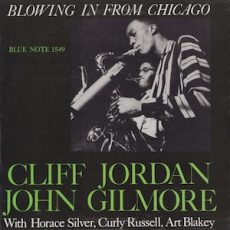
This morning’s choice from my library is an excellent LP from 1957 by two tenor saxophonists who made significant impressions in jazz, Clifford Jordan and John Gilmore. Their only album as co-leaders is titled Blowing In From Chicago (Blue Note BLP 1549), which signifies their roots in the vibrant jazz scene of Chicago. The quintet has an excellent rhythm section consisting of Horace Silver on piano, Curly Russell on bass, and Art Blakey on drums. My copy is the 1983 Pathé Marconi-EMI French Mono reissue, sharing the original catalog number. Before I proceed, let me state that this is not a DMM (Digital Metal Mastering) pressing.
The album opener, Status Quo, is a lively tune by John Neely, with both horns leading the charge through the uptempo melody. John rips into the opening solo, aggressively slicing through each verse like a sharp blade. Clifford joins him next in a short exchange, then takes off with a supercharged reading. Horace shifts into high gear on the third statement with a blazing swiftness that’s equally inspired and scintillating. Art engages in a brief conversation with both horns, then brings the solos to a close with an electric performance illustrating his incomparable artistry before the ensemble returns to the theme and quick stop. The first of two originals by Jordan follows.
Bo-Till slows the tempo to a laid-back pace with a Latin flavor. After a short introduction by the trio, the quintet states the theme collectively, stepping aside for Jordan, who makes a profound impression with a beautifully conceived statement displaying a great tone throughout. Silver gets into the groove next with an incredible, smooth reading, one of his best on the album. Gilmore delivers the closing choruses of the song proficiently with meticulous execution. Blakey constructs a concise comment during the ensemble’s end theme and close.
Blue Lights by Gigi Gryce is a catchy tune that opens with the quintet laying down a gorgeous medium beat on the theme and gives everyone a solo opportunity. John steps into the spotlight with a spirited performance. Horace follows with notes of undeniable pleasure in one of his most robust solos. Clifford weaves his way through the next musical improvisation with astounding skill. Curly puts together a condensed reading that walks for one chorus with solid bass lines. Art breezes into a straightforward interpretation that culminates into a splendid summation of the first side.
The second side gets underway with Charlie Parker’s Billie’s Bounce, which gives everyone except Russell a lengthy solo canvas on which to work. Blakey begins with a high-voltage introduction that sets the pace for the following fiery quintet theme. Clifford packs a mighty punch on the opening statement with a fire-breathing showcase, preceding John, who exhibits a robust attack on the subsequent interpretation with extremely hot choruses. Horace takes over next for a scintillating performance, taking his piano on a sizzling uptempo ride. Both horns exchange a few riffs with Art before the drummer gives an unaccompanied propulsive exhibition into the ending theme.
Clifford’s second original is a blues titled Evil Eye, which eases the throttle back from the previous burner to a medium pace with a collective melody by the quintet. Jordan opens the solos with a series of choruses that are smooth and well-structured. In the following presentation, Gilmore shows that he can also interpret blues with plenty of soul, which develops nicely. Silver delivers a lightly swinging performance that expresses pleasure as he moves masterfully through each chorus. Both horns return to share a few more thoughts. Blakey makes a short statement preceding the theme’s reprise and finish.
The album’s final track is Everywhere, a mid-tempo original by Horace Silver, which I believe made its debut on this album. It opens with a simple opening melody by the ensemble in unison, and the solo order is Gilmore, Jordan, Silver, and Blakey. John takes the stage first with a bewitchingly delightful opening statement. Clifford makes his case with a captivating contribution that moves sprightly alongside the rhythm section’s groundwork drive. Horace takes over next, communicating his points well with a pronounced beat. Art puts the joyous exclamation point on the song and album with a compelling statement that leads the group back to the ending theme and close.
Clifford Jordan recorded three albums for Blue Note; the other two LPs are Cliff Jordan and Cliff Craft. He played and recorded with many elite jazz musicians, including Charles Mingus and Max Roach. Clifford also enjoyed success recording as a leader and sideman, and in my opinion, his discography is well worth investigating. He remained in demand over the next three decades and toured worldwide. His final album was a 1992 live recording at Condon’s in New York City for Milestone, where he performed with his big band, Down Through The Years. He lost his battle against lung cancer on March 27, 1993, at age sixty-one.
Blowing In From Chicago was the first of three appearances on Blue Note by John Gilmore. The other two were as a sideman on two of Andrew Hill’s LPs, Andrew and Compulsion. He began playing the clarinet at fourteen, then pursued a musical career after a four-year stint in the United States Air Force, where he took up and played the tenor saxophone. He began a forty-year term with Sun Ra in 1953 and recorded for various labels with his group, Sun Ra Arkestra. During this time, Gilmore also toured with The Jazz Messengers and recorded with Paul Bley, Andrew Hill, Pete LaRoca, McCoy Tyner, and Dizzy Reece. After Sun Ra’s death on May 30, 1993, Gilmore led the Arkestra for two years before his death from emphysema on August 20, 1995, at age sixty-three.
As for the music on Blowing In From Chicago, it’s fantastic, as are the solos on each track, and the sound quality of this reissue is exemplary. The instruments deliver an excellent soundstage throughout the treble, midrange, and bass that places your sweet spot in the studio with the musicians. It’s a cut above the average debut album and a title I recommend as a terrific addition to any jazzophile’s library, particularly if you’re a hard-bop fan or love a good “blowing session” or “jam session.”
~ Andrew (Blue Note BLP 4203/BST 84203), Cliff Jordan (Blue Note BLP 1565), Cliff Craft (Blue Note BLP 1582/BST 81582), Compulsion (Blue Note BLP 4217/BST 84217), Down Through The Years (Milestone MCD-9197-2) – Source: Discogs.com
~ Billie’s Bounce – Source: JazzStandards.com
~ John Gilmore, Andrew Hill, Clifford Jordan – Source: Wikipedia.org
© 2024 by Edward Thomas Carter
More Posts: bandleader,choice,classic,collectible,collector,history,instrumental,jazz,music,saxophone
Requisites
Jammin’ With Gene ~ Gene Ammons All-Stars | By Eddie Carter
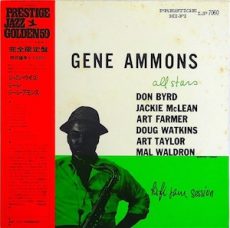
A few evenings ago, after dinner, I was enjoying a good book when I suddenly craved some jazz with a tenor sax. That decision led me to today’s discussion. Upon going to the shelf, I rediscovered one of my favorite records by the Gene Ammons All-Stars. “Jammin’ With Gene” (Prestige PRLP 7060) was the tenor saxophonist’s third release as a leader when it hit the stores in 1956. It was also the second of seven blowing session albums he recorded forthe label. The personnel for this date is a stellar supporting cast: Art Farmer and Donald Byrd on trumpet, Jackie McLean on alto sax, Mal Waldron on piano, Doug Watkins on bass, and Arthur Taylor on drums. My copy of this album is the 1977 Victor Musical Industries Japanese mono reissue (Prestige VIJ-5039).
The first side opens with the title tune, Jammin’ With Gene, by Gene Ammons. From the start, the septet establishes a cohesive atmosphere, with the front line delivering the melody in tight, harmonious unison. Gene takes the lead solo, slipping into a soulful groove that floats effortlessly over the rich foundation provided by his fellow musicians. Donald steps in next, his interpretation unfolding with increasing intensity, from a gentle warmth to a robust climax, also with the front line shadowing him. Art and Jackie then state their cases in the subsequent two readings, each presentation adding a fresh layer of expression. Mal wraps things up with a laid-back performance, which is followed by the group circling back to their unified closing chorus.
The album’s only standard, We’ll Be Together Again, by Carl Fischer and Frankie Laine, opens gently as Gene, Mal, and Doug’s introduction segues into a subtle, slow-moving melody by Ammons. Gene then steps forward, launching the opening statement with a smooth, relaxed swing. Art follows, infusing the second reading with vivacious energy, and then Jackie picks up the rhythm with lively, enthusiastic lines. Donald delivers the goods on the following interpretation, after which Mal ushers in a flowing groove leading into Gene’s closing passage back into a ballad tempo for the group’s graceful finish.
The album’s finale, Not Really The Blues by Johnny Mandel, is a lively, up-tempo tune that takes off with a brisk melody from the whole ensemble. Donald leads off, delivering a spirited statement that sets the pace, then Jackie adds some bite with sharp, energetic phrasing. Art keeps the momentum high with his vigorous contribution, while Gene steps in with high-octane in the next solo. Mal keeps things simmering with his smooth piano work, paving the way for a rapid-fire exchange among Farmer, Byrd, McLean, and Ammons. The excitement builds as Donald, Jackie, Art, and Gene trade choruses in a heated musical conversation, driving the group toward a swift and exhilarating exit.
Bob Weinstock supervised the session, and Rudy Van Gelder was responsible for the recording duties. This reissue’s sound quality is a delight to hear, with a vivid soundstage that transports the musicians to the sweet spot in your listening room. If you’re a Gene Ammons fan and appreciate a good bop album, I happily recommend “Jammin’ With Gene” by the Gene Ammons All-Stars for a spot in your library. It’s an underrated, but excellent album that every tenor sax enthusiast should seek out on their next record-shopping trip!
~ We’ll Be Together Again – Source: JazzStandards.com
© 2025 by Edward Thomas Carter
More Posts: choice,classic,collectible,collector,history,instrumental,jazz,music,saxophone
Requisites
Indestructible! ~ Art Blakey and The Jazz Messengers | By Eddie Carter
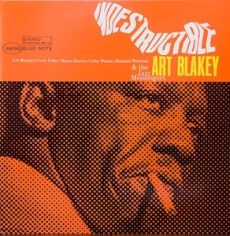
For over three decades, Art Blakey made an indelible mark on jazz, both as a dynamic drummer and a visionary band leader. His creative drive propelled The Jazz Messengers to the forefront of the jazz world, earning them international acclaim as one of the genre’s premier ensembles. By 1964, the group was facing a turning point: Wayne Shorter was preparing to leave for the Miles Davis Quintet, and both Cedar Walton and Reggie Workman were set to embark on solo careers. This week’s featured album from the library is Indestructible (Blue Note BLP 4193/BST84193), Blakey’s final session for Blue Note. Intriguingly, the album wasn’t released until 1966, making its debut with a powerful, unforgettable presence.
Art is accompanied by Lee Morgan on trumpet, Curtis Fuller on trombone, Wayne Shorter on tenor sax, Cedar Walton on piano, and Reggie Workman on bass. My copy of the album is the 1985 Toshiba-EMI Limited Japanese stereo reissue utilizing the original catalog number. The Egyptian, by Curtis Fuller, which opens the first side, sets the tone with a relaxed, mid-tempo beat. The trio’s lengthy conversation leads to the front line’s irresistibly catchy melody. Curtis goes to work first, establishing a laid-back mood, then Wayne provides the song’s most dventurous solo, which nearly steals the spotlight. Lee injects a burst of energy into a swinging improvisation next. Finally, Cedar wraps up things with a superb statement, leading to the ensemble’s ending theme and fadeout.
Curtis Fuller’s Sortie opens with a blues-inspired introduction, drawing the ensemble into a smooth, medium-tempo melody. Lee begins the opening solo impressively, then Wayne executes a soulful, down-home statement. Curtis steps in with a lively, toe-tapping reading next, after which Cedar presents his ideas on the final performance perfectly until the group comes to a graceful closing chorus and gentle fade. On the second side, Calling Miss Khadija by Lee Morgan starts with Reggie, Cedar, and Art, setting the lively mood for the track’s vivacious theme. Lee ignites the opening statement with his energetic playing. Wayne continues the momentum with swinging, expressive lines. Curtis then delivers a solo rooted in blues, leading into Cedar’s scintillating reading, followed by Art’s brief but memorable presentation, before the ensemble’s closing chorus softly dissolves.
When Love Is New by Cedar Walton is a gorgeous ballad that begins with the ensemble’s unified introduction, then gives way for Wayne to shape the beautiful melody and a sprightly, breezy lead solo. Lee follows with an easy swing in his tone and a steady sureness until the saxophonist returns to pilot the group back to the closing chorus and a soft summation. Mr. Jin by Wayne Shorter showcases his knack for weaving an intricate, adventurous melody with an
Oriental flavor. Art sets the tone for the ensemble’s precise interplay, then Wayne steps up first with ample room to stretch out on the opening statement. Lee responds to the saxophonist with bright, lively phrases, leading back to the sextet’s theme reprise and the trio’s slow fadeout.
The chemistry among the musicians on Indestructible is truly remarkable. Art Blakey created a space where creativity flourishes and daring improvisation thrives. This approach yields performances with vibrant energy, yet remains disciplined and refined. Every member of the ensemble is given room to shine individually without ever losing their unmistakable coherence. Lee Morgan’s trumpet stands out with vibrant flair, while Curtis Fuller’s trombone adds a rich, soulful layer. Wayne Shorter’s tenor saxophone brings an alluring, mysterious edge. At the heart of the ensemble, Cedar Walton and Reggie Workman provide a steadfast and fluid foundation of rhythms and harmonies, completing what stands as one of the finest incarnations of the Jazz Messengers under Art’s leadership.
Alfred Lion produced the album, and Rudy Van Gelder was behind the recording console. The sound quality of this Toshiba-EMI reissue is absolutely stunning, with a superb soundstage that transports the listener to the studio as the musicians play. If you’re already a fan of Art Blakey and The Jazz Messengers, or simply in the mood for some hard bop to unwind after a long day, I highly recommend checking out Indestructible on your next record-shopping trip. It’s an outstanding album that promises countless hours of rewarding listening. Additionally, as Art Blakey’s swan song for the label and the three departing members, it is sure to be cherished by both newcomers and seasoned fans alike!
© 2025 by Edward Thomas Carter
More Posts: choice,classic,collectible,collector,drums,history,instrumental,jazz,music