

Daily Dose Of Jazz…
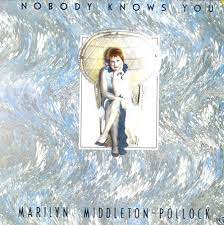
Marilyn Middleton Pollock, born October 25, 1947 in Chicago, Illinois began singing folk music professionally at the age of fifteen. Expanded her repertoire to include rock & roll and blues, she then turned to jazz.
By the end of the 1980s Marilyn had moved to England where she worked with Max Collie, touring with him internationally. Their album Nobody Knows You received the Music Retailers Association Award for Excellence in 1988. She appeared in the theater show A New Orleans Mardi Gras and then in her critically acclaimed solo shows Those Women of the Vaudeville Blues and Jazz Me Blues.
From 1994 she produced the series Vaudeville, Red Hot and Blue for BBC Radio 2 with her jazz band The Chicago Hoods. She toured Great Britain several times with her band.
Vocalist Marilyn Middleton Pollock continues to perform, tour and record.

More Posts: bandleader,instrumental,jazz,music,vocal
Daily Dose Of Jazz…
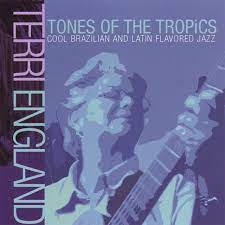
Terri England was born on October 24, 1956 in South Texas, England into a family of musicians, artists, and entrepreneurs. At six years of age she took an interest in playing guitar that would never wane, while also receiving extensive classical training on piano and cello. During formal education her immersion in both art and music proved to be valuable experiences strongly influencing her later development as an independent artist.
Her orchestral activities would teach her to create dynamic, musical arrangements that take the listener on a stimulating sonic journey. Her debut album, Tone Of The Tropics, is a mix of high energy tunes and melodies backed by samba, bossa nova and batucada rhythms from Brazil and booty-shakin’ Latin beats. Using a Brazilian guitar fingerstyle technique, England conveys a refreshing economy of expression that allows her music to breathe while flowing above rich harmonies and tight, syncopated rhythms.
Recording and mixing in her own studio, Terri blends bass, drums and percussion, as well as unexpected tempo changes on a few tunes. She releases her recordings through her publishing company, Inglaterra Música.
Guitarist, composer and arranger Terri England continues to produce original music by combining cool Brazilian and Latin rhythms, jazz highlights and classical orchestral arrangements.
More Posts: arranger,bandleader,composer,guitar,history,instrumental,jazz,music

Daily Dose Of Jazz…
Jan Gunnar Hoff was born in Bodø, Norway on October 22, 1958. A graduate of the Teachers’ College in his hometown and Bergen, Norway, he pursued further education in the Jazz program at Trondheim Musikkonservatorium under Terje Bjørklund for three years starting in 1986. He trained in composition at Norges Musikkhøgskole in 2001.
He had his jazz debut with his own trio on Ad Lib Jazzklubb in 1976. Hoff’s background includes classical piano, progressive rock, pop and jazz. Over the course of his career Hoff has released 21 recordings as solo artist and co-leader, fifty-seven as a sideman, and has composed 250 works for different settings.
He has received several awards for his music including a US Grammy nomination for the album Quiet Winter Night. Hoff’s quartet album Fly North with Marilyn Mazur, Anders Jormin and Arve Henriksen was nominated for the Norwegian Grammy, Spellemannpris 2014. He received the highest distinction in Norwegian Jazz, the Buddy-award and became a Steinway Artist.
He is a professor at the University of Tromsø and the University of Agder. He co-founded The Groove Valley JazzCamp in Beiarn, Norway and was artistic director for TGV Jazz camp from 2005 to 2009. Hoff also initiated Bodø Jazz Open which was launched in 2011, where he was artistic leader and festival head until 2020.
Pianist, composer, arranger and professor Jan Hoff, who has worked with Pat Metheny, Mike Stern, Alex Acuña, Karin Krog, Maria João, Marilyn Mazur, Gary Novak and Arild Andersen among numerous others.
More Posts: arranger,bandleader,composer,educator,history,instrumental,jazz,music,piano
Daily Dose Of Jazz…
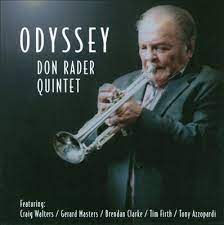
Donald Arthur Rader was born October 21, 1935 in Rochester, New York and began playing trumpet at age five, being taught by his father. He studied at Sam Houston State Teachers College before serving in the Navy in the 1950s as a member of the band.
At the end of the decade he played and arranged for Woody Herman into the Sixties, followed by Maynard Ferguson, Count Basie, Louie Bellson, Harry James, Terry Gibbs, Frank Foster, Henry Mancini, Les Brown from 1967 to 1972. Then he left Brown for the Stan Kenton Orchestra.
He toured with Della Reese, Sarah Vaughn, Andy Williams, Percy Faith, Diana Ross, Elvis Presley, Jerry Lewis and Bob Hope, both intermittently for 28 years with five tours of wartime Vietnam with the latter.
Assembling a quintet in Los Angeles, California in 1972 Don continued working with West Coast jazz musicians, including Lanny Morgan, Lew Tabackin, and Toshiko Akiyoshi. He recorded as a leader and worked in music education for many years, including in Australia in the 1980s.
He has recorded eight albums as a leader, and as a sideman three with Count Basie, and seven with Maynard Ferguson. Trumpeter Don Rader continues to perform at the age of 87.
More Posts: bandleader,history,instrumental,jazz,music,trumpet
Daily Dose Of Jazz…
Rozanne Levine was born on October 19, 1945 in New York City, New York. She was introduced to the jazz/new music community as a performer with William Parker and Patricia Nicholson Parker’s Centering Music/Dance Ensemble during the late Seventies.
Throughout the 1980’s and 1990’s Levine performed in saxophonist/clarinetist Mark Whitecage’s Glass House Ensemble, playing both clarinet and Whitecage’s sound sculptures. In 1993 she rejoined the Parkers as a founding member of their New York-based Improvisors Collective, performing in the Collective Orchestra and with Collective members in smaller ensembles. During her three year tenure with the Collective she formed two ensembles, Crystal Clarinets and the Clarinet Choir, which performed in New York City and Connecticut.
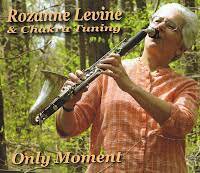
In 1999 Rozanne and Whitecage formed a touring duo, RoMarkable, to showcase their acoustic and electronic forays. They performed at numerous clubs and festivals around the country. She led Chakra Tuning, with Mark Whitecage, clarinetist Perry Robinson and violinist/vocalist Rosi Hertlein. Her compositions form the thematic material from which the musicians improvise, each artist adding their distinct voice to the mix. The group released their highly-praised debut album, Only Moment, in 2009, on her and Whitecage’s label, Acoustics.
Levine performed with Mark Whitecage and The Bi-Coastal Orchestra, Anthony Braxton, The New Reed Quartet, Jason Kao Hwang, Jackson Krall, Theo Jorgensmann, Blaise Siwula, and Who Knows?, among others.
Alto clarinetist, bamboo flutist and composer Rozanne Levine, who became a noted photographer that were incorporated into her performances, transitioned in Morristown, New Jersey on June 18, 2013.
More Posts: bamboo flute,bandleader,clarinet,composer,history,instrumental,jazz,music