


CHRISTIAN MCBRIDE & URSA MAJOR
World renowned bassist, composer, arranger, educator, and eight-time Grammy Award-winner, Christian McBride has been one of the most important and prolific figures in the jazz world for over 20 years. From jazz to R&B, and pop/rock and hip-hop/neo-soul to classical, Christian is one of the most acclaimed bassists of his generation, renowned for his bold, swinging style and robust sound. He has appeared on more than 300 recordings as a sideman, and is an eight-time Grammy Award winner, earning a 2016 GRAMMY Award for “Best Improvised Jazz Solo”, the only bassist to ever win at this category.
Christian McBride has worked with the best of the very best – James Brown, Herbie Hancock, Pat Metheny, Chaka Khan, Freddie Hubbard, Sonny Rollins, J.J. Johnson, Ray Brown, Milt Jackson, McCoy Tyner, Roy Haynes, Chick Corea, Isaac Hayes, Natalie Cole, Lalah Hathaway, Sting, Carly Simon, Don Henley, Bruce Hornsby, The Roots, D’Angelo & Queen Latifah. Christian has been artist-in-residence and artistic director with organizations such as Jazz Aspen, Los Angeles Philharmonic, The Jazz Museum in Harlem, Jazz House Kids, the New Jersey Performing Arts Center – Newark, the Montclair Jazz Festival, and the Newport Jazz Festival.
The Band:
Christian McBride ~ bass
Nicole Glover ~ saxophone
Ely Perlman ~ guitar
Michael King ~ piano
Savannah Harris ~ drums
Tickets: $45.00 ~ $55.00 +fees
Streaming: $20.00 +fees | %:00pm Show
More Posts: adventure,bandleader,bass,club,genius,jazz,music,preserving,travel
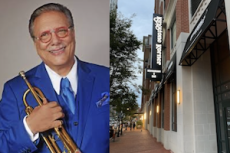
ARTURO SANDOVAL
The 10-time Grammy Award winner and Emmy Award recipient, Arturo Sandoval is also a 6-time Billboard Award winner and the recipient of the 2013 Presidential Medal of Freedom.
protégé of the legendary jazz master Dizzy Gillespie, he was born in Artemisa, a small town in the outskirts of Havana, Cuba, on November 6, 1949, just two years after Gillespie became the first musician to bring Latin influences into American Jazz. Sandoval began studying classical trumpet at the age of twelve, but it didn’t take him long to catch the excitement of the jazz world. He has since evolved into one of the world’s most acknowledged guardians of jazz trumpet and flugelhorn, as well as a renowned classical artist, pianist and composer.
He is one of the most dynamic and vivacious live performers of our time, and has been seen by millions at the Oscars, at the Grammy Awards, and the Billboard Awards. Musicians and fans alike rightly marvel at his technical ability on the horn – the effortless high notes and the dizzying speed and execution of his improvised runs.
The Band:
Arturo Sandoval, trumpet
Keith Fiala, trumpet
Michael Tucker, saxophone
Larry Bustamante, baritone saxophone
Will Brahm, guitar
Lisandro Pidre, piano
Maximilian Gerl, bass
Daniel Feldman, drums
Samuel Torres, percussion
Tickets: $65.00 ~ $75/00 +fees
Streaming: $15.00 +fees | 6:00pm Show
More Posts: adventure,bandleader,club,genius,instrumental,jazz,music,preserving,travel,trumpet
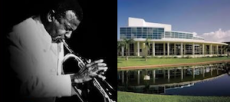
MELTON MUSTAFA JAZZ FESTIVAL
The 29th Annual Melton Mustafa Jazz Festival Weekend returns to Florida Memorial University for an unforgettable music alumni homecoming honoring Dr. Dawn Batson.
Artists:
Jesse Jones Jr. ~ Saxophone
Mark Strowbridge ~ Guitar
James Cotman ~ Drums
Leon “Foster” Thomas ~ Steel Pan
Doug Carter ~ Piano
Nicole Yarling ~ Violin, Vocal
The FMU Funk Jazz AllStars:
Wildmayer Marcelin ~ Saxophone
Mark McClary ~ Drums
Raignor Rollocks ~ Piano
Jaquan Hunter ~ Bass
Joel Chinnery
Day 2 – February 27, 2026
Cigars & Jazz | Dress to Impress!
Gardens Cigar Lounge
19801 NW 27th Avenue
Miami Gardens, FL 33056
8:00 – 10:00PM
Festival Tickets: $20.00 ~ $230.00
See full schedule for details.
More Posts: adventure,bandleader,festival,genius,instrumental,jazz,music,preserving,travel,trumpet
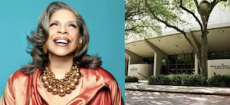
PATTI AUSTIN
A Night of Legacy, Voice, and Vision. Patti Austin Pays Tribute to Patrick Williams.
Grammy Award-winning vocalist Patti Austin joins the Henry Mancini Institute Orchestra and Big Band with Steve Guerra, conductor, for a powerful tribute to the late composer, arranger, and musical visionary Patrick Williams. This unforgettable evening brings to life Williams’ rich, genre-defying legacy—music that was, as lyricist Arthur Hamilton described, “muscular, sensuous, powerful, and captivatingly rhythmical.”
Known for his masterful writing for film, jazz, and the concert hall, Williams received 16 Grammy nominations and a Pulitzer nod for An American Concerto. His music has graced the voices and instruments of legends such as Frank Sinatra, Eddie Daniels, and Tom Scott—and, notably, Patti Austin.
Austin, a revered artist whose career spans jazz, R&B, pop, and the Great American Songbook, brings her unmatched depth, honesty, and elegance to this program. Described by The New York Times as one of the few artists who can authentically channel Ella Fitzgerald, Austin was a close collaborator of Williams, recording several of his works including the GRAMMY-nominated “52nd and Broadway” and selections from his Home Suite Home and Sinatraland albums. Her performances offer not only musical brilliance, but a window into the personal connections that animated Williams’ compositions.
Audiences will be treated to a two-set concert featuring Williams’ bold orchestral works followed by a dynamic second half of big band music and heartfelt vocal performances by Austin. Central to the program will be selections from her celebrated For Ella album, bringing Williams’ sophisticated arrangements and Austin’s commanding interpretations of the Great American Songbook to the forefront.
Tickets: $50.00 General Admission | $45.00 Seniors | $15.00 Student
Stream: https://www.youtube.com/live/fyxztdDdmrw
More Posts: adventure,bandleader,genius,instrumental,jazz,music,preserving,travel,vocal

TERENCE BLANCHARD
Malcolm X Jazz Suite Featuring Terence Blanchard, The E-Collective and Turtle Island Quartet
In celebration of the centennial of human rights and civil rights icon Malcolm X, NEA Jazz Master Terence Blanchard will perform his iconic Malcolm X Jazz Suite with his band, The E-Collective, and Grammy-winning Turtle Island Quartet. Blanchard created the project following the release of Spike Lee’s 1992 biopic Malcolm X, for which Blanchard wrote the score and performed most of the trumpet cues. A reworking of the score for quintet, the Jazz Suite has been updated and expanded and has rippled through Blanchard’s work for the past three decades.
Tickets: $52.65 – $152.10 (includes fees)
More Posts: adventure,bandleader,genius,instrumental,jazz,music,preserving,travel,trumpet