

Daily Dose Of Jazz…
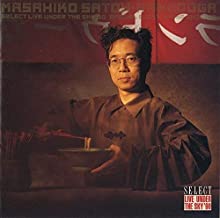
Masahiko Satoh was born on October 6, 1941 in Tokyo, Japan and the family home contained a piano. He started playing at the age of five, and twelve years later he began playing professionally accompanying singers, magicians, and strippers at a cabaret in the Ginza district.
By 1959 Satoh began playing in Georgie Kawaguchi’s band, together with alto saxophonist Sadao Watanabe and tenor saxophonist Akira Miyazawa. After graduating from Keio University, at the age of 26 he moved to the United States to study at the Berklee College of Music. During those two years of study, he read about composing and arranging, earned money working in a food shop, and played the piano in a hotel.
1968 had Masahiko writing and conducting the music for a series of pieces that were combined with dance and performed around New York City. After returning to Japan, he recorded Palladium, his first album as a leader, and appeared on a Helen Merrill album.
In the late 1960s and early 1970s, his career led him to perform in a free, percussive style. Masahiko played at the 1971 Berlin Jazz Festival as part of a trio, using at the time an unusual ring modulator to alter the sound. During that period he recorded with Attila Zoller, Karl Berger, and Albert Mangelsdorff. He wrote the psychedelic music for the 1973 anime film Belladonna of Sadness.
He went on to write arrangements for recordings led by, among others, Helen Merrill, Kimiko Itoh, and Nancy Wilson. He arranged for strings and quartet on Art Farmer’s 1983 album Maiden Voyage, formed a large group, named Rantooga, that combined various forms of folk music from around the world, and composed for film, television, and advertisements. By the early 1990s pianist, composer, and arranger Masahiko Satoh composed music for a choir of 1,000 Buddhist monks and now spends 70% of his time arranging and composing, the rest on playing and recording.

More Posts: arranger,bandleader,composer,history,instrumental,jazz,music,piano
Daily Dose Of Jazz…
Fred Norman was born on October 5, 1910 in Leesburg, Florida and started out playing trombone when he was 14. After working with local bands in Florida, until moving to Washington, D.C. in 1930. There he worked with Duke Eglin’s Bell Hops, Booker Coleman, and Elmer Calloway (Cab’s younger brother). When he joined Claude Hopkins’ Orchestra in 1932, he doubled as a singer and contributed many arrangements.
Norman was with the Hopkins Big Band during its key years (1932-37), and when he departed, gave up the trombone and stuck exclusively to writing. Norman wrote arrangements for many big bands including those of Benny Goodman (1938), Bunny Berigan, Gene Krupa, Lionel Hampton, Jack Teagarden, Glenn Miller, Harry James, Artie Shaw, and Tommy Dorsey.
Landing the position of staff arranger for Krupa from 1940 to 1943, he spent periods writing exclusively for Dorsey and Charlie Spivak. In the 1950s, Fred started working closely with MGM and Carlton record labels, among others, and often as a musical director for singers such as Dinah Washington, Sarah Vaughan, and Brook Benton.
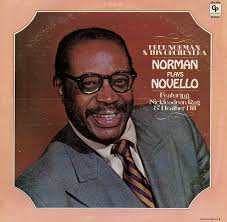
Although his orchestra backed numerous singers, he led his own orchestra record date, producing Norman Plays Novello. Trombonist, vocalist, and arranger Fred Norman, who spent most of the swing era as a busy arranger, passed away on February 19, 1993 in New York City, New York.
More Posts: arranger,bandleader,history,instrumental,jazz,music,trombone,vocal
Daily Dose Of Jazz…
Sten Åke Henry “Stan” Hasselgård was born on October 4, 1922 in Sundsvall, Sweden. His father, John Levin Johansson changed his name to John Hasselgård. Growing up in Bollnäs, Sweden, he began playing clarinet at age 16, attended the University of Uppsala, and played in the Royal Swingers there.
In 1945 he played in a quintet led by Arthur Österwall, and founded a new Royal Swingers group that same year. In 1946-47 he played with Simon Brehm’s sextet alongside pianist Gösta Eriksson, trumpeter Bror Hansson, guitarist Kurt Wärngren, and drummer Bertil Frylmark.
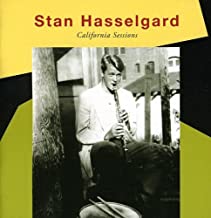
Having achieved international renown, he moved to New York City in 1947, and played on 52nd Street with Jack Teagarden and Max Roach. Under the stage name Stan Hasselgard he made his acclaimed recording of Swedish Pastry. and in 1948 he joined Benny Goodman’s septet, alongside Wardell Gray, Mary Lou Williams and others.
His last recording session took place on November 18th, because five days later he was killed in a car crash. Clarinetist Stan Hasselgard passed away on November 23, 1948 in Decatur, Illinois. He was 26.
More Posts: bandleader,clarinet,history,instrumental,jazz,music
Daily Dose Of Jazz…
Roy Powell was born on October 2, 1965 in Langham, Rutland, England. His mother was a historian, his father a scientist who moved the family to Canada. His father had given him piano lessons and had been playing the piano for five years. Returning to England when he was ten, he attended New Mills Grammar School at the same time as Lloyd Cole.
In the 1970s, Powell was listening to Duke Ellington and Miles Davis and buying albums through the mail from America. He attended the Royal Northern College of Music, studying piano and classical composition during the day and playing in Manchester jazz clubs at night. After departing school, he started a jazz fusion band and choreographed a ballet. In 1992 he was a member of the Creative Jazz Orchestra. Three years later he moved to Norway to teach.
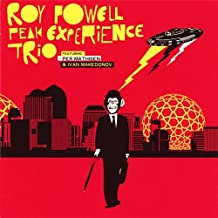
Powell has been a member of the group InterStatic with Jacob Young, and Jarle Vespestad, and the group Naked Truth with Lorenzo Feliciati, Pat Mastelotto, and Graham Haynes. He recorded the album Mumpbeak with Feliciati, Mastelotto, Bill Laswell, Tony Levin, and Shanir Ezra Blumenkranz. Pianist, organist, composer, and educator Roy Powell has recorded fifteen albums as a leader and continues to perform and record.
More Posts: bandleader,composer,educator,history,instrumental,jazz,music,piano

Daily Dose Of Jazz…Trumpet
Jon Eardley was born on September 30, 1928 in Altoona, Pennsylvania and first started on trumpet at the age of 11. His father played in the Paul Whiteman Orchestra. From the age of eighteen, he played1946 to 1949 he played in the Air Force Band in Washington, D.C., then led with his own quartet in D.C. from 1950 to 1953.
A move to New York City in 1953 got him introduced to the jazz scene. The following year he played with Phil Woods, then left for Gerry Mulligan for three years, and during that time played with Hal McIntyre. Returning to his hometown, Jon played there until 1963, when he moved to Europe and settled for a time in Belgium.
1969 saw his next residency in Cologne, Germany where he played with Harald Banter and Chet Baker and working through the 1980s. The last years before death he played in the WDR Big Band Cologne, Germany. Trumpeter Jon Eardley passed away on April 1, 1991 in Lambermont, near Verviers, Belgium.

More Posts: bandleader,history,instrumental,jazz,music,trumpet