

Daily Dose Of Jazz…
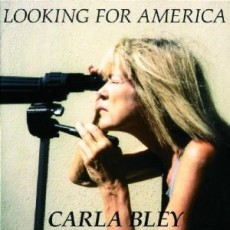
Carla Bley was born Carla Borg on May 11, 1936 is best known for her work as a jazz composer, pianist, organist and band leader in the post bop generation and free jazz movement of the 60s.
Raised in Oakland, California she was encouraged by her father, piano teacher and choirmaster, to sing and learn the piano. Giving up church to immerse herself in roller-skating at fourteen, Carla moved to New York and became a cigarette girl at Birdland. It is here that she met and married Paul Bley, who encouraged her to start composing. Her compositions would later begin to appear on recordings by George Russell and Jimmy Guiffre, with compositions being performed by Gary Burton, Art Farmer and Paul Bley.
In 1964 she was involved in organizing the Jazz Composer Guild bringing together the most innovative musicians in New York and started the JCOA record label, which released albums by Clifford Thornton, Don Cherry and Roswell Rudd, Michael Mantler and herself. With Mantler the two started the New Music Distribution Services, now defunct, that specialized in small, independent labels issuing creative improvised music.
Carla Bley has collaborated with a number of other artists, including Kurt Weill, Jack Bruce, Charlie Haden, Phil Woods, Johnny Griffin, Pink Floyd drummer Nick Mason, Blood, Sweat & Tears, Lew Soloff, Phil Woods and her current partner bassist Steve Swallow. She has continued to record frequently with her own big band and a number of smaller ensembles.
More Posts: bandleader,composer,organ,piano
Daily Dose Of Jazz…
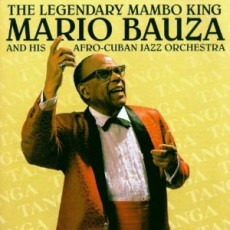
Mario Bauzá was born on April 28, 1911 in Havana, Cuba and was classically trained. By age nine he was playing clarinet in the Havana Philharmonic Orchestra and would stay there for the next three years. In 1925 he ventured to New York to record with Maestro Antonio Maria Romeu’s band “Charanga Francesca”. He was fourteen. Five years later he returned to New York and reputedly learned to play trumpet in two weeks to become a part of the Don Azpiazu Orchestra.
Bauzá became lead trumpeter and musical director for Chick Webb’s Orchestra by 1933, and it was during his time with Webb that Bauzá both met fellow trumpeter Dizzy Gillespie and discovered and brought into the band singer Ella Fitzgerald. 1938 saw Bauzá joining Cab Calloway’s band, later convincing Calloway to hire Dizzy as well, with whom Bauzá would continue to collaborate even several years after he left Calloway’s band in 1940. The fusion of Bauzá’s Cuban musical heritage and Gillespie’s advancements in bebop eventually culminated in the development of cubop, one of the first forms of what is commonly referred to as Latin jazz.
Bauzá became musical director of Machito and his Afro-Cubans in 1941, a band led by his brother-in-law, Frank Grillo, also known as Machito, and in 1942 he brought a young timbales player named Tito Puente into the fold. For the next 30 years Bauzá remained director of the band up until 1976 where he began working sparingly leading his own Afro-Cuban orchestra through the eighties and into the early 90s, where his last band made a guest appearance on The Cosby Show.
Mario Bauzá, who died in New York City on July 11, 1993, was one of the first musicians to introduce Latin music to the United States by bringing Cuban musical styles into the New York jazz scene. He was one of the most influential figures in the development of Afro-Cuban music, and his innovative work and musical contributions have many jazz historians to call him the “Founding Father of Latin Jazz”.

More Posts: bandleader,clarinet,trumpet
Daily Dose Of Jazz…
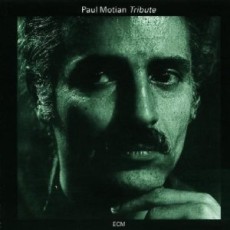
Paul Motian was born Stephen Paul Motian on March 25, 1931 in Philadelphia, Pennsylvania but was raised in Providence, Rhode Island. After playing guitar during his childhood, he started the drums at twelve, which led to his eventual touring New England with a swing band, followed by enlisting in the Navy during the Korean War.
A professional drummer since 1954, Motian came to prominence in the late 50’s in the Bill Evans band from 1959 to 1964. He briefly played with Thelonious Monk, then in the sixties played with Paul Bley, Keith Jarrett, Lennie Tristano, Warne Marsh, Joe Castro and Arlo Guthrie, Carla Bley, Charlie Haden and Don Cherry. As his career progressed Paul went on to play with many great jazz musicians.
From the seventies on Motian became an important composer and bandleader and by the early 80’s was leading a trio featuring guitarist Bill Frisell and saxophonists Joe Lovano. The trio invited occasional guest appearances from the likes of Lee Konitz, Charlie Haden, Dewey Redman, Geri Allen and others.
Paul continued to have an affinity for his first instrument, the guitar, leading the Electric Bebop Band featuring two and sometimes three electric guitars, while his other groups were absent of piano most times, working in an array of contexts. He played an important role in freeing the drummer from the strict duty of timekeeping. Drummer, percussionist and composer Paul Motian passed away on November 22, 2011 at the age of 80 in Manhattan, New York.
More Posts: bandleader,composer,drums,guitar
Daily Dose Of Jazz…
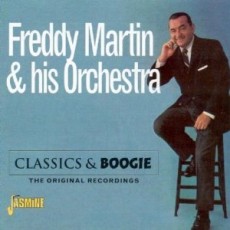
Freddy Martin was born Frederick Alfred Martin on December 9, 1906 in Cleveland, Ohio. Raised largely in an orphanage and with various relatives, he started out playing drums, then switched to C-melody saxophone and later the tenor saxophone that he would come to be identified with. He led his own band in high school, played in several local bands and took that money to enroll in Ohio State University.
After working on a ship’s band, Martin joined the Mason-Dixon band, then joined Arnold Johnson and then Jack Albin, with whom he would make his first recording with the “Hotel Pennsylvania Music” for Columbia’s Harmony, Velvet Tone, and Clarion 50 cent labels in 1930. However it was while filling in for Guy Lombardo one night that kick started his career. It was in 1931 at the Bossert Marine Room in Brooklyn, New York that Freddy pioneered the “Tenor Band” style that swept the sweet-music industry. With his own tenor sax as melodic lead, Martin fronted an all-tenor sax section with just two brasses and a violin trio plus rhythm.
The Martin band recorded first for Columbia, Brunswick and RCA’s Bluebird and Victor, backed singers, played hotels and became a staple on NBC’s Maybelline Penthouse Serenade. His adaptation of a Tchaikovsky tune released as Tonight We Love became his biggest hit.
Freddy Martin was nicknamed “Mr. Silvertone” by saxophonist Johnny Hodges and Chu Berry has named him his favorite saxophonist. He used the banner “Music In The Martin Manner.” Having a good ear for singers at one time or another, Martin employed Helen Ward, Stuart Wade, Merv Griffin, Buddy Clark as well as pianists Sid Appleman and Terry Shand, violinist Eddie Stone and many others.
Martin’s popularity as a bandleader led him to Hollywood in the 1940s where he and his band appeared in a handful of films, in the 1950s and 1960s he continued to perform on the radio, appear on television, be the musical director for Elvis Presley’s first Vegas appearance, and continue his hotel gigs. He would continue to lead his band until the early 80s, although by then, he was semi-retired. Bandleader and tenor saxophonist Freddy Martin passed away on September 30, 1983, in a Newport Beach hospital after a lingering illness. He was 76 years old.

More Posts: bandleader,saxophone
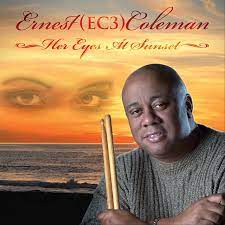
Review: Ernest Coleman | Her Eyes At Sunset
The title Her Eyes At Sunset ambiguously defines the listener’s journey. At first glance, Mr. Coleman’s choice of tunes appears to be indiscriminate, however, upon closer inspection one finds a carefully crafted playlist to delight the ear.
Ernest’s point of embarkation is a driving tempo with the title theme from the 1948 film The Night Has a Thousand Eyes, and yet, it is not surprising that he follows with the Gershwin’s They Can’t Take That Away From Me from the 1937 Astaire/Rogers vehicle Shall We Dance, done refreshingly as a quiet ballad. Combining the Latin rhythms of Jobim’s Waters of March, Romero’s Quinta Anauco and his original title track with the delivery of Chantae Cann on Estrada Branca is a happy madness.
The arrangement of Blue In Green is unprecedented as is the well-executed bass on the Bricusse/Newley composition Pure Imagination. If homework is a prerequisite for testing the musicianship of this excellent assemblage of players and voices, this project raises the bar of the listening experience, and thus, is no stranger to my Serenade To The City playlist.
carl anthony |serenade to the city | jazz 91.9fm wclk | july 28, 2011
Give A Gift Of Jazz ~ Share 
#preserving genius
More Posts: bandleader,drums,history,instrumental,jazz,music,review