

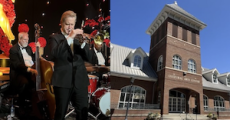
JOE GRANSDEN
Joe Gransden celebrates The Good Life: A Musical Tribute to the Artistry of Tony Bennett!
Joe and the band as they take you on a swingin’ stroll through the life and career of Tony Bennett! One of the greatest performers of the American Songbook, Tony Bennett’s tone, phrasing and feel set him apart from other vocalists of his era.
Tickets: $40.50
More Posts: bandleader,genius,instrumental,jazz,music,preserving,trumpet,vocal

TONY HIGHTOWER
Tony Hightower brings his powerful talented voice to play the Sunday jazz Lounge at St. James Live hosted by Lori Williams. He has contributed vocals to the successful projects of Gerald Levert, Jimmy Jam and Terry Lewis, the soundtrack for “Money Train,” Goodie Mob’s certified gold album “Soul Food,” Society of Soul’s album “Brainchild,” Pebbles’ album “Straight From My Heart,” Lionel Richie’s album “Louder Than Words,” and Outkast.
he singer/songwriter is taking up the mantle to be a bridge that ushers R&B audiences into Jazz…Real Jazz. With years of experience as a musical performer and actor with familial roots that place him firmly within the music’s firmament, Atlanta-native Hightower is still just getting started on this benevolent turn in his journey. And he is bringing a lot of young people with him.
Tickets: $35.00 ~ $40.00
More Posts: adventure,bandleader,club,instrumental,jazz,vocal

EUGENIE JONES
Join us at Fountainhead Gallery for an exciting event that combines the elegance of Chris Hopkin’s fine art painting with the exquisite music of award-winning vocalist Eugenie Jones! Experience the flow of creativity and emotive rhythms at this unique live jazz concert.
A raffle will be held at the end of the performance, giving ticket holders in the audience a chance to win this stunning art piece. Increase your chances of winning by purchasing extra raffle tickets before the drawing.
This event supports the 2025 Jackson Street Jazz Walk, so don’t miss out on this one-of-a-kind experience that unites art, music and community in a truly jazzy way!
The Band: Peter Adams on piano | Ryan Donnelly on bass | John Stout on drums
More Posts: adventure,bandleader,club,genius,instrumental,jazz,music,preserving,travel,vocal
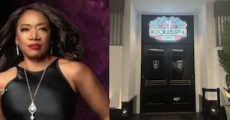
EUGENIE JONES
ONE NIGHT ONLY!
The Kookaburra Lounge presents international fan-based singer-songwriter Eugenie Jones in an evening of original jazz and reimagined jazz and soul classics from her #4 Jazz Week charted album – Eugenie! Hip, slick musical accompaniment provided by LA’s Charles Love on piano, Jeff Littleton on bass & Akira Yamada on drums.
Known for her dynamic stage presence and passionate singing style, Jones has established herself as one of our time’s most evocative, powerful, and compelling jazz artists. In a recent review, Paris Move USA correspondent Thierry De Clemensat described Jones as “one of the most beautiful voices in the United States.”
LA Jazz Scene/Scott Yanow describes Jones saying she is, “..a powerful singer whose vocalizing explores the soulful side of jazz.”
Former John Coltrane bassist and NEA JAZZ MASTER Reggie Workman refers to Jones as…”An extraordinary singer-songwriter.”
Tickets:
General Admission ~ $25.00 + $5.00 fee | Early General Admission Seating ~ $35.00 + $5.00 fee | VIP ~ $90.00 (Front Row Table for 2) + $8.00 fee
Party Booth ~ $40.00 per person (seats 2-10) + $5.00 fee | VIP Couch ~ $250.00 (seats 5) + $15.00 fee | Katie’s Booth ~ $300.00 (seats 5) + $15.00 fee
~ 2 Drink Minimum | Wine, Alcohol & Non-Alcoholic beverages
~ Parking is $3 in the Ovation Garage with validation.
More Posts: adventure,bandleader,club,genius,instrumental,jazz,music,preserving,travel,vocal
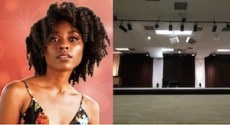
LAVAHI
Lavahi is a scholar-artist on a mission to better society from the inside out. Through her music, scholarship, and performance, she is building a platform to nourish the heart and mind, empathize our human experiences, and vibe together. As a daughter of jazz, the culture heavily informs her ideology and influences her sound. Acrobatic scatting, compelling chords, and the art of improvisation evoke that classic traditional aesthetic and set her contemporary sound apart from the norm of mainstream neo-soul, hip hop, and R&B. And with her satisfying blend of analog and digital sounds, Lavahi shows that the lineage of Black sound is not linear but ever folding and stretching.
She produces, plays flute and piccolo, and arranges. She has added her unique sound to national and international projects in genres varying from rap to film scores to alternative. Lavahi loves the studio and feels most natural when recording independently; but her second home is the collaborative live performance of the stage. She has been featured at venues such as Blues Alley, Bethesda Blues and Jazz, Kat’s Cafe, Porter-Sanford III, St. James Live!, City Winery, and more, and she has even stepped into the world of acting via musicals and stage plays.
Cover: $25.00
More Posts: adventure,bandleader,genius,instrumental,jazz,music,preserving,vocal