

Three Wishes
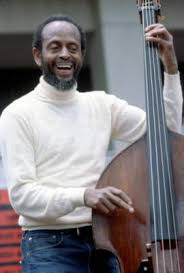
On the day that Percy Heath was questioned by Pannonica as to what his three wishes would be he said:
-
-
“I would like to be able to travel to another planet.”
-
“To find something to do when I get there.”
-
“To know how to get back again.”
-
*Excerpt from Three Wishes: An Intimate Look at Jazz Greats ~ Compiled and Photographed by Pannonica de Koenigswarter

More Posts: baroness,bass,history,instrumental,jazz,music,pannonica,three,wishes
Daily Dose Of Jazz…
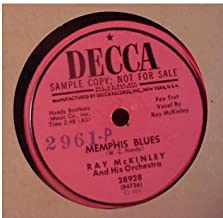
Ray Mckinney was born Raymond Patterson McKinney on June 20, 1931 in Detroit, Michigan. He was the fourth of ten children artistically gifted, and most of the children took music lessons from their mother. Starting on the Ocarina, he soon graduated to the piano, then the cello which he took to the instrument immediately. His father and English teacher encouraged him to write poetry and he became quite proficient.
During his high school years that Ray was first exposed to jazz, hearing Ella Fitzgerald with Chick Webb in 1939, also Erskine Hawkins and Jay McShann when he had Charlie Parker with him. Music in the neighborhood, there were bands made up of youngsters who played homemade instruments, such as, pails, brushes, spoons and it was where Ray learned that he only needed himself to make music.
The band director at Northwestern High School forced him to switch from cello to bass. Academically gifted, he was determined to be heard above the Northwestern band, he developed his technique. His passion for music consumed his time and he quit school in 1947 at age sixteen. He was spending time with like-minded students and other aspiring musicians from his west-side neighborhood, Maurice Wash, Claire Rockamore, Barry Harris, and Frank Foster. It was where he developed stamina, playing twelve, eighteen hours at a time. McKinney and Harris worked local jobs backing a vocal group in which Harris’ wife Christine was a member. This group recorded at least twenty titles for the New Song label in 1950.
Ray became a force to be reckoned with on the competitive Detroit scene and he worked with several Detroit piano stars. Though he liked bassists Alvin Jackson, Clarence Sherrill and Major “Mule” Holley, his major influences were Ray Brown, Oscar Pettiford, Tommy Potter and Dillon “Curly” Russell. He befriended Paul Chambers and his cousin Doug Watkins, because their playing impressed him, especially Paul’s bowing.
In 1956 he moved to New York City with harpist Dorothy Ashby’s group, however, the gig didn’t last long when Ray was fired after punching Ashby’s husband in the face during an argument. He would go on to work with Guy Warren, Barry Harris, Ben Webster, Edmund Hall, Max Roach, Walter Benton, Booker Little, Julian Priester, Coleman Hawkins, Mal Waldron, Eric Dolphy, Red Garland, Yusef Lateef, Andy Bey and spent a year with comic Nipsey Russell’s back-up band.
For a short time he experimented with heroin but by 1973 McKinney was clean and living in Oberlin, Ohio and with a new love interest before settling in San Diego, California in 1974. With not much jazz happening he took up a series of day jobs for the next four years while continuing to create poetry.
His precarious health and his lack of insurance caused his friends concern and made his last years were unsteady. He received a special Lifetime Achievement award during Baker’s Keyboard Lounge 70th anniversary celebration in 2004. It was one of his final public appearances. Bassist Ray McKinney passed away on August 3, 2004, aged 73 in San Diego.

More Posts: bandleader,bass,history,instrumental,jazz,music
Daily Dose Of Jazz…
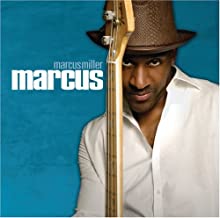
Marcus Miller, born William Henry Marcus Miller Jr. on June 14, 1959 in Brooklyn, New York and raised in a musical family. Classically trained as a clarinetist, he also plays keyboards, saxophone and guitar. He began to work regularly in New York City, eventually playing bass and writing music for jazz flutist Bobbi Humphrey and keyboardist Lonnie Liston Smith.
Spending 15 years as a session musician, he arranged and produced frequently, was a member of the Saturday Night Live band from 1979 to 1981, and co-wrote Aretha Franklin’s Jump To It along with Luther Vandross. He has played bass on over 500 recordings, appearing on over 500 albums by such artists as Herbie Hancock, The Crusaders, Wayne Shorter, McCoy Tyner, Frank Sinatra, George Benson, Michael Jackson, Beyoncé, Mariah Carey, Eric Clapton, Dr. John, Aretha Franklin, Elton John, Joe Walsh, Jean-Michel Jarre, Grover Washington Jr., Donald Fagen, Bill Withers, Bernard Wright, Kazumi Watanabe, Chaka Khan, LL Cool J, and Flavio Sala.
He won the Most Valuable Player award given by NARAS to recognize studio musicians three years in a row and was subsequently awarded Player Emeritus status and retired from eligibility. In the nineties, Miller began to write his own music and make his own records, putting a band together and touring regularly.
Between 1988 and 1990 he appeared regularly both as a musical director and as the house band bass player in the Sunday Night Band during two seasons of Sunday Night on NBC late-night television, hosted by David Sanborn.
As a composer, Miller co-wrote and produced several songs on the Miles Davis album Tutu, including its title track. He also composed Chicago Song for David Sanborn and co-wrote ‘Til My Baby Comes Home, It’s Over Now, For You To Love, and Power of Love for Luther Vandross and wrote Da Butt, which was featured in Spike Lee’s School Daze.
Miller hosts a jazz history show called Miller Time with Marcus Miller, is a film score composer, was nominated and won several Grammy Awards. Bassist Marcus Miller continues to perform, record and tour.
More Posts: bass,clarinetist,guitar,history,instrumental,jazz,keyboards,music,saxophone,vocal
Daily Dose Of Jazz…
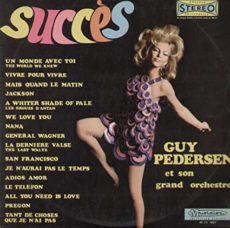
Guy Eugène Hilarion Pedersen was born on June 10, 1930 in Grand-Fort-Philippe, France. Coming from a family of popular musicians all members of his maternal family are fiddlers and his great-grandfather composed the jazz standard Tiger Rag.
At the age of 13 he started music theory in 1943, taking free lessons at the Roubaix Conservatory until 1952. In 1950, he won the prize for the best double bassist in the Brussels competition, then that of Jazz Hot in Paris, and then decided to become a musician. Already passionate about jazz, he listened to radio broadcasts by Hugues Panassié and bought his first American records by Charlie Parker, Thelonious Monk, and Lee Konitz at Deruyck in Roubaix.
He began working in Paris with singer Fats Edward, then played with pianist Henri Renaud and drummer Jean-Louis Viale at Tabou, and at Ringside founded by boxing champ Sugar Ray Robinson. He went on to work with Jacques Hélian and then Claude Bolling with whom he learned the large orchestra profession. From 1955 to 1966, he was a member with drummer Daniel Humair of the most famous trio led by Martial Solal, recording the historic Jazz à Gaveau in 1962.
Guy Pedersen and Daniel Humair then joined the Swingle Singers to record the second disc. They will travel around the world in their company, even passing through the White House in 1966.
From 1973 Guy toured with Baden Powell, recording more than a dozen records with him. Between 1973 and 1980, he recorded seven albums and toured frequently with Jean-Christian Michel.
During that time, Pedersen led an active career as a studio musician, appeared in variety shows on television, accompanying the group Les Troubadours. The late 1960s saw him composing, writing a lot of music for short films. Some of his recordings on the musical illustration labels Tele Music and Montparnasse 2000 are today cult, especially in the disc jockeys world.
In 1977 a serious cardiac accident forced him to withdraw from the world of music. He then became an antique dealer. Bassist Guy Pedersen passed away on January 4, 2005 at the age of 74.
More Posts: bandleader,bass,history,instrumental,jazz,music
Daily Dose Of Jazz…
Toby Hardwicke was born Otto James Hardwicke on May 31, 1904 in Washington, D.C., and started on string bass at the age of 14, then moved to C melody saxophone and finally settled on alto saxophone. A childhood friend of Duke Ellington, he joined Ellington’s first D.C. band in 1919. He also worked for banjoist Elmer Snowden at Murray’s Casino.
In 1923, Ellington, Hardwick, Snowden, trumpeter Arthur Whetsol, and drummer Sonny Greer had success as the Washingtonians in New York City. After a disagreement over money, Snowden was forced out of the band and Duke Ellington was elected as the new leader. Booked at a Times Square nightspot called the Kentucky Club for three years, they met Irving Mills, who produced and published Ellington’s music.
Otto left the Duke Ellington band in 1928 to visit Europe, where he played with Noble Sissle, Sidney Bechet and Nekka Shaw’s Orchestra, and led his own orchestra before returning to New York City in 1929. He went on to have a brief stint with Chick Webb that year, then led his own band at the Hot Feet Club, with Fats Waller leading the rhythm section in 1930. He led a group at Small’s before rejoining Duke Ellington in the spring of 1932, following a brief stint with Elmer Snowden.
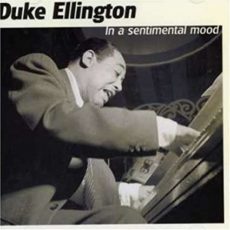
He played lead alto on most Ellington numbers from 1932 to 1946 and was a soloist on Black and Tan Fantasy, In a Sentimental Mood and Sophisticated Lady. Hardwick, with his creamy tone, was almost always the lead alto in the reed section of the Ellington orchestra except in some situations where Ellington required the more cutting tone of Johnny Hodges’ alto to set the tone of the ensemble. He left the band in 1946 over a disagreement with Ellington about his girlfriend, freelanced for a short time in the following year, and then retired from music.
>Occasionally doubling on violin and string bass in the Twenties, alto saxophonist Toby Hardwicke who also played clarinet and bass, baritone, and soprano saxes, passed away on August 5, 1970.

More Posts: bass,clarinet,history,instrumental,jazz,music,saxophone,violin