

Daily Dose Of Jazz…
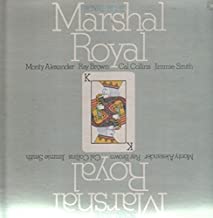
Marshal Walton Royal Jr. was born into a musical family on December 5, 1912 in Sapulpa, Oklahoma. His first professional gig was with Lawrence Brown’s band at Danceland in Los Angeles, California. In a very short time, he secured a regular gig at the Apex, working for Curtis Mosby in Mosby’s Blue Blowers, a 10-piece band. Following that gig, he began an eight-year stint from 1931–1939 with the Les Hite Orchestra at Sebastian’s Cotton Club in Los Angeles. He spent 1940 to 1942 with Lionel Hampton, until the war interrupted his career.
With his brother Ernie, he served in the U.S. Navy in the 45-piece regimental band that was attached to the Navy’s pre~flight training school for pilots at St. Mary’s College in Moraga, California. Two swing bands were organized from the larger regimental band, and they played for smokers and dances at USOs and officers clubs. Royal was the leader of the Bombardiers, one of those bands, which also included not only his brother Ernie, but Jackie Kelson (later known as Jackie Kelso), Buddy Collette, Jerome Richardson, and Vernon Alley.
When he left Basie in 1970, Royal settled permanently in Los Angeles, continuing to play and record, working with Bill Berry’s big band, Frank Capp and Nat Pierce, Earl Hines, and Duke Ellington. Royal recorded as a soloist with Dave Frishberg and Warren Vache. He co-led a band with Snooky Young in the 1970s and 1980s, recording with the band in 1978.
Alto saxophonist and clarinetist Marshal Royal, best known for his twenty years with Count Basie, passed away in Culver City, California, on May 9, 1995, aged 82.
More Posts: bandleader,clarinet,history,instrumental,jaz,music,saxophone
Daily Dose Of Jazz…
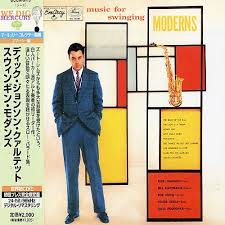
Dick Johnson was born Richard Brown Johnson on December 1, 1925 in Brockton, Massachusetts. His primary instrument was clarinet, however, he also played the alto saxophone and flute.
He began his professional career as a musician while serving in the U.S. Navy in 1944-1946 and played with the navy band on the USS Pasadena during World War II. He often credited his stint in the Navy for kicking off his career in jazz. After the war, Johnson toured with the big bands of Charlie Spivak and Buddy Morrow.
Eventually, after several years on the road, he settled in his hometown of Brockton, Mass. It was there in Brockton where he and his close friend, Lou Colombo formed a jazz sextet. The group lasted 10 years, but the friendship and musical kinship lasted for the rest of his life. In addition, Dick formed his septet, Swing Shift, which was a staple on the Boston music scene for many years.
Like Herb Pomeroy, Johnson managed a double career as a performer and an educator, teaching jazz at nearby Berklee School of Music, where he mentored many younger jazz musicians.
Between 1956 and 2006 he recorded ten albums as a leader. He worked with Frank Sinatra, the Swing Shift Orchestra, Dizzy Gillespie, and Tony Bennett.
Clarinetist, alto saxophonist, and flutist Dick Johnson, who also played in the free jazz genre, passed away on January 10, 2010 in Boston, Massachusetts after a short illness, aged 84.
</ahref=”http:>
More Posts: bandleader,clarinet,educator,flute,history,instrumental,jazz,music,saxophone

Daily Dose Of Jazz…
Paul D. “Polo” Barnes was born on November 22, 1901 in New Orleans, Louisiana, the brother of Emile Barnes. He attended St. Paul Lutheran College and began playing alto saxophone in 1919. He and Lawrence Marrero formed the Original Diamond Band, later known as the Young Tuxedo Band.
In 1922 he was with Kid Rena, then the Maple Leaf Orchestra in 1923, and Papa Celestin’s Original Tuxedo Band. Later that year; Celestin’s group recorded his composition My Josephine, which became quite popular. He went on to play with Chick Webb in 1927 and with King Oliver three times between 1927 and 1935. He toured with Jelly Roll Morton in 1928-29.
In 1932-33 he led his own band then through that decade he played with Chester Zardis and Kid Howard. He played in Algiers, Louisiana in a Navy band during World War II, then returned to work with Celestin from 1946 to 1951. The Fifties saw him moving to California and left music, however, upon his return to New Orleans in 1959, he played with Paul Barbarin in 1960. but from 1962-65 joined the Young Men from New Orleans band that played on a riverboat at Disneyland.
Returning once again to New Orleans in 1964 he played at Preservation Hall and Dixieland Hall. While touring Europe in 1973-74, poor health ended his career in 1977. Clarinetist and saxophonist Polo Barnes, a mainstay of the New Orleans jazz scene of the 1920s and 1930s, passed away on April 3, 1981 in his hometown.
More Posts: clarinet,hitory,instrumental,jazz,music,saxophone

Daily Dose Of Jazz…
Achille Joseph Baquet was born on November 15, 1885 in New Orleans, Louisiana into a musical family whose patriarch, Théogène, led the Excelsior Brass Band. He learned the clarinet from Luis “Papa” Tio and was thought to have been a member of the Whiteway Jazz Band.
Moving to New York City in 1918, then ragtime pianist, vocalist, and leader Jimmy Durante, the only member not from New Orleans, hired him to play with the Original Dixieland Jazz Band that was founded by Johnny Stein. He would go on to work with Papa Jack Laine’s Reliance Brass Band and was part of the clarinet section of the Happy Schilling Dance Orchestra.
Baquet’s credits as a composer include Why Cry Blues, written with Jimmy Durante. According to Papa Jack Laine, he co-wrote Livery Stable Blues with Acide “Yellow” Nunez.
Clarinetist and saxophonist Achille Baquet, who was a light-skinned black man able to pass for white, passed away on November 20, 1956 in his hometown.
More Posts: clarinet,history,instrumental,jazz,music,saxophone
Daily Dose Of Jazz…
Scoville “Toby” Browne was born on October 13, 1909 in Atlanta, Georgia and played in the late 1920s with Junie Cobb’s band and the Midnight Ramblers in Chicago, Illinois. From 1931 to 193232 he played saxophone and clarinet for Fred Avendorph. He went on to work with Louis Armstrong from 1933–35, and in the mid- and late Thirties with Jesse Stone, Jack Butler, Claude Hopkins, and Blanche Calloway.
By the end of the decade, he was attending the Chicago College of Music and the 1940s Browne played with Slim Gaillard, Fats Waller, Buddy Johnson, Hot Lips Page, and Eddie Heywood before serving in the U.S. military during World War II. Following his discharge, he played with Hopkins again and with Buck Clayton.
Taken on the role of bandleader on and off in the 1950s, Toby also studied classical music. He was the main clarinet soloist with Lionel Hampton and toured overseas with Muggsy Spanier late in the decade, and appeared in the 1958 photograph A Great Day in Harlem.
Continuing to work with Hopkins well into the Seventies, alto saxophonist and clarinetist Toby Browne who never recorded as a bandleader but only a sideman, passed away on October 3, 1994 in Chicago.

More Posts: bandleader,clarinet,history,instrumental,jazz,music,saxophone