


Jazz Poems
LEAVING SATURN
Sun Ra & His Year 2000 Myth Science
Arkestra at Grendel’s Lair Cabaret, 1986
Skyrocketed—
My eyes dilate old
Copper pennies.
Effortlessly, I play
*
Manifesto of the One
Stringed Harp. Only
This time I’m washed
Ashore, shipwrecked
*
In Birmingham.
My black porcelain
Fingers, my sole
Possession. So I
*
Hammer out
Equations for
A New Thing
Ogommetelli.
*
Ovid & Homer
Behind me, I toss
Apple peelings in
The air & half-hear
*
Brush strokes,the up
Kick of autumn
Leaves, the Arkestra
Laying down for
*
New dimensions,
I could be at Berkeley
Teaching a course—
Fixin’s How to Dress
*
Myth or Generations
Spaceships in Harlem
Instead, vibes from Chi-
Town, must be Fletcher’s
*
Big Band Music—oh,
My brother, the wind—
I know this life is
Only a circus. I’m
*
Brushed aside: a naïf,
A charlatan, too avant-
Garde. Satellite music for
A futuristic tent, says
*
One critic. Heartbreak
In outer space, says
Another, —lunar
Dust on the brain.
*
I head to New York
New York loves
A spectacle wet pain
Of cement, sweet
*
Scent of gulls swirling
Between skyscrapers
So tall, looks like war
If what I’m told is true
*
Mars is dying, it’s after
The end of the world.
So, here I am,
In Philadelphia,
*
Death’s headquarters,
Here to save the cosmos,
Here to dance in a bed
Of living gravestones.
MAJOR JACKSON
from Jazz Poems ~ Selected and Edited by Kevin Young

More Posts: book,classic,collectible,history,jazz,library,poet

Requisites
Gettin’ Together ~ Art Pepper | By Eddie Carter
This morning’s library selection is a standout example of cool jazz by the multi-talented musician Art Pepper. Gettin’ Together (Contemporary Records M3573/S7573), released in 1960, was his third album on Lester Koenig’s label. It
demonstrated his creativity and versatility as a composer and featured a superb lineup. Conte Candoli on trumpet (tracks: A1, A2, B1), Art Pepper on alto (A1, A3, A4, B2) and tenor sax (A2, B1, B3), Wynton Kelly on piano, Paul Chambers on bass, and Jimmy Cobb (listed here as Jimmie) on drums. My copy is the 1984 U.S. Original Jazz Classics stereo reissue (Contemporary Records OJC-169).
Side One opens with Whims of Chambers by Paul Chambers, initially recorded by the bassist in 1957. Art, Paul, and Jimmie’s introduction gets things started ahead of the ensemble’s melody. Art sets the groove with some homecooking, and then Wynton follows with a thoroughly satisfying statement. Conte steps in briefly before Paul takes the next flight. Art and Jimmie briefly exchange thoughts, leading to the theme’s reprise. Bijou the Poodle is an original by Art Pepper, inspired by his dog; the quintet collectively presents the medium-paced melody. Pepper opens with long, flowing phrases, and then Candoli makes a profound impression. Kelly gets into the groove next, succeeded by Chambers, who weaves comfortably through the final interpretation until the climax.
Up next is a quartet performance of Why Are We Afraid? by Dory Langdon and André Previn. Wynton’s brief introduction leads into Art’s gentle theme and first solo, which asks this tender question with tranquil support from the rhythm section. Wynton continues the thoughtful mood in the following interpretation before Art makes a few final comments and delivers the ending theme. The tempo picks up with Softly As In a Morning Sunrise by Sigmund Romberg and Oscar Hammerstein II. The trio gets things started, then Pepper leads the lively melody. The leader steps into the spotlight first with a terrific presentation. Kelly takes a sizzling reading next. Paul walks through the third reading with strong bass lines, and Pepper and Cobb engage in an upbeat conversation, leading to the melody’s restatement.
Side Two opens with Thelonious Monk’s Rhythm-a-Ning. Jimmy starts with a brief introduction before the quintet dives into the playful theme. Art goes right to work with fiery passion, and then Conte plays with intense emotion. Wynton makes a quick, impressive statement, and then Paul delivers a deeply expressive reading. Art and Jimmie conclude with an inspired improvisation, leading to the finale. Diane is Art Pepper’s heartfelt tribute to his wife. The rhythm section introduces this gentle ballad ahead of Pepper’s beautiful melody. He continues in the opening solo, displaying romantic tenderness. Kelly glides elegantly into the following performance, culminating gracefully with the quartet’s out-chorus and exit.
The title tune, Gettin’ Together, by Art Pepper, is a blues that allows each musician to shine. The quartet gets underway with Art guiding them through the relaxing theme. The saxophonist opens with a lightly swinging statement. Wynton offers a few breezy choruses next, and then Paul strolls leisurely. Finally, Art and Jimmie briefly converse before the theme returns. Lester Koenig produced the album, and Roy DuNann and Howard Holzer were behind the dials. This OJC reissue is an excellent recording with a stellar soundstage and crystal-clear sonics. If you’re a cool jazz fan, I invite you to check out Gettin’ Together by Art Pepper on your next record hunt. It’s a stellar effort in allareas that sounds as fresh as when it was first released and is highly recommended for a spot in your library!
~ Whims of Chambers (Blue Note BLP 1534/BST 81534) – Source: Discogs.com~ Softly As In a Morning Sunrise – Source: JazzStandards.com
~ Rhythm-a-Ning – Source: Wikipedia.org
© 2025 by Edward Thomas Carter

More Posts: choice,classic,collectible,collector,history,instrumental,jazz,music,saxophone
Jazz Poems
THELONIOUS SPHERE MONK
Cold, the day you leave
you can use that hat.
Ahh Monk, the station fades
as the suburbs begin
you bent the notes right
they will not lose their ring.
I see your shuffle dance
up from the 5 Spot piano
and hear you, wordless, sing.
BILL CORBETT
from Jazz Poems ~ Selected and Edited by Kevin Young
More Posts: book,classic,collectible,history,jazz,library,poet
Requisites
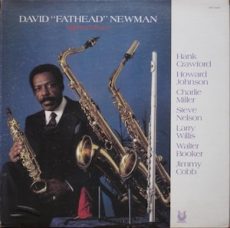
Still Hard Times ~ David “Fathead” Newman | By Eddie Carter
David “Fathead” Newman, a versatile multi-instrumentalist, enters this morning’s spotlight with his vastly underrated album, Still Hard Times (Muse Records MR 5283). This musical feast delights any jazz aficionado, offering a satisfying blend of David’s proficiency on the alto sax (track: B2), flute (B1, B3), soprano sax (A3), and tenor sax (A1, A2, B1). On his second Muse Records date, he joins forces with an talented ensemble of musicians: Charlie Miller on trumpet (A1, A2, B1, B2), Hank Crawford on alto sax (A1, A2, B1 to B3), Howard Johnson on baritone sax (A1, A2, B1, B2), Steve Nelson on vibraphone (A3, B3), Larry Willis on piano, Walter Booker on bass, and Jimmy Cobb on drums. My copy is the 1982 U.S. Stereo release.
The album opens with the septet’s introduction to Shana by David Newman, segueing into a mid-tempo melody that sets the mood. David indulges in delightful fun on a vibrant performance with playful energy and a lively tone. Larry adds an extra layer of excitement with a vibrant solo before the ensemble wraps up the song. Blisters by Hank Crawford opens with the rhythm section’s bluesy introduction, irresistibly getting your fingers snapping and your foot tapping. The theme starts as the front line launches this musical meal. Newman’s easygoing first course whets the appetite; then it’s on to Crawford, who delivers a splendid main course. Willis unfolds the perfect ending in a delicious treat for dessert, leading to the song’s conclusion.
Newman’s switch to the soprano sax for One For My Baby by Harold Arlen and Johnny Mercer is a moment of profound emotion. Larry introduces the jazz standard, ascending to David’s deeply poignant theme. He continues telling the melancholic story delicately. In the following tender presentation, Steve reveals the song’s melodic beauty, which precedes David’s serene fadeout. To Love Again is a beautiful ballad by Hank Crawford featuring “Fathead” in a heartfelt flute and tenor sax performance. Side Two opens with Newman’s flute introduction, followed by his gentle melody on the tenor sax with the ensemble in the background. In the song’s only solo, “Fathead” conveys heartwarming and precious thoughts in every note until the group returns for the gentle closing chorus.
The album’s title track, Still Hard Times by David Newman, places the leader on alto sax as the septet’s soulful theme begins. David leads off with an easy-flowing interpretation as enjoyable as something comfortable to wear. Larry brings a cheerful spontaneity to the second statement, complimenting David’s performance preceding the ending theme, which fades out gently. Percy Mayfield’s blues ballad, Please Send Me Someone To Love, receives a regal treatment by the sextet with Newman’s return to the flute, accompanied by Nelson’s vibes complementing the rhythm section as “Fathead” unveils the melody. The highlight is Crawford’s funky down-home performance until the group’s theme reprise and finale!
Still Hard Times was produced by Michael Cuscuna. Vince Traina was behind the dials of the recording, and Joe Brescio mastered the album. It has superb sound quality, with a rich soundstage transporting the listener to the studio as the musicians perform. David “Fathead” Newman’s versatility is remarkable, and the rhythm section’s steady foundation enhances the front line’s performance throughout each track. Whether you’re a soul jazz fan or discovering his music, I highly recommend checking out Still Hard Times by David “Fathead” Newman on your next record hunt. It’s a perfect album for a relaxing evening with friends or when enjoying the quiet, listening alone. It’s become a cherished part of my library, and I hope that after you hear it, it will become a treasured part of yours!
One For My Baby, Please Send Me Someone To Love – Source: Wikipedia.org
© 2025 by Edward Thomas Carter
More Posts: choice,classic,collectible,collector,history,instrumental,jazz,music,saxophone

Jazz Poems
CREPUSCULE WITH NELLIE
For Ira
Monk at the Five Spotlate one night.
Ruby my Dear, Epistrophy.
The place nearly empty
Because of the cold spell.
One beautiful black transvestite
alone up front,
Sipping his drink demurely.
The music Pythagorean,
one note at a time
Connecting the heavenly spheres,
While I leaned against the bar
surveying the premises
Through cigarette smoke.
All of a sudden, a clear senseof a memorable occasion…
The joy of it, the delicious melancholy…
This very strange manbent over the piano
shaking his head, humming…
Misterioso.
Then it was all over, thank you!
Chairs being stacked up on tables,
their legs up.
The prospect of the freeze outside,
the long walk home,
Making one procrastinatory.
Who said Americans don’t have history,
only endless nostalgia?
And where the hell was Nellie?
CHARLES (DUŠAN) SIMIĆ
from Jazz Poems ~ Selected and Edited by Kevin Young
More Posts: book,classic,collectible,history,jazz,library,poet