

Requisites
Midnight Sugar ~ Tsuyoshi Yamamoto Trio | By Eddie Carter
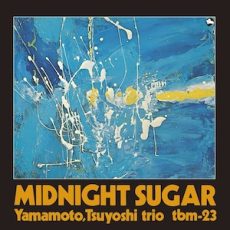
This morning’s choice from the library is one of my absolute favorites because each time I hear it, I’m transported back to one of my happiest memories as a young adult. If any of you lived in Cleveland, Ohio during the seventies and eighties, Audio Craft at 3915 Carnegie Avenue was the place to go if you wanted to purchase a quality entry-level, mid-level, or high-end audio system. My uncle Bob Franks was the manager there for many years and I got to help him on Monday and Thursday evenings, and each Saturday. He was instrumental in teaching me about excellent audio equipment, helping me put together my first system, and introducing me to The Tsuyoshi Yamamoto Trio.
Midnight Sugar (Three Blind Mice TBM-23) is the group’s 1974 debut for the Japanese jazz label and has long been a favorite to demonstrate high-end audio equipment at audio shows and audio salons worldwide. It’s also become a collector’s item, a mint original LP or the 1977, 1979, and 1982 Stereo reissues can cost a few hundred dollars. Joining the pianist are two giants in their own right, Isoo Fukui on bass and Tetsujiro Obara on drums. My copy used for this report is the 1977 Japanese Stereo reissue (Three Blind Mice TBM-2523) and LP collectors take note. Only the 1977, 1979 (TBM(P)-2523) and 1982 (Trio Records – Three Blind Mice PAP-2006) reissues list the group’s name as Tsuyoshi Yamamoto Trio. All other LP reissues and the original release show the pianist’s last name first.
Midnight Sugar is a slow tempo blues beginning Side One with a brief bowed bass introduction by Isoo before Yamamoto takes over on the melody. Tsuyoshi is the only soloist and is at his best on a lengthy interpretation that’s sublimely soulful and one of the highlights on the album, thanks to the rhythmic harmony provided by his colleagues. I’m A Fool To Want You was written in 1951 by Frank Sinatra, Jack Wolf, and Joel Herron. Sinatra recorded the song for Columbia Records, making it a hit. It opens with a graceful introduction and wistful delivery of the melody. The pace moves to midtempo for Yamamoto’s solo performance and he responds with a mesmerizing display and emotional depth preceding the closing chorus ending with fingertip delicacy.
The Nearness of You starts Side Two and was written in 1937 by Hoagy Carmichael and Ned Washington. It became a hit for Ray Eberle who recorded it with The Glenn Miller Orchestra in 1940. The trio dresses up this timeless evergreen with a blissful theme treatment and a sentimental swing on the song’s only interpretation by Yamamoto drawing the listener into this beautiful standard at a leisurely pace. It Could Happen To You is by Jimmy Van Heusen and Johnny Burke, this popular song was written in 1943 and was first recorded by vocalist Jo Stafford with the Paul Weston Orchestra. Its first film appearance was in the 1944 musical comedy And The Angels Sing. The trio’s interaction is stunning on the dreamy melody. Tsuyoshi’s reading is skillfully constructed with tender lyricism on one of the most beautiful ballads ever written.
The album closes with Yamamoto’s Sweet Georgia Blues, an uptempo original sharing some similarities with the 1925 jazz and pop classic, Sweet Georgia Brown by Ben Bernie, Ken Casey, and Maceo Pinkard. It opens with a vivacious theme by the trio, then a brief comment preceding Obara giving a short workout of explosive fireworks. Tsuyoshi wraps up the album with a few final remarks of fun leading to the lively closing chorus.
Three Blind Mice began in 1970 with the premise of showcasing emerging jazz artists. The label produced one-hundred thirty albums over thirty years and was known for their outstanding sound. TBM also was instrumental in the development of Japanese jazz. Many of the stars from Japan now known around the world recorded their debut albums on the label. The album was produced by Takeshi Fujii who ran TBM for many years and recorded by Yoshihiko Kannari, the distinguished Japanese engineer who worked for TBM at the time, and now runs his own organization, Studio Lion since 2000.
The sound on Midnight Sugar is spectacular and a perfect choice to demonstrate any mid-level or high-end audio system. Your sweet spot is right in the studio with the musicians because of the incredible lifelike detail coming from the piano, bass, and drums. Tsuyoshi Yamamoto has an incredible discography of music, is still performing today and all of his albums on Three Blind Mice are worth occupying a spot in your library. If you’re looking for a jazz trio album for the library or are a fan of piano jazz specifically, I happily submit for your approval, Midnight Sugar by Tsuyoshi Yamamoto Trio. An album that’s quite a value for the music, sound quality, and a title that’ll provide its owner many hours of listening pleasure.
~ I’m A Fool To Want You (Columbia 39425); It Could Happen To You (Capitol Records 158); ~ The Nearness of You (Bluebird B-10745) – Source: Discogs.com
~ It Could Happen To You, The Nearness of You – Source: JazzStandards.com
~ I’m A Fool To Want You, Sweet Georgia Brown, Three Blind Mice – Source: Wikipedia.org
© 2021 by Edward Thomas Carter

More Posts: choice,classic,collectible,collector,history,instrumental,jazz,music,piano
Jazz Poems
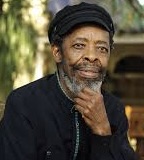
FOR ART BLAKEY AND THE JAZZ MESSENGERS For the sound we revere we dub you art as continuum as spirit as sound of depth here to stay In my young years I heard you bopping and weaving messages I could only walk to where wood mates with skin I would have dubbed you godhead but your sound rolled and pealed I am the drumhead even though Blue Note don’t care nothing bout nothing but profit How you sound is who you are where your ear leans moaning or bopping from the amen corner of chicken and dumpling memories and places In my young years I would have dubbed you something strange as god of opiate heaven of brutal contact of bible and rifle memories But the drumhead rolled my name: How you sound is who you are like drumsound backing back to root roosting at the meeting place the time that has always been here Even here where wood mates with skin on wax to make memory, to place us even in this hideous place pp-ppounding pp-ppounding the ss-ssounds of who we are even in this place of strange and brutal design KEORAPETSE KGOSITSILE | 1938~2018from Jazz Poems ~ Selected and Edited by Kevin Young

More Posts: book,classic,collectible,history,jazz,library,poet
Requisites
Live From Los Angeles ~ Oliver Nelson’s Big Band | By Eddie Carter
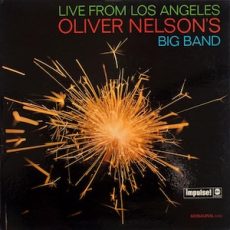
Submitted for your approval this morning is a 1967 live album by Oliver Nelson’s Big Band, Live From Los Angeles (Impulse A-9153/AS-9153). It was recorded at Marty’s on The Hill over three nights during a six-day engagement. Oliver was a brilliant arranger, composer, and multi-instrumentalist. The band members are Bobby Bryant, Conte Candoli, Buddy Childers, and Freddy Hill on trumpet; Lou Blackburn, Billy Byers, Pete Myers, and Ernie Tack on trombone; Gabe Baltazar and Frank Strozier on alto saxophone; Bill Perkins and Tom Scott on tenor saxophone, Oliver Nelson on soprano saxophone, arranger and conductor, Jack Nimitz on baritone saxophone, Frank Strazzeri on piano, Mel Brown on guitar, Monty Budwig on bass, and Ed Thigpen on drums. My copy is the 1967 U.S. Mono release.
Side One opens with Miss Fine, an original by Oliver Nelson named in honor of his sister. The band begins at a medium beat, with their ensemble playing admirably tight during the opening and concluding chorus. Freddy Hill delivers a captivating performance in the song’s only interpretation, mesmerizing both the audience and the listener. Milestones by Miles Davis is a high-energy swinger from the start, setting a brisk pace for the big band’s theme. Frank Strozier bursts out of the gate quickly, followed by an intense exchange with Tom Scott. Tom takes flight last with a spirited performance leading to the final theme and ending.
Frank takes center stage in the next tune, I Remember Bird by Leonard Feather, a gentle ballad that begins with the saxophonist presenting the theme and its restatement while the band supports in the background. As the only soloist, he provides delicate softness in a gorgeous interpretation, preceding a beautiful conclusion. Night Train by Jimmy Forrest, Lewis Simpkins, and Oscar Washington is one of two tunes Oliver recorded with Jimmy Smith and Wes Montgomery a year earlier. The ensemble opens and closes similarly. Mel Brown is the featured soloist and serves a healthy portion of soul food for the ears until the band takes it out.
Oliver Nelson’s Guitar Blues gets Side Two underway, giving Mel another opportunity to shine. The band sets things in motion with a feisty melody, then Mel shows up and shows out in an outstanding performance, culminating in the theme’s reprise and a spirited finale. Down By The Riverside is an African-American spiritual that initially received a jazzy makeover from Jimmy, Wes, and Oliver on their collaborative album. After the band establishes the theme in this version, the driving force consists of four trumpeters: Bobby Bryant, Freddy Hill, Conte Candoli, and Buddy Childers, who take four successive solos that nearly bring the house down before the band wraps things up.
The band’s theme, Ja Da by Bob Carleton, brings the album to a gentle close. The slow-paced melody sets the mood for Lou Blackburn’s lone solo while the ensemble provides a warm and heartfelt backdrop. The trombonist’s performance creates a rich tapestry of sound, leading to an elegant theme restatement. Bob Thiele produced Live From Los Angeles, and Wally Heider was the recording engineer. The album’s sound quality is exceptional, immersing the listener in the big band’s performances and making you feel like you’re in the audience. The album adheres to Impulse’s high standards, featuring laminated gatefold covers, distinctive spine color, stunning photography, insightful liner notes, and outstanding music.
Oliver Nelson was also a master of the alto and tenor saxophones. Throughout his career, he arranged numerous albums for jazz and pop musicians and vocalists, showcasing a style combining traditional big band elements with modern jazz innovations. He also recorded for Argo, Flying Dutchman, Prestige, and Verve Records. After moving to the West Coast in 1967, Nelson became sought after for scoring background music for films and television shows. The jazz community deeply mourned his untimely death from a heart attack at the age of forty-three. If you’re in the mood for a terrific big-band live album, I recommend Oliver Nelson’s Big Band Live From Los Angeles the next time you’re record shopping. It’s a thrilling release that promises endless listening pleasure for jazz enthusiasts like me!
~ Jimmy & Wes: The Dynamic Duo (Verve Records V-8678/V6-8678) – Source: Discogs.com
~ Ja Da, Milestones, Night Train – Source: Wikipedia.org
© 2025 by Edward Thomas Carter
More Posts: choice,classic,collectible,collector,history,instrumental,jazz,music,saxophone

Jazz Poems
COLTRANE, SYEEDA’S SONG FLUTE
FOR M & P.R.When I came across it on the
piano it reminded me of her,
because it sounded like a
happy, child’s song.
COLTRANE
To Marilyn, to Peter,
playing, making things : the walls, the stairs,
the attics, bright nests in nests;
the slow, light, grave unstitching of lies,
opening, stinking, letting in air
you bear yourselves in, become your own mother
and father,
you own child.
You lying closer.
You going along. Days.
The strobe-lit wheel stops dead
once, twice in a life: old fashioned rays:
and then all the rest of the time pulls blur,
only you remember it more, playing.
Listening here in the late quiet you can thinkgreat things of us all, I think wwe will all, Coltrane,
meet speechless and easy in Heaven,our names
known and forgotten, all dearest, all come
giant-stepping
out into some wide, light, merciful mind..
JohnColtrane, 40, gone
right through the floorboards,
up to the shins, up to the eyes,
closed over,
Syeeda’s happy child’s song
left up here, playing.
JEAN VALENTINE
from Jazz Poems ~ Selected and Edited by Kevin Young
More Posts: book,classic,collectible,history,jazz,library,poet
Requisites
Trailways Express ~ Philly Joe Jones | By Eddie Carter
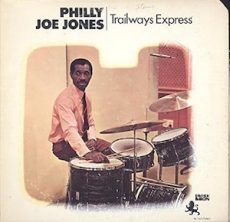
A few nights ago, I spent the evening listening to albums by three of my favorite drummers: Art Blakey, Elvin Jones, and Philly Joe Jones. This morning’s record from my library inspired me to take a trip aboard the Trailways Express (Polydor – Black Lion Records 2460 142), a 1971 U.K. release by Philly Joe Jones. It was his sixth album as a leader and was recorded in 1968, a year after he moved to London. He’s accompanied on this date by Les Condon on trumpet (track: B1), Kenny Wheeler on flugelhorn (A1 to A3, B2, B3) and trumpet (B1), Chris Pyne on trombone (B3), Peter King on alto sax (A2, A3, B1 to B3), Harold McNair on flute (A2, B2) and tenor sax (A1, B1 to B3), Mike Pyne on piano, John Hart (B1), and Ron Matthewson (A1 to A3, B2, B3) on bass. My copy is the 1975 U.S. Stereo reissue (Black Lion Records BL-142).
The group jumps headfirst into the spirited melody of Mo Jo by Philly Joe Jones. Mike ignites the opening statement with electrifying notes. Harold continues creating a crisp, upbeat solo, and then Kenny glides and soars smoothly on the flugelhorn next. Mike and Philly exchange ideas as the song progresses until the final chorus and conclusion. The tempo shifts as the front line introduces Gone, Gone, Gone by George and Ira Gershwin. It starts with a slower beat that steadily climbs as the septet embarks on their theme. Peter is up first and delivers a vibrant interpretation. Kenny, still on flugelhorn, spreads his wings next. Philly’s exquisite brushwork closes the solos before the ensemble returns to the theme.
Baubles, Bangles, and Beads by Robert Wright, George Forrest, and Alexander Borodin begins with Philly’s short introduction, preceding the group’s lively melody. Peter initiates the good times in the first solo, followed by Kenny, again on flugelhorn, who keeps the brisk mood alive. Mike takes over for a short, jubilant performance, and then Ron walks in vivaciously. Philly Joe precedes the ensemble’s closing chorus with a succinct remark. The title tune, Trailways Express by Philly Joe Jones, kicks off Side Two with Les taking over on trumpet and Philly’s introduction calling the group to action. Harold lights the fuse in the opening presentation; then Peter continues spreading the fire next. Philly fans the flames further toward the theme’s reprise and gradual descent to a fadeout.
Here’s That Rainy Day by Jimmy Van Heusen and Johnny Burke begins with Philly guiding the ensemble’s melody in his introduction. Peter starts with a soothing statement, and Harold narrates the next solo masterfully on the flute. Mike comes in next with a relaxed, easygoing reading. Philly delivers the song’s final festive swing ahead of Harold and Peter’s closing theme and the finale. The final track is Ladybird by Tadd Dameron and Ted Heath. Philly starts with a brief introduction before the septet’s vibrant theme. Mike sets the stage for the goodies to come. Harold follows him cheerfully, and Kenny moves along swiftly with cat-like ease next. Chris amazes in a dazzling interpretation, and Philly concludes with a final flourish, leading the ensemble back to the reprise and climax on a high note.
Alan Bates produced Trailways Express, though the identity of the recording engineer remains a mystery. Nonetheless, the album boasts a strong soundstage that listeners will find delightful. Philly Joe Jones was an outstanding drummer and the powerhouse behind the first great Miles Davis Quintet of the fifties. His nickname, Philly, distinguished him from another renowned drummer, Jo Jones. Although Jones’s discography as a leader is limited, he collaborated with numerous top-tier musicians as a sideman throughout his career. For fans of hard-bop and post-bop who seek exceptional drumming, Trailways Express by Philly Joe Jones is a must-listen. Its exceptional musicianship, led by Jones’s drumming, makes it a pleasure to listen to repeatedly!
~ Here’s That Rainy Day – Source: JazzStandards.com
~ Baubles, Bangles and Beads, Ladybird – Source: Wikipedia.org
© 2025 by Edward Thomas Carter
More Posts: choice,classic,collectible,collector,drums,history,instrumental,jazz,music