

Requisites
Mulligan Meets Monk ~ Thelonious Monk and Gerry Mulligan | By Eddie Carter
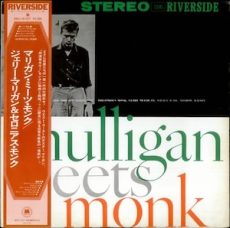
This morning’s record from the library, Mulligan Meets Monk (Riverside RLP 12-247/RLP 1106), is an excellent quartet date that brings together two giants, Gerry Mulligan and Thelonious Monk, for their only collaborative album. Their influence on bop and cool jazz is immeasurable. It hit the stores in 1957, and the personnel are Gerry Mulligan on baritone sax, Thelonious Monk on piano, Wilbur Ware on bass and Shadow Wilson on drums. My copy is the 1975 Victor Musical Industries Japanese Stereo reissue (Riverside SMJ-6107).
‘Round Midnight by Thelonious Monk, Cootie Williams, and Bennie Hanighen is one of The Great American Songbook’s most beautiful and recorded jazz tunes. It opens the first side with the quartet’s elegantly tender theme. Gerry delivers a mesmerizing first solo. Thelonious is next and gives a beautifully constructed reading ahead of the theme’s reprise and climax. Thelonious Monk’s Rhythm-a-ning picks up the pace with a lively introduction by Wilson segueing into the foursome’s spirited melody. Mulligan is up first with a statement of dynamic energy; then Monk speaks assertively in the second reading. Gerry returns with an excellent improvisation ahead of the theme’s restatement.
The group’s unique and refreshing approach to Sweet and Lovely by Gus Arnheim, Jules LeMare, and Harry Tobias starts with Gerry and Thelonious’ delicately graceful theme. Monk shows a considerable amount of respect in the opening solo. Mulligan’s exquisite softness in the closer precedes a gorgeous conclusion. Decidedly by Gerry Mulligan begins Side Two with a two-instrument dialogue between Gerry and Shadow, extending into the quartet’s brisk theme. Mulligan functions most effectively in the opening statement. Monk unwraps a pleasant surprise next. Wilbur takes a short, impressive walk, Gerry takes over briefly, and Shadow wraps things up before the close.
Straight, No Chaser is one of Thelonious Monk’s perfectly structured originals. The foursome’s bluesy theme sets up Gerry’s inspired opening statement. Wilbur’s bass goes to work next in a short reading, and then the pianist sums everything up nicely before the closing chorus and finale. I Mean You by Thelonious Monk and Coleman Hawkins begins with the pianist’s introduction, leading to the ensemble’s opening chorus. Monk steps into the spotlight first, cruising comfortably, and then Mulligan puts together a few good ideas in the second solo. Ware rounds out things with a breezy walk before the group reassembles to take the song out.
Mulligan Meets Monk was produced by Orrin Keepnews and recorded by Jack Higgins. The album’s sound quality is top-notch, with a superb soundstage that makes it feel like the quartet is performing right before you. Whether you’re a bop or cool jazz fan or new to the music of Gerry Mulligan and Thelonious Monk, Mulligan Meets Monk is a must-listen on your next record-shopping trip. It’s a delightful addition to both musicians’ discographies, showcasing their talents in a way that might make it a favorite in your library!
~ ‘Round Midnight, Straight, No Chaser, Sweet and Lovely – Source: JazzStandards.com
© 2024 by Edward Thomas Carter

More Posts: choice,classic,collectible,collector,history,instrumental,jazz,music,piano,saxophone
Requisites
The Modern Touch ~ Benny Golson Sextet | By Eddie Carter
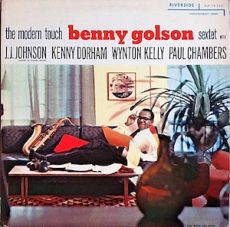
The jazz world mourned the loss of an icon when Benny Golson passed away on September 21, 2024. His departure left a void that can never be filled. Benny was an excellent musician, arranger and composer. He co-founded the Jazztet with Art Farmer. His extensive discography as a leader and his collaborations with elite jazz musicians as a sideman are a testament to his unique talent. My mother was a fan of his, and her love for his music inspired this morning’s discussion. The Modern Touch (Riverside RLP 12-256), released in 1958, is his second album as a leader and first for the label. He’s joined by Kenny Dorham on trumpet, J.J. Johnson on trombone, Wynton Kelly on piano, Paul Chambers on bass, and Max Roach on drums. My copy is the 1974 Victor Musical Industries Japanese Mono reissue (Riverside SMJ-6070M).
Out of The Past by Benny Golson opens the album with the sextet’s leisurely melody, setting the mood for the saxophonist’s relaxing opening solo. Kenny steps into the spotlight next. He is followed by J.J., who expresses his thoughts in the following statement. Wynton gives a captivating interpretation; then Paul walks with a steady beat. Max adds the finishing touches with a short solo ahead of the reprise. Reunion by Gigi Gryce begins with the front line’s introduction to the ensemble’s upbeat melody. Golson gets right to work first and wails. Johnson takes over and is especially impressive in an inspired interpretation. Dorham follows with a superb solo, ahead of a brief comment by Roach that gives way to Chambers telling a fascinating story. Kelly sustains the excitement in the following reading, and the drummer has an exchange with the front line into the closing chorus that slowly dissolves into nothingness.
Venetian Breeze by Benny Golson takes us on a musical journey inspired by the saxophonist’s travels over the Venetian Causeway from Miami to Miami Beach. The tempo shifts to mid-tempo for the three horns in unison to drive the sextet’s theme. J.J. takes the first solo and moves with ease into a fine groove. Kenny takes over like a refreshing drink on a hot day to give a relaxing performance. Benny swings straight from the heart next, and then Wynton holds our attention leading to the theme’s restatement. Hymn To The Orient by Gigi Gryce is a happy-blowing vehicle. It starts the second side with the sextet’s upbeat theme. Kelly takes the opening chorus and gives an energetic reading. Golson is at his most effective on the subsequent interpretation. Johnson has an outstanding solo next; then Roach gives his drums a short workout before the song’s conclusion.
The pace slows down for a beautiful rendition of Namely You by Gene DePaul and Johnny Mercer. The group sets the mood with a lovely introduction, segueing into Benny’s gentle, deeply emotional melody. In the solo showcase, the saxophonist applies a little tenderness and romantic beauty before the sextet reappears for a soft summation. Blues on Down by Benny Golson is a blues affording everyone a solo opportunity. It brings the album to a close, beginning with the sextet’s leisurely melody. Dorham begins the blowing with an easy-going solo. Golson continues to communicate a laid-back feeling in the following reading. Johnson steps into the spotlight next with a breezy interpretation; then Kelly offers a mellow flow of ideas in the fourth statement. Chambers gets the nod and takes a soulful walk, and Roach takes us home in the finale, ahead of the theme.
>Orrin Keepnews produced The Modern Touch, and Jack Higgins was the recording engineer behind the dials. The album has an excellent sound and is beautifully engineered. The listener will feel like the musicians are playing for them in their listening room. Benny Golson was one of the significant contributors to hard bop jazz as an arranger, composer and musician. I had the pleasure of seeing him perform live and meeting him during the nineties when he was the leader and musical director of The Jazz Messengers during a concert in Cleveland, Ohio. He couldn’t have been more gracious and down to earth. We talked for quite a while after the group’s performance, and I consider it a highlight of my life. His career lasted just over seven decades; he was ninety-five when he died.
Anyone who’s already a fan of Benny Golson and in the mood for an excellent hard-bop album should consider The Modern Touch on your next record-shopping trip. It’s a terrific release that offers a glimpse into one of the best multi-talented jazz musicians, and a record I happily recommend for a spot in your library!
Postscript: The Modern Touch was reissued in 1962 as Reunion on Jazzland (AM 85/AS 985).
© 2024 by Edward Thomas Carter
More Posts: choice,classic,collectible,collector,history,instrumental,jazz,music,saxophone
Requisites
In The Vanguard ~ Bobby Hutcherson | By Eddie Carter
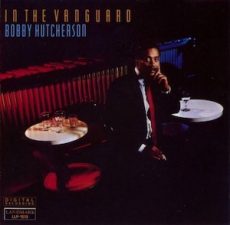
This morning’s discussion arose because I’ve been listening intensely to several great vibraphonists in my library recently, leading me to an underrated live album by Bobby Hutcherson. In The Vanguard (Landmark Records LLP-1513) hit the stores in 1987 and documents excerpts of his performance over two December nights the year before at the Village Vanguard. Bobby was the first artist Orrin Keepnews signed for his new record label; this was his third release. The quartet consists of Bobby Hutcherson on the vibraphone and marimba, Kenny Barron on piano, Buster Williams on bass, and Al Foster on drums. My copy is the original U.S. Stereo album.
The opener, Little Niles by Randy Weston, is a jazz waltz. The quartet gets things off to a spirited start with their melody. Bobby opens the soloing with an infectiously swinging groove. Kenny keeps the lyricism intact with a compelling case ahead of the theme’s restatement and close. Estaté by Bruno Martino and Bruno Brighetti is up next. Williams and Hutcherson set the song in motion with a pretty introduction. Barron and Foster enter next to add sensitive warmth to the gorgeous melody. Bobby’s opening solo is beautiful; then Kenny articulates his ideas tenderly while Buster and Al hold everything together into the quartet’s graceful climax.
Well, You Needn’t by Thelonious Monk and Mike Ferro opens with Bobby’s introduction before the ensemble’s theme takes off quickly. Bobby is out of the gate first with an exhilarating reading. Kenny steps up next to play with exciting urgency. Buster and Al share a moment in the closer, preceding the foursome’s return with a quick resolution. Side Two starts with Some Day My Prince Will Come by Frank Churchill and Larry Morey. The ensemble establishes the song with a quaint melody that moves upward for Hutcherson’s opening solo. Barron turns in an exquisite performance next, and Williams provides a superbly conceived finale, one of the album’s highlights before the reprise and ending.
Witchcraft by Cy Coleman and Carolyn Leigh begins with a two-instrument dialogue between Bobby and Buster, segueing into the quartet’s lovely melody. Bobby kicks off the solos with a stream of imaginative ideas. Kenny takes the reins, gliding to the rhythm section’s buoyant beat ahead of the song’s conclusion. I Wanna Stand Over There by Bobby Hutcherson is off to the races during the quartet’s upbeat theme. Barron comes right out of the gate, bristling with energy. Hutcherson follows with a hard-driving interpretation; then Foster provides the album’s final fireworks in a short solo ahead of the theme’s restatement and climax.
In The Vanguard is a digital recording produced by Orrin Keepnews and Tom Mark, the recording engineer. George Horn mastered the album, and Danny Kopelson provided the digital transfer, editing and sequencing at Fantasy Studios. The album’s sound quality is exceptional, capturing the live energy and ambiance of the Village Vanguard. The listener becomes a part of the audience as the musicians perform with crystal-clear fidelity. Despite its high-quality performance and recording, this album is often overlooked in Bobby Hutcherson’s discography. But please don’t let that discourage you from checking out In The Vanguard by Bobby Hutcherson the next time you’re out record shopping. It’s a jazzy treat for your ears and an absolute pleasure to listen to, especially if you enjoy live jazz albums!
Postscript: Estaté is listed on the Side One label and back album cover with two composers, Bruno Martino, and Bruno Brighetti. I have no idea why this happened, but they are the same man, Bruno Martini. He was an Italian composer, pianist, singer, and songwriter. Estaté was his best-known composition; many jazz musicians and vocalists have recorded it since its first appearance in 1960. Martino’s career lasted fifty-five years; he died on June 12, 2000, at age seventy-four.
~ Bruno Brighetti, Bruno Martino – Source: Discogs.com
~ Some Day My Prince Will Come – Source: JazzStandards.com
~ Little Niles, Witchcraft – Source: Wikipedia.org
© 2024 by Edward Thomas Carter
More Posts: choice,classic,collectible,collector,history,instrumental,jazz,music,vibraphone
Requisites
A Night In Tunisia ~ Art Blakey and The Jazz Messengers | By Eddie Carter
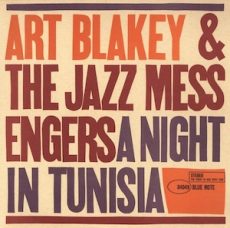
This morning’s record from the library is an exceptional jazz album where the musicians complement each other behind the iconic drummer Art Blakey. A Night In Tunisia (Blue Note BLP 4049/BST 84049) is a 1961 release that is not just one of the best LPs in The Jazz Messengers discography but a historical treasure that is better experienced than described. In the spotlight with Art on this date are Lee Morgan on trumpet, Wayne Shorter on tenor sax, Bobby Timmons on piano, and Jymie Merritt on bass. The 1978 King Record Company Japanese Stereo reissue is my copy (Blue Note BST 84049 – GXK 8041).
A Night In Tunisia by Dizzy Gillespie and Frank Paparelli starts swinging with Art’s lively introduction to the quintet’s brisk melody. Wayne launches into a hard-driving interpretation, showcasing his technical prowess and emotional depth. Lee continues cooking with energetic exuberance, his trumpet work adding a vibrant layer to the tune. Jymie demonstrates his skillful command of the bass, walking with authority in a short solo. Art fuels the finale with intense emotion ahead of the theme’s vigorous restatement.
The ensemble eases to a medium melody for Sincerely Diana by Wayne Shorter, stepping aside for the saxophonist’s bluesy opening statement. Morgan carries himself well in the following reading, his trumpet work adding a soulful touch. Then, Timmons delivers a delightfully relaxed performance, his piano playing adding a smooth, jazzy feel. Blakey provides a memorable exclamation point ahead of the closing chorus, his drumming adding a dynamic energy to the piece.
So Tired by Bobby Timmons starts Side Two at a medium tempo, with a boogaloo flavor for the ensemble’s theme. Wayne gives the opening solo an unmistakable melodic charm. Lee next illustrates a splendid study in soulful improvisation; then Bobby hits an ideal groove, leading to the theme’s restatement and graceful fadeout. Yama is the first of two originals by Lee Morgan, and the quintet’s melody is a model of uncomplicated beauty. Timmons is up first and shows his soloist capabilities to fine advantage here in a gentle performance. Morgan responds with a tender, tasteful presentation next. Shorter culminates the solos with an affectionately intimate reading over the trio’s lush foundation into the song’s soothing ending.
Art’s drums kick off the album closer, Kozo’s Waltz by Lee Morgan. The complete ensemble joins in for the medium-fast theme. Wayne gets things underway with a passionate opening statement. Lee responds with an exciting interpretation; Timmons follows with a few intriguing choruses. Art puts his stamp on the closing solo with a sizzling beat before the return to the theme. Alfred Lion produced the initial session, and Rudy Van Gelder was the recording engineer, both of whom were instrumental in capturing the quintet’s energy and chemistry. This King Record Company reissue has a spectacular soundstage that transports the musicians to the sweet spot in your listening room with stunning fidelity. If you’re a hard bop fan, I happily recommend A Night In Tunisia for a place in your jazz library. It’s a gem by Art Blakey and The Jazz Messengers that no jazz enthusiast should miss on their next shopping trip!
~ A Night In Tunisia – Source: JazzStandards.com
© 2024 By Edward Thomas Carter
More Posts: choice,classic,collectible,collector,drums,history,instrumental,jazz,music
Requisites
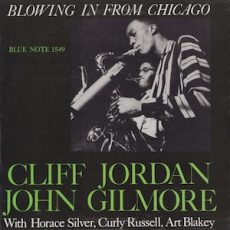
Blowing In From Chicago ~ Cliff Jordan & John Gilmore | By Eddie Carter
As a youngster discovering this music, I was always captivated by jazz’s unique and spontaneous nature, particularly the ‘blowing session’ or ‘jam session.’ These impromptu performances, where musicians control the flow of musical ideas from moment to moment, are a testament to the music’s excitement and unpredictability. Whether in a live setting at a club, concert, or jazz festival or captured in a studio session, jazz’s enthusiasm, vitality, and freedom are always present.
This morning’s choice from my library is an excellent LP from 1957 by two tenor saxophonists who made significant impressions in jazz, Clifford Jordan and John Gilmore. Their only album as co-leaders is titled Blowing In From Chicago (Blue Note BLP 1549), which signifies their roots in the vibrant jazz scene of Chicago. The quintet has an excellent rhythm section consisting of Horace Silver on piano, Curly Russell on bass, and Art Blakey on drums. My copy is the 1983 Pathé Marconi-EMI French Mono reissue, sharing the original catalog number. Before I proceed, let me state that this is not a DMM (Digital Metal Mastering) pressing.
The album opener, Status Quo, is a lively tune by John Neely, with both horns leading the charge through the uptempo melody. John rips into the opening solo, aggressively slicing through each verse like a sharp blade. Clifford joins him next in a short exchange, then takes off with a supercharged reading. Horace shifts into high gear on the third statement with a blazing swiftness that’s equally inspired and scintillating. Art engages in a brief conversation with both horns, then brings the solos to a close with an electric performance illustrating his incomparable artistry before the ensemble returns to the theme and quick stop. The first of two originals by Jordan follows.
Bo-Till slows the tempo to a laid-back pace with a Latin flavor. After a short introduction by the trio, the quintet states the theme collectively, stepping aside for Jordan, who makes a profound impression with a beautifully conceived statement displaying a great tone throughout. Silver gets into the groove next with an incredible, smooth reading, one of his best on the album. Gilmore delivers the closing choruses of the song proficiently with meticulous execution. Blakey constructs a concise comment during the ensemble’s end theme and close.
Blue Lights by Gigi Gryce is a catchy tune that opens with the quintet laying down a gorgeous medium beat on the theme and gives everyone a solo opportunity. John steps into the spotlight with a spirited performance. Horace follows with notes of undeniable pleasure in one of his most robust solos. Clifford weaves his way through the next musical improvisation with astounding skill. Curly puts together a condensed reading that walks for one chorus with solid bass lines. Art breezes into a straightforward interpretation that culminates into a splendid summation of the first side.
The second side gets underway with Charlie Parker’s Billie’s Bounce, which gives everyone except Russell a lengthy solo canvas on which to work. Blakey begins with a high-voltage introduction that sets the pace for the following fiery quintet theme. Clifford packs a mighty punch on the opening statement with a fire-breathing showcase, preceding John, who exhibits a robust attack on the subsequent interpretation with extremely hot choruses. Horace takes over next for a scintillating performance, taking his piano on a sizzling uptempo ride. Both horns exchange a few riffs with Art before the drummer gives an unaccompanied propulsive exhibition into the ending theme.
Clifford’s second original is a blues titled Evil Eye, which eases the throttle back from the previous burner to a medium pace with a collective melody by the quintet. Jordan opens the solos with a series of choruses that are smooth and well-structured. In the following presentation, Gilmore shows that he can also interpret blues with plenty of soul, which develops nicely. Silver delivers a lightly swinging performance that expresses pleasure as he moves masterfully through each chorus. Both horns return to share a few more thoughts. Blakey makes a short statement preceding the theme’s reprise and finish.
The album’s final track is Everywhere, a mid-tempo original by Horace Silver, which I believe made its debut on this album. It opens with a simple opening melody by the ensemble in unison, and the solo order is Gilmore, Jordan, Silver, and Blakey. John takes the stage first with a bewitchingly delightful opening statement. Clifford makes his case with a captivating contribution that moves sprightly alongside the rhythm section’s groundwork drive. Horace takes over next, communicating his points well with a pronounced beat. Art puts the joyous exclamation point on the song and album with a compelling statement that leads the group back to the ending theme and close.
Clifford Jordan recorded three albums for Blue Note; the other two LPs are Cliff Jordan and Cliff Craft. He played and recorded with many elite jazz musicians, including Charles Mingus and Max Roach. Clifford also enjoyed success recording as a leader and sideman, and in my opinion, his discography is well worth investigating. He remained in demand over the next three decades and toured worldwide. His final album was a 1992 live recording at Condon’s in New York City for Milestone, where he performed with his big band, Down Through The Years. He lost his battle against lung cancer on March 27, 1993, at age sixty-one.
Blowing In From Chicago was the first of three appearances on Blue Note by John Gilmore. The other two were as a sideman on two of Andrew Hill’s LPs, Andrew and Compulsion. He began playing the clarinet at fourteen, then pursued a musical career after a four-year stint in the United States Air Force, where he took up and played the tenor saxophone. He began a forty-year term with Sun Ra in 1953 and recorded for various labels with his group, Sun Ra Arkestra. During this time, Gilmore also toured with The Jazz Messengers and recorded with Paul Bley, Andrew Hill, Pete LaRoca, McCoy Tyner, and Dizzy Reece. After Sun Ra’s death on May 30, 1993, Gilmore led the Arkestra for two years before his death from emphysema on August 20, 1995, at age sixty-three.
As for the music on Blowing In From Chicago, it’s fantastic, as are the solos on each track, and the sound quality of this reissue is exemplary. The instruments deliver an excellent soundstage throughout the treble, midrange, and bass that places your sweet spot in the studio with the musicians. It’s a cut above the average debut album and a title I recommend as a terrific addition to any jazzophile’s library, particularly if you’re a hard-bop fan or love a good “blowing session” or “jam session.”
~ Andrew (Blue Note BLP 4203/BST 84203), Cliff Jordan (Blue Note BLP 1565), Cliff Craft (Blue Note BLP 1582/BST 81582), Compulsion (Blue Note BLP 4217/BST 84217), Down Through The Years (Milestone MCD-9197-2) – Source: Discogs.com
~ Billie’s Bounce – Source: JazzStandards.com
~ John Gilmore, Andrew Hill, Clifford Jordan – Source: Wikipedia.org
© 2024 by Edward Thomas Carter
More Posts: choice,classic,collectible,collector,history,instrumental,jazz,music,saxophone