


Requisites
The Young Bloods ~ Phil Woods and Donald Byrd | By Eddie Carter
This morning’s choice from the library brings together two of my favorite musicians for a quintet jam session, Phil Woods and Donald Byrd. The Young Bloods (Prestige LP 7080) is a 1957 release reuniting altoist Phil Woods, trumpeter Donald Byrd and bassist Teddy Kotick who appeared together on Jazz For The Carriage Trade a year earlier. Al Haig on piano and Charlie Persip on drums round out the ensemble. My copy is the 2022 Analogue Productions US Mono Audiophile reissue (Prestige PRLP 7080).
The opener, Dewey Square by Charlie Parker, takes off right out of the gate with Haig’s introduction segueing into the ensemble’s melody. The song takes its title from the Harlem hotel where Parker and other musicians resided during the forties. Donald leads off with a cooking opening solo; then, Al continues swinging in the second reading. Phil blows up a storm with a lengthy statement, succeeded by Charlie’s enthusiastic exchange with the front line ahead of the climax. Dupeltook, the first of four from Phil Woods, begins with a danceable theme by the ensemble. Woods is up first and manages the opening statement efficiently. Byrd grabs us by the ears with an inspired improvisation, then Haig hits a scintillating groove. Persip, Woods, and Byrd share a final conversation leading to the ending.
Once More, a relaxing blues by Woods opens with the front line moving in unison on the melody. Phil leads off with a marvelous opening reading. Donald delivers a pleasant presentation of sheer enjoyment; next, Al says some exciting things in his statement. Teddy walks a few bass lines toward the quintet’s theme reprise and climax. House of Chan is Woods’ dedication to his wife, Chan Parker, who initially was the common-law wife of Charlie Parker. The horns establish the medium theme together; Woods gets a good thing going in the opening statement. Byrd takes a few fine choruses in the second solo. Haig responds with a gorgeous bounce in the third reading, and Persip wraps it up in a brief exchange with Woods and Byrd preceding the group’s exit.
Phil’s final tune is In Walked George, named for pianist George Wallington. The front line sets the stage for the ensemble’s collective melody. Byrd takes the opening solo with a delightful interpretation, and woods follows with a statement as light as a fall breeze. Al puts the joyously cheerful exclamation point on the song ahead of the closing chorus and climax. Lover Man, by Jimmy Davis, Roger Ramirez, and James Sherman, receives a warm tribute by the quintet. Al opens the standard with a tender introduction segueing into a lovely melody and lead solo by Phil that takes your breath away. Donald expresses care and thoughtfulness in the second reading, followed by Al, who delivers a delicately graceful finale before the ensemble takes the song out softly.
Bob Weinstock supervised the initial recording of The Young Bloods, and Rudy Van Gelder was behind the dials. Kevin Gray mastered this audiophile reissue, and the sound quality is fantastic. The musicians emerge from your speakers with superb clarity. The record is 180 grams of audiophile vinyl that’s silent until the music starts, and the album jacket has a high gloss worthy of displaying on the wall. The Young Bloods is an excellent album that one can enjoy any time of the day or evening. If you’re looking for a great Hard-Bop album and are a fan of Phil Woods and Donald Byrd, The Young Bloods is a title you should seriously consider for a spot in your library!
~ Lover Man – Source: JazzStandards.com © 2023 by Edward Thomas Carter

More Posts: choice,classic,collectible,collector,history,instrumental,jazz,music,saxophone,trumpet

Requisites
All Day Long ~ The Prestige All-Stars | By Eddie Carter
This morning’s discussion is about an album I initially discovered as a youngster and have wanted in my library for a long time. All Day Long (Prestige PRLP 7081) is one of three 1957 jam sessions released by The Prestige All-Stars. It was recorded on January 4 and is the companion album to All Night Long, which the group recorded a week earlier. The sextet on this date is an exceptional ensemble of musicians, Donald Byrd on trumpet, Frank Foster on tenor sax, Tommy Flanagan on piano, Kenny Burrell on guitar, Doug Watkins on bass, and Arthur Taylor on drums. My copy is the 1979 Prestige Jazz Masterpieces Series Japanese Mono reissue (Prestige SMJ-6604M) by Victor Musical Industries.
The album opens with the title tune, Kenny Burrell’s All Day Long, a laid-back blues occupying the entire first side. Burrell, Watkins, and Taylor provide the foundation in the opening chorus, then Byrd, Foster, and Flanagan enter to complete the melody. Frank gets the solos underway with an inspired performance, and Donald follows with a down-home statement as satisfying as a delicious meal. Kenny takes the following solo with exemplary poise, then Tommy soars effortlessly into the following interpretation. Doug adds a few elaborate ideas to the finale preceding the closing chorus. Slim Jim by Donald Byrd begins Side Two with a Latin-flavored introduction by piano, drums, and the front line. Foster, Byrd, Flanagan, and Burrell cruise comfortably in each solo, leading to the closing theme and dissolution.
Say Listen, also by Donald Byrd, starts with the sextet’s finger-popping theme in unison. Kenny steps up first with an opening solo as smooth as satin. Frank gets into a spirited groove on the second interpretation, then Donald takes over for an incredibly effective reading. Tommy has the last word and makes his point convincingly ahead of the ending theme and conclusion. A.T. by Frank Foster pays homage to Art Taylor, with the ensemble collectively taking flight on a lively melody. Foster takes the lead and gives a scintillating reading; next, Burrell takes a quick romp on the second statement. Byrd takes over for a presentation of aggressive energy, then Flanagan adds fresh fuel to the fire in a short solo. Taylor engages in a brief conversation with his fellow soloists into the sextet’s vigorous close.
Bob Weinstock supervised the initial album, and Rudy Van Gelder was the recording engineer. The sound is superb, and Victor Musical Industries has done a stellar job remastering this reissue. The highs sparkle, the midrange is crisp, and the low end is stunning, transporting the musicians to your listening room with exceptional sound quality. If you’re a Hard-Bop fan, I offer All Day Long by The Prestige All-Stars for your consideration on your next vinyl shopping trip. Like its companion, All Night Long, the two albums complement each other perfectly; either is a title you won’t regret adding to your library
~ All Night Long (Prestige PRLP 7073), Earthy (Prestige PRLP 7102) – Source: Discogs.com ~ © 2023 by Edward Thomas Carter
More Posts: choice,classic,collectible,collector,ensemble,history,instrumental,jazz,music
Requisites
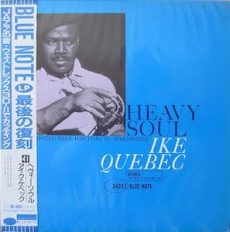
Heavy Soul ~ Ike Quebec | By Eddie Carter
A few nights ago, I was thinking about my mom and reflecting on some of the records she loved to play while cooking dinner when my sister and I were younger. I listened to one of her favorite albums by tenor saxophonist Ike Quebec, which led me to this morning’s choice from the library. Heavy Soul (Blue Note BLP 4093/BST 84093) is a quartet date and the third of four records the label released in 1962. His bandmates on this record are Freddie Roach on organ, Milt Hinton on bass, and Al Harewood on drums. Their first appearance together was on an earlier release that year; It Might As Well Be Spring. My copy is the 1990 Toshiba-EMI Limited Japanese Stereo reissue sharing the original catalog number.
Side One kicks off with the first of three originals by Ike Quebec. Acquitted is a catchy tune that begins with a lively groove for the quartet’s theme. Ike kicks off the solos with a driving rhythm, and Freddie treats the listener to a zesty performance. The leader returns to share a few more thoughts preceding the ending theme, fading into nothingness. Just One More Chance by Sam Coslow and Arthur Johnston first appeared in the 1931 featurette, One More Chance. Quebec and company make an indelible impression on the melody, then the saxophonist leads off with a stylish performance. Freddie adds a deep sense of nostalgia in the second statement, leading to the tenor’s elegant conclusion.
Que’s Dilemma, also by Quebec, moves the beat upward for the saxophonist’s agile melody. He begins the song’s only solo with Milt and Al in the background, Freddie joins the festivities next, and Ike completes his invigorating statement into the closing chorus and disappearance. Brother, Can You Spare A Dime? by Jay Gorney and E.Y. Harburg poignantly gives a glimpse into the times during the Great Depression. The quartet presents the melody with a sad simplicity that serves as a springboard into Ike’s deeply affecting opening solo. The following presentation by Freddie is equally gentle and stunningly executed with Milt and Al’s assistance. Ike sums up the song’s story with a gorgeous reprise and finish.
Side Two gets underway with George, and Ira Gershwin’s, The Man I Love. The ensemble states the theme slowly; next, the tempo quickens for Ike to wail on the song’s only interpretation. The group slows the beat down for the closing chorus and finale. Ike’s third tune, Heavy Soul, is a down-home blues that commences with an introduction, first by Milt. Then, Ike, Al, and Freddie enter with subtly conceived statements to complete the theme. Ike draws an exceptionally tender tone from his tenor sax in the first presentation. Freddie maintains a therapeutic mood with one of his most relaxed performances. Milt has the last word and effectively walks toward the saxophonist’s ending theme, which disappears into oblivion.
I Want a Little Girl by Murray Mencher, and Billy Moll is a beautiful ballad that hasn’t been over-recorded. Ike and the rhythm section establish an affectionately exquisite theme, and he continues telling a sensitive story in the opening interpretation. Freddie emerges next with a delicately expressed reading, then Ike returns to add a heartfelt exclamation preceding the quartet’s return for the gentle climax. The album’s closing track, Nature Boy by Eden Ahbez, is a two-instrument conversation between tenor and bass. Ike creates an enchanting illustration on the opening and closing melody, and Milt provides supportive warmth and sensitivity into a charming finale. Alfred Lion produced the initial session, and Rudy Van Gelder was the recording engineer.
The reissue’s sound quality is fantastic, with a spacious soundstage that’s clear and detailed. Toshiba-EMI has also done an excellent job on the remastering, and the vinyl is quiet until the music begins. Ike Quebec was an accomplished dancer and pianist before taking up the tenor sax in his twenties. In 1940, his recording career began with the Barons of Rhythm, and he’s performed with Cab Calloway, Benny Carter, Roy Eldridge, Ella Fitzgerald, Coleman Hawkins, Hot Lips Page, and Trummy Young. Most of Ike’s discography as a leader and sideman is on Blue Note, and he also served as an arranger and talent scout for the label. He occasionally recorded during the fifties due to heroin addiction but began a comeback in 1959. Four years later, he lost his battle with lung cancer on January 16, 1963, at age forty-three.
If you’re in the mood for mellow tenor sax, I invite you to add Heavy Soul to your list the next time you are out vinyl shopping. It’s an excellent place to start discovering the music of Ike Quebec and a delightful album perfect for late-night listening or long drives with the windows down. The fast numbers crackle with excitement, and the slow tunes reveal the depths of Ike Quebec’s creative ingenuity, resulting in an easy choice for any jazz lover’s library that’s hard to beat!
~ It Might As Well Be Spring (Blue Note BLP 4105/BST 84105) – Source: Discogs.com ~ Nature Boy, The Man I Love – Source: JazzStandards.com ~ Ike Quebec, Brother, Can You Spare a Dime? – Source: Wikipedia.org ~ © 2022 by Edward Thomas Carter
More Posts: choice,classic,collectible,collector,history,instrumental,jazz,music,saxophone
Requisites
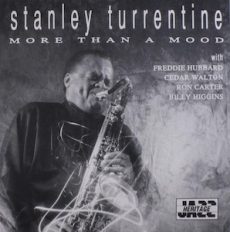
More Than a Mood ~ Stanley Turrentine | By Eddie Carter
After the enormous success of Sugar in 1971, tenor saxophonist Stanley Turrentine began moving in a different direction towards smooth jazz and jazz funk. Two decades later, he returned to his bop roots with three CD albums for the MusicMasters Jazz label. This morning’s discussion hit the stores in 1992. More Than a Mood (Jazz Heritage 913307A) puts the listener in mind of his sixties Blue Note LPs. On this date, he is working with a superb quartet, Freddie Hubbard on trumpet (track: A1) and flugelhorn (B3), Cedar Walton on piano, Ron Carter on Bass, and Billy Higgins on drums. My copy is the 1993 US Stereo release.
The first side gets underway with Thomasville by Tommy Turrentine (Stanley’s brother), with the rhythm section fueling the frontline’s invigorating melody. Stanley reaches a height of feisty excitement. Freddie follows with a scintillating performance; then Cedar delivers an exciting improvisation. Billy enters the spotlight with vigorous enthusiasm on the finale, leading to the closing chorus. They Can’t Take That Away From Me by George, and Ira Gershwin is a quartet highlight for Turrentine and the trio, who set the pace with a beautiful melody. Stanley applies a nostalgic touch to the opening solo with a splendid presentation. Cedar responds with a delicious interpretation ahead of the reprise and soft summation.
In a Sentimental Mood by Duke Ellington, Irving Mills, and Manny Kurtz is one of The Great American Songbook’s most recorded jazz and pop standards. The quartet’s rendition begins with a concise introduction by Cedar that opens the way for Stanley’s lovely melody and delicately gentle opening statement. Cedar is up next and delivers an elegant interpretation that’s a marvel to behold. Stanley returns with a few distinctive comments preceding the foursome’s delicately gentle climax. Easy Walker by Billy Taylor and Teddy Castion moves the quartet back to a medium tempo for Turrentine’s excellent execution of the melody and opening solo. Walton moves in next with an impressive statement, then Higgins takes care of business into the closing chorus and conclusion.
To begin Side Two, the quartet tackles the Bossa Nova song, Triste, by Antônio Carlos Jobim. The title’s definition in English is sad, and it’s one of Jobim’s best-known compositions. He first recorded it in 1967, and the quartet’s rendition begins and ends with two festive opening and closing choruses. Stanley and Cedar are the featured soloists, and both give spirited readings sustained by Ron and Billy’s groundwork. Pieces of Dreams by Alan Bergman, Marilyn Bergman, and Michael Legrand commences with the trio’s introduction segueing into Turrentine’s elegant theme and pretty thoughts on the opening reading. Walton carries the ball with a presentation of pure beauty leading to the ensemble’s ending theme.
Spirits Up Above by Rahsaan Roland Kirk brings back Freddie Hubbard and displays his flugelhorn at its most beguiling. The opening melody flows with the warm, mellow tones of the front line’s gentle message over the rhythm section. Turrentine is up first and crafts a reading as sweet as honey. Walton achieves a very intimate feeling on the second statement, and Hubbard infuses the closer with sentimental warmth into the quintet’s theme reprise and poetic fadeout. The title tune, More Than A Mood, by Frank Marino and Bill Simon, brings the album to a close with a slow tempo that affords Stanley the solo spotlight alone. The trio opens this song peacefully, and Stanley responds with a gorgeous melody and alluring statement culminating with a sensuously tender closing chorus and fading out of sight.
Joe Delia produced More Than a Mood, and the recording engineer was Jimmy Douglass. The record has superb sound quality, and the music is excellent throughout. Stanley dedicated this album to his brother Tommy and fellow saxophonists Don Byas and Rahsaan Roland Kirk, and it recaptures the spirit of his Blue Note records with inspired performances. If you’re new to the music of Stanley Turrentine or are already a seasoned fan, I invite you to check out More Than a Mood on your next vinyl hunt. Sadly, the record label Jazz Heritage no longer exists, so the album may be difficult to find, but it’s worth seeking out for a spot in your library and is sure to make you smile once you do!
~ More Than a Mood (MusicMasters Jazz 01612-65079-2), Wave (A&M Records SP-3002) – Source: Discogs.com ~ In a Sentimental Mood, They Can’t Take That Away From Me – Source: JazzStandards.com ~ Pieces of Dreams, Triste – Source: Wikipedia.org ~ © 2022 by Edward Thomas Carter
More Posts: choice,classic,collectible,collector,history,instrumental,jazz,music,saxophone
Daily Dose Of Jazz…
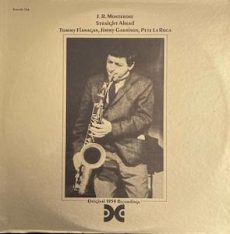
J.R. Monterose steps into the spotlight of this discussion with Straight Ahead (Xanadu Records 126). It was his second album as a leader and was released initially as The Message in 1960. J.R. was born Frank Anthony Peter Vincent Monterose Jr., and his initials come from Junior. He began playing the clarinet at age thirteen, then started the tenor sax two years later. Monterose was equally proficient on the soprano sax, but the tenor became his primary instrument. He’s collaborated with Kenny Burrell, Teddy Charles, Kenny Dorham, Jon Eardley, Charles Mingus, Buddy Rich, and George Wallington over his career. His bandmates on this date are three of the best in the business, Tommy Flanagan on piano, Jimmy Garrison on bass, and Pete La Roca on drums. My copy is the 1976 U.S. Mono reissue.
Straight Ahead, the first of five tunes composed by J.R. Monterose, opens the album with a brief introduction segueing into the quartet’s fleet melody. J.R. kicks off the solos with a brisk interpretation; next, Tommy builds a statement of pure excitement. J.R. and Pete share a swift exchange of notes, leading to the closing chorus and exit. Violet For Your Furs is a beautiful composition by Matt Dennis and Tom Adair from the forties. It begins with a brief dialogue between Monterose and Flanagan that blossoms into the ensemble’s elegant opening chorus. J.R. has the song’s only statement and brings out its warmth and lyricism in a display of intimate tenderness complemented by the rhythm section ahead of a soothing ending.
Chafic is the saxophonist’s tune for a French poodle he owned. The word’s definition in Arabic is merciful, and the pace moves upward for the foursome’s central theme. J.R. expresses his love and admiration for his pet in the opening statement. Tommy extends the pleasant feeling in the second interpretation, and Jimmy gets a bit of work leading to the climax. I Remember Clifford by Benny Golson, and Jon Hendricks closes the first side with a very touching rendition by the ensemble. The jazz standard is one of Golson’s most recorded tunes and a moving tribute to trumpeter Clifford Brown. A concise introduction by the leader opens the way for the foursome’s delicately gentle theme. Monterose again has the solo spotlight and crafts a charming interpretation into a serene finale.
Side Two is occupied by the final three tunes by J.R. Monterose, beginning with Green Street Scene, a blues that swings easily from the theme’s opening notes. The saxophonist goes to work first on an infectiously cheery solo. Tommy comes in next for an entertaining romp; then Jimmy takes a short stroll on the following reading. J.R. and Pete share a stimulating conversation before the close. You Know That is a swinger that the quartet brings vibrantly to life in the opening chorus. The saxophonist leads off with a compelling interpretation, then Flanagan gets into a swinging groove on the following statement. La Roca has a brief remark before Monterose returns for the closing theme reprise and a slow dissolve into nothingness.
Short Bridge is an exercise of pure joy, opening with a beautifully conceived melody and the opening statement by J.R. Tommy slides in next with one of his most mellow readings. The saxophonist returns with a memorable exclamation point ahead of the song’s conclusion. It’s unknown who produced the original album, but Don Schlitten produced the Xanadu reissue, and Paul Goodman remastered it. The album has an excellent soundstage through the treble, midrange, and low end. If you’re in the mood for an album that recaptures the spirit of Hard-Bop, I offer for your consideration Straight Ahead by J.R. Monterose. It’s a beautiful performance that’s highly recommended and worth the price of admission for a spot in any jazz library!
~ The Message (Jaro International JAM-5004/JAS-5004) – Source: Discogs.com ~ I Remember Clifford – Source: JazzStandards.com ~ Violet For Your Furs – Source: Wikipedia.org © 2022 by Edward Thomas Carter
More Posts: choice,classic,collectible,collector,history,instrumental,jazz,music,saxophone