

Daily Dose Of Jazz…
Lawrence Benjamin Bunker was born November 4, 1928 in Long Beach, California. At first he played primarily drums, but increasingly he focused on vibraphone. He was later highly regarded for his playing of timpani and various percussion instruments.
Bunker is a dependable and in-demand studio drummer and vibist who achieved distinction recording with Billie Holiday, Ella Fitzgerald, Peggy Lee, Diana Krall, and many other jazz greats. In 1952, he was the drummer in one of Art Pepper’s first groups. The next two years he played drums in some of the earliest of Gerry Mulligan’s groups.
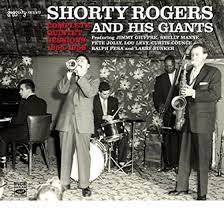
In the 1950s and 1960s he appeared at Howard Rumsey’s Lighthouse in Hermosa Beach, and performed with Shorty Rogers and His Giants and others. The Sixties had him intermittently drumming in the Bill Evans trio and played timpani with the Los Angeles Philharmonic orchestra.
His work in movie soundtracks spanned over fifty years, from Stalag 17 in 1953 and Glengarry Glen Ross in ‘92) to The Incredibles in 2004. Larry’s work included soundtracks by John Williams, Henry Mancini, Quincy Jones, Miklós Rózsa, Jerry Goldsmith, Johnny Mandel, Lalo Schifrin and many other composers.
Drummer, vibraphonist, and percussionist Larry Bunker, who was a central figure on the West Coast jazz scene, transitioned from complications of a stroke in Los Angeles, California at age 76 on March 8, 2005.

More Posts: bandleader,drums,history,instrumental,jazz,music,percussion,timpani,vibraphone
The Jazz Voyager
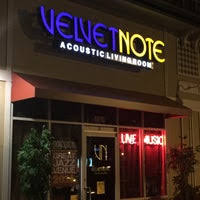
I’m off to Alpharetta, Georgia to see one of my favorite bassists at The Velvet Note located at 4075 Old Milton Parkway. I enjoy this venue for its coziness and superb sound system. No matter where you sit you are perfectly positioned to hear clearly. There’s no columns to obstruct the view and they even have a sofa if you want to feel like you’re in your living room.
This week it’s the Curtis Lundy Trio with pianist Cyrus Chestnut and drummer Victor Jones. These three in-demand musicians will bring the heat as they do individually when leading their trios or quartets. This promises to be a heavyweight treat. Two nights, two sets each evening at 7:30 and 9:30 pm
As always, coming in a day early to the ATL will give me time to hang out and break bread with friends and relatives. For more information, the number is 855-583-5838 or thevelvetnote.com.

More Posts: adventure,album,bass,club,drums,festival,genius,jazz,museum,music,piano,preserving,restaurant,travel
TAWANDA
With John DiMartino, Marco Panascia & Tim Horner
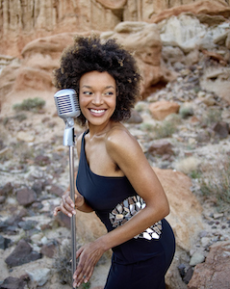
An official Resonance Records CD Release performance! The first 30 ticket buyers will receive a FREE copy of Tawanda Suessbrich-Joaquim’s newest release, “SMILE!”
Since she grew up in the Deep South to a mother from Germany and a father from Mozambique, her unique cultural DNA opened up her heart and mind to many worlds of music that are still an integral part of everything she sings.
Jazz is one form of music that transcends most other genres and has done so throughout the ages. Its complexity, off beat rhythms, sophistication and constant desire to improvise and evolve itself courses through its precious origins. Those traditions run deep within the soul of award-winning vocalist Tawanda Suessbrich-Joaquim and there is no greater gift than seeing her sing her story in full flight.
A vibrant mix of cultural heritages that underpin her every move, Tawanda was raised in the deep south of New Mexico on the border with Texas. She is proudly a first generation American with a mother from Germany and a father from Mozambique. That fusion of intoxicating backgrounds gave her access to music that many do not experience and which will forever stay in her heart.
Always looking forward, Tawanda delves deep into the worldwide Jazz scene and explores the multi-genre fusion that can be found in its paradise of riches. That desire to respect not only her peers but the origins of her name which translates as ‘we are more’ in a Bantu dialect called Shona, has embedded a deep-rooted desire within her to give back to those around her.
There is no better affirmation of her talent than winning the prestigious 2020 Sarah Vaughan Vocal Jazz competition. Now based in Los Angeles and with a whole host of performances that have enthralled audiences everywhere, Tawanda Suessbrich-Joaquim is set to soar on the wings of success.
More Posts: adventure,album,bass,club,drums,festival,genius,jazz,museum,music,piano,preserving,restaurant,travel,vocal
CHARLES MCPHERSON & SEAN JONES
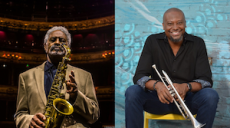
Charles McPherson with Sean Jones featuring Jeb Patton, Russell Hall & Billy Drummond
Thursday-Sunday, November 10-13th
Thursday: 7:30pm
Friday & Saturday: 7pm & 9:30pm
Sunday: 5pm & 7:30pm
Four incredible nights with these five grand masters!
“Charles is the very definition of excellence in our music. He is the definitive master on this instrument. He plays with exceptional harmonic accuracy and sophistication. He performs free-flowing, melodic and thematically developed solos with unbelievable fire and an unparalleled depth of soul.” – Wynton Marsalis
More Posts: adventure,album,bass,club,drums,festival,genius,jazz,museum,music,piano,preserving,restaurant,saxophone,travel,trumpet
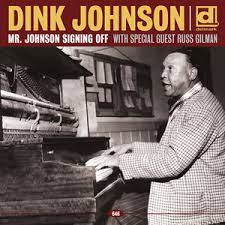
Daily Dose Of Jazz…
Ollie “Dink” Johnson was born in Biloxi, Mississippi on October 28, 1892. He was the younger brother of double bassist William Manuel “Bill” Johnson. He worked around Mississippi and New Orleans before moving to the western United States in the early 1910s. He played around Nevada and California, often with his older brother. He played with the Original Creole Orchestra, mostly on drums.
He made his first recordings in 1922 on clarinet with Kid Ory’s Band. He made more recordings in the 1940s and 1950s, mostly on piano, although Johnson recorded some one-man band sessions, playing all three of his instruments by over-dubbing.
His piano style was influenced by his brother-in-law Jelly Roll Morton, and his clarinet playing by Larry Shields. The tunes he wrote included The Krooked Blues, recorded by King Oliver and So Different Blues.
Pianist, clarinetist, and drummer Dink Johnson, who played in the Dixieland genre, transitioned in Portland, Oregon on November 29, 1954.
More Posts: bandleader,clarinet,drums,history,instrumental,jazz,music,piano