


Daily Dose Of Jazz…
Leah Souza was born in Plymouth, Massachusetts on May 8, 1982 and began singing at a very early age. She started performing at functions and outdoor concerts when she was thirteen. At 16, she was the lead vocalist of a seven piece band that was selected in a national talent search to perform in California. In high school she was the jazz band’s featured vocalist and played the tenor saxophone in multiple bands. She got her big break nationally singing on a song with her flugelhornist father, appropriately titled A Song for My Father.
Leah studied with jazz singer and vocal coach Rebecca Parris while in high school. For several years she regularly attended a Jazz All-Stars show at “Ricky T’s Jazz Club” on the South Shore. There she listened to the top jazz musicians in New England on a weekly basis and eventually began sitting in with the different All-Star bands. Studying these musicians helped her develop as a musician herself, as well as, the opportunity to meet and perform with many wonderful and often legendary performers.
She crafts her duo, trio, quartet or quintet to the venue she is playing with performances that may be lively and exciting, or romantic and full of standard ballads. Souza has performed at the cream-of-the- crop venues in Boston, Massachusetts and throughout New England.
Vocalist Leah Souza continues to pursue her burgeoning career as she expands her reach.

More Posts: bandleader,history,instrumental,jazz,music,vocal
Jazz Poems
DARK TO THEMSELVES
Invent, experiment–Jazzthat doesn’t swing but dances tight
as a drumhead so taut it mightexplode: whole notes cleaved
into sixteenths with a single blow, melodiesrecoded as arpeggios. Say, what he calls this
composition? Tiny fingers diviningan architectonic flow, forearms jacking
cracks in the keyboard as wireand wood cry out in agony:
duo follow, ringing changes.Liberate the dissonance without killing
the blues. Unit structure cut it.They don’t teach this joint in the Conservatory.
Varèse via Jelly Roll, serial Waller,harmony ribbons in a Möbius strip. Recut it.
Enough is enough. Brother can’t playhere again, the customers ain’t paying.
Even Miles was giggling in the darkness.It’s always a bitch to be out
front. He summons the basslineof his thoughts in the shadows, tracing a new theory
of silence. Don’t worry about the next gig.Their ears are still learning.
JOHN KEENEfrom Jazz Poems ~ Selected and Edited by Kevin Young
More Posts: book,classic,collectible,history,jazz,library,poet

Daily Dose Of Jazz…
Vic Berton was born Victor Cohen on May 7, 1896 in Chicago, Illinois. His father was a violinist who began his son on string instruments around age five. He was hired as a percussionist at the Alhambra Theater in Milwaukee, Wisconsin in 1903 when he was only seven years old. By 16, he was playing with the Milwaukee Symphony Orchestra and the Chicago Symphony Orchestra. While serving in World War I he played drums for John Philip Sousa’s Navy band.
In the early 1920s, Berton played in the Chicago bands of Art Kahn, Paul Beise, and Arnold Johnson. He led his own ensemble which played at the Merry Gardens club. 1924 saw him become the manager of The Wolverines, and occasionally played alongside Bix Beiderbecke in the ensemble. Later in the decade, he played with Roger Wolfe Kahn, Don Voorhees, Red Nichols and Paul Whiteman. He worked extensively as a session musicianbefore moving to Los Angeles, California in 1927.
During his time in Los Angeles he played with Abe Lyman and recorded in studios for film soundtracks. Vic served as director of Paramount Films’s music division for a period and worked in the Los Angeles Philharmonic Orchestra. In the 1940s, he worked as a percussionist in the studios for 20th Century Fox.
Drummer Vic Berton died on December 26, 1951 in Hollywood, California from lung cancer.
More Posts: bandleader,drums,history,instrumental,jazz,music

Daily Dose Of Jazz…
Duke Jones was born Albert Jones on May 6th in White Plains, New York. The nickname was given to him by his favorite aunt due to his love of music at an early age. He began learning trumpet at the age of nine and played in elementary school through high school. He formed a band with The Lewis Brothers and Sharon Bryant that ultimately became Atlantic Starr.
Jones attended Northwestern University in Evanston, Illinois, studying music and film. He worked the New York club circuit and continued his studies with traditional island rhythms, calypso and soca at the University of Virgin Islands. He was influenced by Kenny Dorham, Woody Shaw, Lee Morgan, Benny Bailey and Miles Davis.
He would go on to tour Japan, Europe and Africa, working with The Temptations, Angela Bofill, Larry Coryell and Marion Meadows. He has collaborated and recorded with August Darnell, and drummer Norman Connors. Duke served as Vice President of Creole Records, a label started with then band mate August Darnell (Kid Creole). In 2005, he formed Café Soul All-Stars, recording their debut album Love Pages which featured George Benson, Roy Ayers and Kenny Garrett among others.
Trumpeter and flugelhornist Duke Jones continues to perform, record and collaborate with his music.
More Posts: bandleader,flugelhorn,history,instrumental,jazz,music,trumpet
Requisites
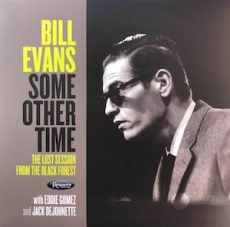
Some Other Time: The Lost Session From The Black Forest ~ Bill Evans | By Eddie Carter
This morning’s album is a studio release by one of my favorite pianists, Bill Evans, Some Other Time – The Lost Session From The Black Forest (Resonance Records HLP-9019). It was initially released on Record Store Day, April 16, 2016. Bill always had a wonderful approach to his playing, and it’s effectively demonstrated in this wonderful two-record collection of originals and standards. The pianist and his trio of Eddie Gomez on bass and Jack DeJohnette on drums had just concluded a successful engagement at the 1968 Montreux Jazz Festival a few days earlier before recording this album. My copy is the 2020 U.S. Record Store Day, Limited Edition Stereo reissue (Resonance Records HLP-2019B).
Side One opens with a lighthearted rendition of You Go To My Head by J. Fred Coots and Haven Gillespie. Bill leads the charge through the catchy, finger-popping melody and the song’s first interpretation. Eddie is up next with an especially appealing reading preceding Bill’s theme reprise and ending. Very Early by Bill Evans begins with a subdued piano introduction before the pace picks up for the theme. Evans takes the lead and expresses his thoughts in a beautiful example of his artistry. Gomez holds his own in a tender presentation ahead of the pianist’s return for the song’s conclusion.
Leslie Bricusse and Anthony Newley created the popular song, What Kind of Fool Am I? Bill and Eddie are the featured performers in this rendition. Evans introduces the tune and then shares a tasteful, articulate melody with Gomez. The opening solo by Bill is elegantly presented, and then Eddie takes a short, luxurious walk towards the theme’s restatement and climax. Evans and Gomez return for I’ll Remember April by Don Raye, Gene DePaul, and Patricia Johnston. This charming song is sheer poetry in Bill’s and Eddie’s hands as they state the theme. Both musicians shine in two brilliant performances culminating in a soft summation.
My Funny Valentine by Richard Rodgers and Lorenz Hart begins with a touchingly tender melody. Bill opens with a beautiful solo that envelops the listener. Eddie makes a profound impression on the following interpretation with Jack’s gentle brushwork keeping perfect time into the soothing reprise and ending. Side Two starts with Baubles, Bangles and Beads by George Forrest and Robert Wright. It’s another showcase for piano and bass, and their duet puts a fresh set of clothes on this old favorite with a collective theme. Bill has the first spot and gives a wonderful reading, and then Eddie struts through the following statement into the out-chorus.
The beat moves upward slightly for Turn Out The Stars by Bill Evans, a gorgeous tune that opens with a sweet introduction ahead of the threesome’s appealing melody. Bill has the song’s only reading and turns in an impressive improvisation ahead of the exit. It Could Happen To You by Jimmy Van Heusen is an old warhorse from the forties that the partnership of Evans and Gomez begins with a beautifully mellow opening chorus. Bill has the first spot and gives an opening performance characterized by poetic sensibility. Eddie takes over and is right at home in the closer preceding the duo taking it out softly.
In a Sentimental Mood is one of Duke Ellington’s best-known and recorded tunes. The trio makes their entrance together for the tender melody, stepping aside for Bill’s gorgeous opening statement. Eddie follows him like a warm evening breeze for a brief walk before the trio reconvenes for the theme’s restatement. These Foolish Things by Jack Strachey and Holt Marvell is a haunting song perfectly suited for Bill and Eddie’s playing. The duo doesn’t disappoint from the start of the delicately gentle melody into the pianist’s exquisitely beautiful opening solo. Gomez answers Evans with soothing bass lines leading to a quiet climax.
The trio closes the first record with the title tune, Some Other Time, by Leonard Bernstein, Betty Comden, and Adolph Green. The group’s interaction applies an equal amount of warmth and tenderness to the opening chorus. The pace picks up slightly for Bill’s breathtakingly beautiful interpretation ahead of an ending of perfect tranquility. You’re Gonna Hear From Me is the creation of spouses André and Dory Previn. It opens Side Three with a marvelous midtempo melody by the trio, leading to a delightful interpretation by the leader of Eddie and Jack’s solid foundation until the song’s conclusion.
Walkin’ Up is a lively little tune by Bill Evans that gets underway with a quirky theme and affords everyone a solo opportunity. The pianist opens with a short statement, then gives way to Eddie, who does the largest amount of walking in this song. Jack shares a small bit of inspired brushwork with Bill before the theme’s reprise ends as it begins. The trio takes on a second rendition of Baubles, Bangles and Beads that opens with a friendly, harmonious theme. Bill dips into his bag of goodies to deliver a carefree first solo, and then Eddie responds with a comforting interpretation before the trio returns for the close.
It’s All Right With Me by Cole Porter made its first appearance in the 1953 musical Can-Can and has been recorded numerous times. The setting for this incomplete take is a solo showcase for Bill to provide a charming interpretation culminating in a gorgeous finale. The listener is treated to a second rendition of What Kind of Fool Am I? Evans introduces the song in a short solo introduction that blossoms into the ensemble’s lively opening chorus. The pianist gets the solo spotlight again and swings easily to the rhythm section’s groundwork before Evans brings back the theme and a tranquil climax.
Side Four starts with a song by Burton Lane and Ralph Freed from the 1941 musical film Babes on Broadway, How About You? The trio’s melody takes off at a brisk pace, and Bill leads the way in a splendid interpretation. Eddie’s bass lines are equally effective in the second reading while Jack’s brushwork holds everything together until the trio’s finale. On Green Dolphin Street by Bronislaw Kaper and Ned Washington has a bouncing beat from the start of the melody. Gomez kicks off the solos and his bass flows vibrantly, leading to a fascinating statement by the leader into the theme’s reprise.
Wonder Why by Nicholas Brodszky and Sammy Cahn is a tune that still sounds fresh because it hasn’t been over-recorded. It comes from the 1951 film Rich, Young and Pretty. The trio’s pretty melody gives way to Eddie walking his bass with Jack’s brushwork tagging along in the first solo. Bill takes over to make a short comment ahead of the closing chorus. Lover Man (Oh, Where Can You Be) by Jimmy Davis, Roger Ramirez, and James Sherman is a solo showcase by Evans beginning with a deeply affecting melody. He follows with a poignantly beautiful statement that’s sure to linger in the listener’s memory after the song’s touching ending.
The final stop on our nostalgic trip is an alternate take of You’re Gonna Hear From Me. Bill begins with a brief introduction that segues into the trio’s lighthearted melody. Bill has the song’s only interpretation and shines with an imaginative flair over Eddie and Jack’s breezy support into the melody’s reprise and close. Andreas Brunner-Schwer and Mathias Brunner-Schwer produced Some Other Time – The Lost Session From The Black Forest. Hans Georg Brunner-Schwer and Joachim Ernst Berendt were the recording engineers. Zev Feldman was the reissue producer, and Kevin Gray of Cohearent Audio mastered the album.
The two-record set was pressed on 180 grams of audiophile vinyl at Record Technology Incorporated and is dead silent until the music starts. The album’s sound quality is spectacular with an astonishing soundstage that transports the musicians to your listening room in stunning fidelity. Also included is an eight-page booklet of interviews, liner notes and photos, and the front and rear covers, though not laminated, are extremely sturdy. Some Other Time – The Lost Session From The Black Forest is the only studio recording of this trio, and that’s a pity because Eddie and Jack make a terrific rhythm section behind the leader.
It’s possible that both pressings are sold out, so it might be difficult to acquire a copy. However, if you’re a Bill Evans fan, your diligence will be rewarded with a wonderful album of upbeat and relaxing jazz that can be enjoyed anytime. Make a note not to miss this one the next time you’re record shopping because as the title suggests, Bill Evans, Eddie Gomez, and Jack DeJohnette are sure to take you to Some Other Time!
~ I’ll Remember April, In a Sentimental Mood, It’s All Right With Me, It Could Happen To You, Lover Man (Oh, Where Can You Be?), My Funny Valentine, On Green Dolphin Street, These Foolish Things, You Go To My Head – Source: JazzStandards.com
~ Baubles, Bangles, and Beads, Wonder Why, You’re Gonna Hear From Me, How About You? What Kind of Fool Am I? – Source: Wikipedia.org
© 2024 by Edward Thomas Carter
More Posts: choice,classic,collectible,collector,history,instrumental,jazz,music,piano