

Daily Dose OF Jazz…
Quinten H. “Rocky” White Jr. was born in 1952 in Hays, Texas near San Marcos. When he was a child, the family moved to Houston. Graduating from San Jacinto High School, where he began playing drums, he attended Texas Southern University and played in the school jazz band. In 1970 he married his high school sweetheart, Erma Green.
While at TSU he met Barrie Hall, who in 1973 joined the Ellington orchestra. It was about a month later that Ellington told Hall he needed another drummer and asked if he knew of one and he recommended Rocky. Joining the orchestra in the summer of 1973, he was one of the last musicians that Ellington hired before he died in 1974.
Drummer Quinten “Rocky” White Jr., whose last appearance with the orchestra was a performance of sacred music in 2007 at Williams Trace Baptist Church, died from cancer on June 4, 2008 in Houston. He was 56.

More Posts: drums,history,instrumental,jazz,music
Requisites
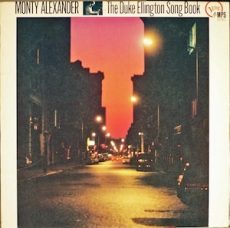
The Duke Ellington Song Book ~ Monty Alexander | By Eddie Carter
This morning’s selection from the library is by one of my favorite pianists. The Duke Ellington Song Book (MPS Records 821 151-1) by Monty Alexander is a sincere tribute to one of jazz’s legendary composers in a duet setting. Monty was born on June 6, 1944, in Kingston, Jamaica, and he discovered the piano at age four. He could pick out melodies by ear and became interested in jazz piano at fourteen. He attended DeCarteret College in Mandeville, then continued his education at Jamaica College. He later began playing in clubs and recording with Clue J & His Blue Blasters, subbing for his hero, Aubrey Adams, when he was unable to play. Monty Alexander is heard here on a Steinway Concert Grand Piano, and John Clayton is on bass. It was initially released in Germany, and my copy of this album is the 1984 U.S. Stereo release (Verve – MPS Series 821-151-1).
The album opener, I Let A Song Go Out Of My Heart by Duke Ellington, Irving Mills, Henry Nemo, and John Redmond, is a happy swinger that takes off with the duo’s spirited melody. The pianist continues dazzling on the first interpretation, then John flexes his muscles in a short statement before the theme’s reentry dissolves slowly. Sophisticated Lady by Duke Ellington, Irving Mills, and Mitchell Parish begins with a soft musical conversation with Clayton stating the tender theme, while Alexander’s pensive restraint supports him. Monty’s opening statement is especially moving and perfectly executed, and John responds with a gentle, understated reading, ahead of the melody’s thoughtful reprise and conclusion.
Things Ain’t What They Used To Be by Mercer Ellington and Ted Parsons was one of the Ellington orchestra’s most-played tunes, and the duo begins with a lively prance through the melody. Monty takes the solo and delivers a stimulating performance that builds to a peak before descending into the closing chorus. Up next is Love You Madly by Duke Ellington and Billy Strayhorn. Here, the duo provides another example of how the right notes delivered with impeccable timing can transform a classic into a fresh conversation between piano and bass. Their interplay is equally elegant and unhurried, allowing each verse to breathe and every nuance to shine into the theme’s restatement and soft ending.
Monty Alexander has always had a remarkable knack for selecting fresh material, steering clear of overplayed standards, and he does just that with Phil Moore’s Eastside, Westside. The duo opens with a thoughtful introduction and melody, with Alexander immediately making a memorable impact in his initial interpretation. Clayton responds with a subtle, tasteful bass line, then Monty brings everything together with a final flourish, leading into a gentle fadeout. The duo starts Side Two with In A Mellow Tone by Duke Ellington and Milt Gabler, and their introduction and jaunty melody are sure to get your body moving and your toes tapping. Monty takes the opening solo, showing off his considerable technical fluency, while John follows with a performance as enjoyable as a morning stroll in the sunshine.
Caravan, by Duke Ellington, Juan Tizol, and Irving Mills, offers Monty Alexander an expansive space for a brilliant solo performance. The pianist approaches the well-known tune with energetic enthusiasm, reimagining it through his own perspective, culminating in its reprise and conclusion. Just Squeeze Me, by Duke Ellington and Lee Gaines, expresses a longing for affection while also declaring unwavering love, even across distances. Clayton’s introduction gets things started, then Alexander joins in to complete the melody. Monty delivers the opening solo with lovely, sentimental melodic lines. John follows with a deep, thoughtful presentation until the duo gently revisits the theme, allowing the song to fade out slowly.
In A Sentimental Mood, by Duke Ellington, Manny Kurtz, and Irving Mills, is one of the most beautiful jazz standards ever written. Monty and John set a serene mood with a theme of refined grace. Alexander’s delicate touch during the sole solo showcases his remarkable talent for interpreting ballads filled with romantic feeling. Clayton adds a cozy, velvety layer under the piano, leading to a tender, heartfelt finale. The album’s cheerful closing note comes with Duke Ellington’s C Jam Blues, featuring Alexander and Clayton’s spirited opening. Alexander takes the spotlight with a lively, medium bounce that naturally swings, while Clayton adds some playful steps during a brief walk, and both musicians bring the song to a joyful end.
Hans Georg Brunner-Schwer was at the helm as producer and recording engineer for The Duke Ellington Song Book. The album’s sound quality is exceptional, creating a vivid listening experience that places the performers right in the sweet spot of your listening room with remarkable precision. Whether you're already familiar with Monty Alexander’s rich body of work or just discovering him, I highly recommend seeking out The Duke Ellington Song Book during your next record-shopping trip. This album delivers an outstanding introduction for new listeners and serves as a brilliant highlight for longtime fans!
~ C Jam Blues, Caravan, I Let A Song Go Out of My Heart, In A Mellow Tone, In A Sentimental Mood, Just Squeeze Me, Sophisticated Lady, Things Ain’t What They Used To Be – Source: JazzStandards.com © 2025 by Edward Thomas Carter
More Posts: choice,classic,collectible,collector,history,instrumental,jazz,music,piano
Daily Dose Of Jazz…
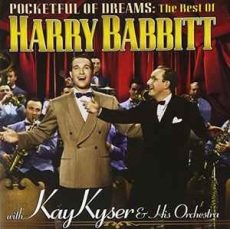
Harry Babbitt was born November 2, 1913 in St. Louis, Missouri. He organized his own band after high school, directing the group in addition to singing and playing saxophone and drums.
With his baritone voice Babbitt joined the Kay Kyser band in 1936 and recorded several hits, his biggest was the cover of Vera Lynn’s The White Cliffs of Dover. He appeared as a regular on Kyser’s radio program, Kay Kyser’s Kollege of Musical Knowledge and in seven movies with Kyser between 1939 to 1944.
Serving in the U.S. Navy from 1944 to 1946, he returned to Kyser’s band, but eventually left for good in 1949. Harry hosted an early morning radio show, The Second Cup of Coffee Club on CBS, which ran 10 years in the 1940s and 1950s. He also co-starred with Mary Small on By Popular Demand in the mid-Forties.
He retired from show business in 1964 and made money in real estate, managed the Newport Tennis Club and headed public relations for a retirement community in Orange County, California.
After Kyser died he went on tour with a new band, using Kyser’s name and music. He retired from that in the mid-1990s. Vocalist Harry Babbitt, who found fame during the big band era, died at the age of 90 in Aliso Viejo, California on April 9, 2004.
More Posts: bandleader,history,instrumental,jazz,music,vocal
Daily Dose Of Jazz…
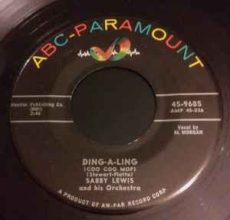
William Sebastian “Sabby” Lewis was born November 1, 1914 in Middleburg, North Carolina. Raised in Philadelphia, Pennsylvania he started taking piano lessons when he was five and moved to Boston, Massachusetts in 1932 at fourteen. After working with Tasker Crosson’s Ten Statesmen two years later, he organized his own seven-piece band in 1936.
The late 1930s and early Forties saw Sabby and his band as mainstays at notable Boston jazz venues. In 1942, Lewis’ band won a listener contest on a broadcast from the Statler Hotel’s Terrace Room in Boston. The win garnered the band a regular gig on NBC’s The Fitch Bandwagon, heard on 120 stations at the time.
Though Lewis did not tour frequently nor leave Boston often, he did perform on Broadway, in ballrooms and clubs in Manhattan on 52nd Street. He performed with Dinah Washington and Billy Eckstine. During World War II his orchestra included tenor saxophonist Paul Gonsalves, and drummer Alan Dawson spent much of the 1950s in the band. His band also included trumpeter Cat Anderson, Sonny Stitt, Roy Haynes, Al Morgan, Idrees Sulieman and Joe Gordon.
Having been seriously injured in an automobile accident in 1962, his performing was greatly curtailed. Sabby became Boston’s first Black disk jockey at WBMS, which later became WILD in the Fifties. He went on to be a housing investigator for the Massachusetts Commission Against Discrimination until his retirement in 1984.
Pianist, bandleader, and arranger Sabby Lewis died on July 9, 1994.
More Posts: arranger,bandleader,history,instrumental,jazz,music,piano
Daily Dose Of Jazz…
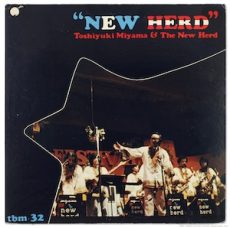
Toshiyuki Miyama was born on October 31, 1921 in Chiba, Japan. He played in a Japan Maritime Self-Defense Force band during World War II. After the war, he joined the Lucky Puppy Orchestra.
From 1950 he led his own ensemble, Jive Ace, however, eight years later the group expanded to big-band size and changed its name to the New Herd. The ensemble’s arranger was Kozaburo Yamaki.
New Herd recorded with Charles Mingus in 1971 and toured worldwide throughout the 1970s and 1980s. Miyama led the ensemble for more than fifty years, continuing to perform into the 2000s.
Clarinetist and bandleader Toshiyuki Miyama died on May 24, 2016 at 94 years.

More Posts: bandleader,clarinet,history,instrumental,jazz,music