


Three Wishes
Pannonica inquired what his three wishes would be if they could be granted and Frank Wess responded by telling her the following:
-
- “I don’t know. I don’t know. You’d think I was crazy if I told you. Well, I’d like to have a crazy pad with horses and some crazy dogs! And to play good music with a lot of people all of my life. And I’ll leave the third wish to the fairy godmother, because she’s been so nice.”
*Excerpt from Three Wishes: An Intimate Look at Jazz Greats ~ Compiled and Photographed by Pannonica de Koenigswarter

More Posts: baroness,flute,history,instrumental,jazz,music,pannonica,saxophone,three,wishes
Daily Dose Of Jazz…
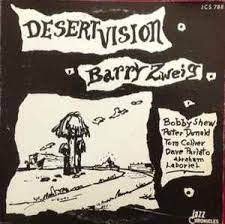
Barry Sweig was born on February 7, 1942 in Detroit, Michigan. His mother loved music and taught her son to clap on the 2 & 4 as a toddler. He received a ukulele for his fifth birthday, played violin from the age of eight until he was eighteen, but bought himself a guitar for ten dollars when he was 15. His first recording session was at age 17, at Capitol Records.
Drafted in the Army in 1964 Sweig was assigned to NORAD Band where he got the opportunity to study with guitarist Johnny Smith. After his discharge he joined Buddy Rich’s band and after recording an album with Sammy Davis Jr. that led to him joining the latter’s band. Touring with Davis ended fourteen months later and he settled in Los Angeles, California and broke into the music scene where he performed and recorded for a host of who’s who vocalists and musicians.
He played his final gig at The Lighthouse Cafe in Hermosa Beach. Guitarist Barry Sweig, who taught at UCLA, USC, and the University of Texas, El Paso, transitioned on March 15, 2020 of complications from Crohn’s disease.
More Posts: bandleader,educator,guitar,history,instrumental,jazz,music
Daily Dose Of Jazz…
Conrad Joseph Gozzo was born in New Britain, Connecticut on February 6, 1922. His father played trumpet, and he began learning the instrument around the age of 5. He played in his junior and senior high school bands, but left school around the age of 16 at the recommendation of Isham Jones to join bandleader and clarinetist Tommy Reynolds in Boston, Massachusetts.
Quickly noted for his exceptional technical ability and style, Conrad played with Reynolds for nine months, then left to play with Red Norvo in 1939. Staying in the band for two years he went on to play with trumpeter Johnnie Davis, then performed and recorded with the Bob Chester Orchestra, and with Claude Thornhill’s band.
By 1942 he had a short stint with Benny Goodman before enlisting in the U.S. Navy, where clarinetist Artie Shaw had formed a band, the Rangers No. 501. Their first assignment was San Francisco, California and then Hawaii before touring in the South Pacific, the U.K. and the mainland States. After his discharge in 1945, Gozzo briefly rejoined Goodman along with fellow trumpet players from Shaw’s band.
By the Fifties Gozzo was sitting in the lead trumpeter chair on the Glen Gray, Stan Kenton, and Harry James “remakes”, and in Dan Terry’s 1954 Columbia sessions. He recorded extensively with arrangers Van Alexander, Nelson Riddle, Billy May, Ray Conniff, Jerry Fielding and Shorty Rogers, and also with performers Dean Martin and Frank Sinatra. He played first trumpet on all of the recordings of composer Henry Mancini.
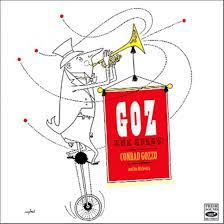
He performed on many major live television shows broadcast on the NBC network, including the Dinah Shore Show, and performed on motion picture soundtracks including The Glenn Miller Story, The Benny Goodman Story, Bye Bye Birdie, Call Me Madam, Ben-Hur and Cleopatra. He played on the two-record set on Verve, Ella Fitzgerald Sings the Harold Arlen Songbook. In 1955, Gozzo released his own album, Goz the Great!, signed with RCA Victor and played by “Conrad Gozzo and his Orchestra”, directed by Billy May. Three of the twelve tracks were written together by Gozzo and May.
Conrad Gozzo, whose nicknames were Goz and Gopher because of his resemblence to the animal when playing, transitioned on October 8, 1964 from liver disease in Burbank, California. Jazz composer Sammy Nestico dedicated Portrait of a Trumpet to Gozzo.
More Posts: bandleader,history,instrumental,jazz,music,trumpet
Requisites
That’s The Way It Is ~ Milt Jackson Quintet Featuring Ray Brown | By Eddie Carter
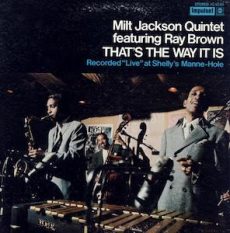
One of my favorite musicians, Milt Jackson, steps into the spotlight with a live date for this morning’s subject. After listening to it, I thought it would be good to discuss. That’s The Way It Is (Impulse – ABC Records AS-9189) is the first of two albums The Milt Jackson Quintet recorded in performance over two August nights at Shelly’s Manne-Hole in 1969. The companion album is Just The Way It Had To Be, and both records hit the stores a year later. Teddy Edwards on tenor sax, Monty Alexander on piano, Ray Brown on bass, and Dick Berk on drums complete the ensemble. My copy is the original 1970 US Stereo release.
The quintet begins its set with Frankie and Johnny. Monty begins the introduction, then steps aside for Ray, who provides the first two choruses of the melody. Teddy is up first and swings nicely on the opening solo; next, Milt speaks with the sweetest of sounds. Monty compliments his colleagues with ease before Ray’s theme reprise and soft ending. Here’s That Rainy Day by Johnny Burke and Jimmy Van Heusen is a quartet feature for Milt and the rhythm section. It begins with a tender dialogue between Jackson and Alexander that grows into the quartet’s pretty theme. Milt combines tenderness and warmth in the song’s only solo for one of his most profoundly moving and lyrical performances preceding the gentle climax.
Wheelin’ and Dealin’ by Teddy Edwards takes off quickly from Monty’s introduction. Teddy picks up the pace for a quick run through the theme and brisk opening chorus. Milt swings into an enthusiastic interpretation, then Monty neatly summarizes the solos with an exhilarating turn leading to the ensemble’s speedy finish. Side Two starts with a Ray Brown creation, Blues In The Bassment. The bassist begins the song with a tasteful introduction that blossoms into a two-instrument melody with Berk. Edwards steps up first to deliver a delightful feast for the ears on the lead reading. Jackson unfolds an inspired presentation next, and Alexander adds a fitting summation that proceeds to the closing chorus and subtle ending.
Up next is Tenderly, by Walter Gross and Jack Lawrence. Ray is the featured musician in this quartet performance. He begins with an extended introduction and the first of two gorgeous readings, and Milt takes a brief moment to shine delicately in a short statement. Ray concludes his second solo with a sensuously beautiful interpretation culminating with the audience’s ovation. The evening ends with the title tune, That’s The Way It Is, by Monty Alexander. This soulful blues begins with Monty’s succulent introduction and segues into the ensemble’s collective theme. Jackson, Edwards, and Alexander provide three soul food dishes with band introductions by Milt, who also thanks the audience before they wrap it up.
Ed Michel produced both That’s The Way It Is and its companion album, Just The Way It Had To Be. Wally Heider was the recording engineer for both nights. The album’s sound quality is quite good, with a ‘you are there’ feel. The musicians are in fine form throughout, and the addition of Ray Brown makes this date a fantastic live session to listen to and enjoy. If you are a fan of Milt Jackson, I invite you to check out, That’s The Way It Is by The Milt Jackson Quintet Featuring Ray Brown. The album is an enjoyable listening experience and is worth considering for your library the next time you’re out vinyl shopping!
~ Just The Way It Had To Be (Impulse – ABC Records AS-9230) – Source: Discogs.com ~ Here’s That Rainy Day, Tenderly – Source: JazzStandards.com © 2023 by Edward Thomas Carter

More Posts: classic,collectible,collector,history,instrumental,jazz,music,vibraphone
Daily Dose Of Jazz…
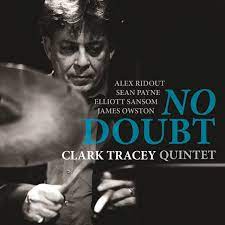
Clark Tracey was born February 5, 1961 in London, England and began his music journey playing piano and vibraphone before switching to drums at age 13, studying under Bryan Spring. He played in several ensembles with his father Stan Tracey including a quartet called Fathers and Sons with John and Alec Dankworth in the 1990s. In addition to his work with his father, which took him around the world, he has played with numerous visiting American musicians, notably Bud Shank, Johnny Griffin, Red Rodney, Sal Nistico, Conte Candoli, Barney Kessell, John Hicks and Pharoah Sanders throughout his career.
Through the 1980s Clark performed and recorded with Buddy DeFranco, Martin Taylor, Charlie Rouse, Alan Skidmore and Tommy Smith. The Nineties saw him with Claire Martin into the new century. During the decade and beyond he led his own ensembles with a host of recognized names like Django Bates, Nigel Hitchcock and Jamie Talbot. Concentrating on promoting the music of his late father, his final group under his own name included Mark Armstrong, Tom Ridout, James Wade Sired, Gareth Williams and James Owston.
Drummer, band leader, and composer Clark Tracey, has received several honors and was awarded the British Empire Medal (BEM) in the 2019 Birthday Honours for services to music and the promotion of jazz. He continues to pursue excellence in the genre.
More Posts: bandleader,composer,drums,history,instrumental,jazz,music