

Daily Dose Of Jazz…
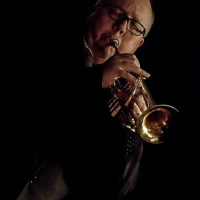
Martin Jones was born in Hull, England on October 14, 1955. He gained his experience playing trumpet first in school bands, and then Hull school bands with many concerts with orchestra’s, concert bands and a jazz swing band.
Leaving those to form his own bands he started working with his own band commercially in the jazz field in the late Seventies. By 1982 Martin was working professionally on the club and theatre circuits in cabaret. He started a residency at two clubs in the Latin Quarter in Paris. Returning to the UK he was trumpeter, front-man and vocalist at the City of London Tavern. He worked between London and Paris over the next two years, eventually joining the international cabaret group, The English Eccentric Ragtime Four.
He became a session trumpet player and vocalist in the London area. then spent some time working for New York Network Television while he was with this band. In 1987 Jones left the band to tour Europe, worked doing broadcasts on several TV shows and eventually left London and returned to his roots back in Hull.
He soon got work with a regional band called The Casablanca Boys, led six of his own bands and taught trumpet and vocal at The Keech School of Music. He developed a new Jazz Course at Access to Music in partnership with East Riding College as well as Jazz Summer Schools.
Trumpeter Martin Jones has currently published eleven books and continues performing, recording and teaching.

More Posts: educator,history,instrumental,jazz,music,trumpet

Daily Dose Of Jazz…
Tommy Whittle was born on October 13, 1926 in Grangemouth, Scotland. He started playing clarinet at the age of twelve before taking up tenor saxophone at 13, guided by Alan Davie. When he was sixteen he moved to Chatham, Kent, England and in 1943 started playing in Claude Giddins’ dance-hall band in nearby Gillingham.
The 1940s saw Whittle playing with Johnny Claes, Lew Stone, Carl Barriteau, and Harry Hayes. In the middle of the decade he joined Ted Heath’s band, playing with him until 1952 when he moved on to play in Tony Kinsey’s small group. In the 1950s he joined Cyril Stapleton’s BBC Show Band where he became a featured soloist in nationwide broadcasts.
Forming a quintet in 1954 with Harry Klein and Dill Jones, and later toured with a ten-piece band for nealy a year and a half. He went on to lead small groups and performed in clubs. In 1955 he was voted Britain’s top tenor-sax player in the New Musical Express and Melody Maker polls, topping the latter the following year.
During the 1950s his sextet performed in France and the United States, where in 1956 he also participated in an exchange visit with Gerry Mulligan. He briefly worked in the Stan Kenton Band, was hired as bandleader at the Dorchester Hotel in London, then followed a period of 12 years with the Jack Parnell ATV Orchestra, accompanying Bing Crosby, Peggy Lee, and Barbra Streisand.
He went on to run a weekly club at the Hopbine pub, worked with Laurie Johnson’s London Big Band and recorded with Benny Goodman. During the 1980s and 1990s, he was in demand as a session musician, performed with his quartet and wife Barbara Jay and became a member and then leader of the Pizza Express All Stars Jazz Band.
Saxophonist Tommy Whittle while on holiday in Spain died on his 87th birthday after contracting pneumonia on October 13, 2013.
More Posts: bandleader,history,instrumental,jazz,music,saxophone
Requisites
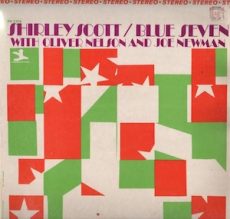
Blue Seven ~ Shirley Scott With Joe Newman and Oliver Nelson | By Eddie Carter
I was still in a jazz organ mindset after listening to Jimmy Smith when I decided to explore a lesser-known, underappreciated gem by Shirley Scott. Blue Seven (Prestige PR 7376/PRST 7376) was recorded in 1961, yet remained on the shelf until its 1965 release. For her fourteenth album, Shirley’s working with an outstanding ensemble: Joe Newman on trumpet, Oliver Nelson on tenor sax, George Tucker on bass, and Roy Brooks on drums. Together, they create a jazz session that’s laid-back and refined, filled with understated groove and energy. Unlike some organists who favor a bold, party-heavy approach, Shirley brings a softer, blues-influenced touch, letting her organ blend with the ensemble rather than dominating it. My copy of this album is the 1965 U.S. stereo release.
Side One opens with the title tune, Blue Seven by Sonny Rollins. George and Roy’s soulful, bluesy introduction eases into the quintet’s mellow theme. Joe opens gently and evolves into a warm, inviting interpretation. Oliver explores intriguing avenues in the following reading. Shirley showcases her expressive touch and impressive technique until the group returns for the finale. Don’t Worry ‘Bout It Baby, Here I Am by Shirley Scott starts on a bright note with the horns merging into the rhythm section’s cheerful melody. Scott opens the first solo with some good, honest soul. Nelson follows with a relaxing performance, then Newman delivers a soothing interpretation that gradually builds to a few final thoughts by Scott before the song ends.
Nancy (With The Laughing Face) by Phil Silvers and Jimmy Van Heusen gently shifts the album’s pace to a tender ballad. Shirley’s delicately gentle melody creates a soft, inviting backdrop for both horns. She then caresses each note of the song’s only solo with elegance and deep emotion, leading to the ensemble’s touching ending. Wagon Wheels by Billy Hill and Peter DeRose was the title tune of the 1934 Western film. Newman steps forward with his muted trumpet, guiding the ensemble through the easygoing melody. Nelson makes a brief, tasteful entrance before Newman continues the mellow mood. Nelson follows with smooth, unhurried lines, then Scott delivers a reading as comforting as a hearty, satisfying meal, before the quintet returns for the closing chorus and gentle fadeout.
The album closer is Give Me The Simple Life, by Rube Bloom and Harry Ruby, kicking off with the quintet’s bright, upbeat melody. Oliver steps forward first to deliver a spirited and swinging interpretation. Joe maintains the momentum in an energetic statement, and then Shirley’s robust performance leaves a lasting impression. All three soloists trade upbeat ideas, leading to the ensemble’s closing chorus. Esmond Edwards supervised the album, and Rudy Van Gelder was behind the dials. The album’s excellent sound quality transports the listener into the heart of the quintet’s lively interaction, with warm, crystal clear acoustics that create the sensation of a live performance happening right in your listening room.
If you love jazz groups that feature the Hammond organ up front and blend the lively drive of hard bop with the soulful rhythms of soul jazz, I offer for your consideration, Shirley Scott’s Blue Seven, the next time you’re out record shopping. This album is a delightful listen, filled with inventive solos and tight group interplay. You’ll experience everything from the upbeat energy of Don’t Worry ‘Bout It Baby, Here I Am and Give Me The Simple Life, to the relaxed swing of Blue Seven and Wagon Wheels, as well as the tender emotion of Nancy (With The Laughing Face). After you spin it on the turntable, it’s likely to earn a permanent spot among the favorites in your library, encouraging you to return to it again and again!
~ Give Me The Simple Life, Nancy (With The Laughing Face), Wagon Wheels – Source: Wikipedia.org
p>© 2025 by Edward Thomas Carter

More Posts: choice,classic,collectible,collector,history,instrumental,jazz,music,organ,saxophone,trumpet
Daily Dose Of Jazz…
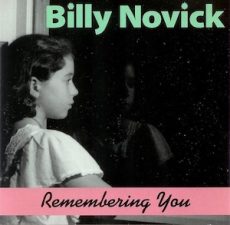
Billy Novick was born on Long Island, New York on October 12, 1951 and began playing clarinet at age eight. He picked up the saxophone at fifteen, and began playing club dates and concerts around the New York area. By 1973 he joined the David Bromberg band. After leaving the band, he started touring and making regional appearances as a sideman with a series of pop performers, including Leon Redbone, Jonathan Edwards, and Martha and the Vandellas.
While rehearsing for a dance performance in 1976, Novick was introduced to the innovative guitarist Guy Van Duser, and the two began a collaboration that continues to flourish. He joined the New Black Eagle Jazz Band, and continues to perform with them. He has appeared on more than thirty-five of the band’s recordings.
With jazz as his first love, Billy has always had an eclectic sensibility and enjoys being able to play a wide range of musical styles. He has performed with blues greats Robert Junior Lockwood, Willie Dixon, Ruth Brown, Duke Robillard, Scott Hamilton, Milt Hinton, Herb Pomeroy, Dave McKenna, Dorothy Donegan and Butch Thompson. He has recorded with a wide variety of artists including Maria Muldaur, Tex-Mex star Freddy Fender, Celtic performers Robbie O’Connel and Aine Minogue, and even rock legend J. Geils.
Internationally recognized as a musician, performer, arranger and composer, he has toured extensively throughout North America, Europe and Asia, and has made spotlight appearances at numerous festivals.
Clarinetist Billy Novick, who has been featured as a sideman on over two hundred and fifty recordings and as a composer, arranger or studio musician has appeared in more than 100 film scores, television shows and commercials, continues to compose, arrange, perform and record.
More Posts: clarinet,history,instrumental,jazz,music

Daily Dose Of Jazz…
George Letellier was born October 11, 1957 in the United States. After attending Berklee College of Music in Boston, Massachusetts in 1975, the following year he wrote his first compositions and arrangements. He began as a pianist playing in warm-up bands for artists such as Phil Woods, Gary Burton, and Steve Swallow. Returning to Berklee in 1983, he graduated two years later with a Superior Prix in Film Music Composition.
Moving to San Francisco, California he worked as a freelance pianist in the jazz and salsa genre from 1986 until 1990. His successful session work attracted film executives and he was hired to compose music for films and corporate videos. In 1987 George served as a music editor on the Academy Award-nominated short film Liru, and in 1988 in Oakland, California, established a film production company where he worked not only as a composer but a producer.
In 1991, Letellier moved to Portugal, accepting a job offer as a professor of composition in Porto, Portugal. There he composed two ballets and was a session musician. He collaborated with saxophonist Mario Santos and formed the George Letellier Quartet which toured all across Portugal.
By 1995 he relocated to Luxembourg and began working as a music composer, session musician and taught private lessons. With the Opus 78 Big Band, he collaborated in arranging the tunes of Frank Sinatra and turning them into large philharmonic ensembles for performing.
From 1997 until 2003, he went into education serving as Director of Jazz Studies at the Esch Conservatoire, wrote three publications on jazz theory and formed the original Consabora Salsa Orchestra with Harri Jokiharra. Since 2001, Letellier has taught jazz at L’Ecole de Musique in Echternach, Luxembourg.
Pianist, composer, and educator George Letellier continues to function as a session pianist, and has performed in hundreds of jazz concerts and theatrical productions in Luxembourg, the United States, Europe, and India.
More Posts: bandleader,composer,educator,history,instrumental,jazz,music,piano