

Requisites
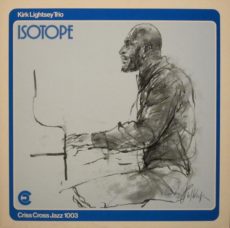
Isotope ~ Kirk Lightsey Trio | By Eddie CarterI’m a huge fan of jazz piano, so I was delighted to be introduced to The Kirk Lightsey Trio recently. I first heard him on the 1987 album Heads Up by David Newman and recently acquired a copy of this morning’s record to discuss. Isotope (Criss Cross Jazz 1003) is a marvelous session featuring Lightsey on piano, Jesper Lundgaard on bass, and Eddie Gladden on drums. My copy used in this report is the original 1983 Netherlands Stereo release.
The title tune was written by Joe Henderson who recorded it on the 1965 album, Inner Urge. It kicks off Side One with a sprightly collective theme, then Kirk crackles with excitement on the opening statement. Jesper gives a spirited performance as bright and sunny as a hot summer day next. Kirk presents a few final lines before closing on a vivacious note. Oleo by Sonny Rollins premiered on the 1954 album, Bags Groove by Miles Davis. Lightsey starts this swift swinger with a brief intro of the melody segueing into a breakneck main theme and first solo. Lundgaard delivers some ferociously spirited bass lines next and Gladden makes a prominent comment into the coda.
Pee Wee is a very pretty tune by Tony Williams that was first heard on the 1988 album, Angel Street. The trio’s rendition opens with an affectionately warm melody. Kirk’s opening and the closing chorus is exceptionally tender and intimately sincere. Jesper follows with a gentle reading of serene beauty in-between the leader’s statements with Eddie’s compassionate brushwork backing both soloists into a lovely finale.
Witch Hunt by Wayne Shorter was first heard on the saxophonist’s 1966 album, Speak No Evil. The trio swings into the main theme with remarkable ease and Lightsey shapes the first solo with effortless spontaneity. Lundgaard walks his bass with a delightful, laid-back bounce that’s perfectly easy and natural before the pianist makes a final comment ahead of the closing chorus. A Monk’s Dream was written by Johnny Griffin and originally recorded on the 1979 album, Return of The Griffin. The ensemble opens with a very friendly melody and Kirk infuses the song’s only solo with an insightful performance that’s passionate and rewarding.
Little Daphne is by Rudolph Johnson and made its debut on the composer’s 1971 record, Spring Rain. It ends the date with a lovely, charming rendition by the trio opening with a gorgeous melody. Lightsey establishes a vivacious momentum on the opening solo with an expertly crafted performance. Lundgaard takes the next turn for an eloquent reading that’s vividly expressive and the leader adds the finishing touches on a brief reprise preceding the coda.
Isotope was produced by Criss Cross Jazz founder Gerry Teekens and engineered by the owner of Studio 44, Max Bolleman. The sound of the album is superb with an exquisite soundstage amid the highs, midrange, and low-end that’s a sonic treat I’m sure you’ll enjoy. Kirk Lightsey has eighteen albums under his leadership and twenty-eight as a sideman. If you’ve not yet heard him and are looking for a trio jazz album for a spot in your library, I offer for your consideration Isotope by The Kirk Lightsey Trio. In my opinion, it’s a perfect choice to begin your day or end your evening of listening with a smile!
~ Angel Street (Blue Note B1-48494); Bags Groove (Prestige 7109); Inner Urge (Blue Note BLP 4189/BST 84189); Return of The Griffin (Galaxy GXY-5117); Speak No Evil (Blue Note BLP 4194/BST 84194); Spring Rain (Black Jazz Records BJ 4) – Source: Discogs.com
~ Oleo – Source: JazzStandards.com ~ © 2020 by Edward Thomas Carter SynopsisIsotope is an album by pianist Kirk Lightsey that was recorded at Studio 44, Monster, Holland on February 14, 1983 and released by the Dutch Criss Cross Jazz label.
Tracks | 48:21
- Isotope (Joe Henderson) – 6:54
- Oleo (Sonny Rollins) – 4:59
- Pee Wee (Tony Williams) – 9:46
- Witch Hunt (Wayne Shorter) – 7:59
- A Monk’s Dream (Johnny Griffin) – 5:30
- Little Daphne (Rudolph Johnson) – 12:43
- Kirk Lightsey – piano
- Jesper Lundgaard – bass
- Eddie Gladden – drums

More Posts: choice,classic,collectible,collector,history,instrumental,jazz,music,piano
Daily Dose Of Jazz…
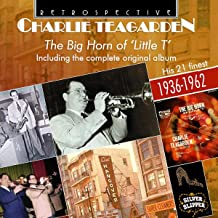
Charlie Teagarden was born July 19, 1913 in Vernon, Texas, the younger brother of Jack Teagarden. Nicknamed Little T, he worked locally in Oklahoma before he and Jack joined Ben Pollack’s Orchestra in 1929. Pollack’s recordings were Teagarden’s first before he worked with Red Nichols in 1931 and Roger Wolfe Kahn in 1932 before doing a seven-year run in the Paul Whiteman Orchestra from 1933 to 1940. In 1936 he, Jack, and Frankie Trumbauer played together in the ensemble The Three T’s.
Teagarden played in his brother’s big band in 1940 but soon branched off to lead his own ensembles. He played with Jimmy Dorsey in 1948-50 and Bob Crosby from 1954–58, as well as working with Pete Fountain in the 1960s. He worked steadily in Las Vegas, Nevada after 1959.
His only release as a leader was issued in 1962 on Coral Records. At the 1963 Monterey Jazz Festival, he performed with Jack, sister Norma, and mother Helen. Teagarden went into semi-retirement in the 1970s.
Trumpeter Charlie Teagarden, also known as Smokey Joe and who was among the hundreds of artists whose material was reportedly destroyed in the 2008 Universal fire according to The New Times Magazine, passed away on December 10, 1984 in Las Vegas.

More Posts: bandleader,history,instrumental,jazz,music,trumpet
Daily Dose Of Jazz…
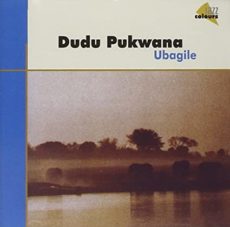
Mthutuzeli Dudu Pukwana was born on July 18, 1938 in Walmer Township, Port Elizabeth, South Africa. He grew up studying piano in his family, but in 1956 he switched to alto saxophone after meeting tenor saxophone player Nikele Miyake In 1962, Pukwana won first prize at the Johannesburg Jazz Festival with Moyake’s Jazz Giants. In his early days, he also played with Kippie Moeketsi. Chris McGregor then invited him to join the pioneering Blue Notes, a sextet, where he was the principal composer and played along with Mongezi Feza, Nikele Moyake, Johnny Dyani and Louis Moholo.
As mixed-race groups were illegal under apartheid, the Blue Notes, increasingly harassed by authorities, emigrated to Europe in 1964, playing in France and Zürich, Switzerland before settling in London, England. After they split in the late 1960s, Pukwana joined McGregor’s Brotherhood of Breath Big Band, which featured his soloing and composing. He wrote Mra, one of the best-loved tunes by the Brotherhood.
1967 saw Dudu receiving his first mention of success with the Bob Stuckey Trio in America’s DownBeat magazine, which later expanded to a quartet when Phil Lee joined on guitar. He went on to form two groups with Feza and Moholo. One was the afro rock band Assagai, the other Spear, with whom he recorded the seminal afro-jazz album In The Townships in 1973 for Virgin Records at The Manor Studio.
His fiery voice was heard in many diverse settings including recordings of Mike Heron, Centipede and Toots and the Maytals. In 1978, Pukwana founded Jika Records and formed his own band, Zila, featuring South Africans Lucky Ranku on guitar and powerful vocalist Miss Pinise Saul. In duo with John Stevens, he recorded the free session They Shoot To Kill in 1987, dedicated to Johnny Dyani. In 1990, Pukwana took part in the Nelson Mandela Tribute held at Wembley Stadium.
Alto saxophonist, pianist, and composer Dudu Pukwana, who was not known for his piano playing, passed away in London, England of liver failure on June 30, 1990, not long after the death of his longtime friend and colleague McGregor.
More Posts: bandleader,composer,history,instrumental,jazz,music,piano,saxophone
Daily Dose of Jazz…
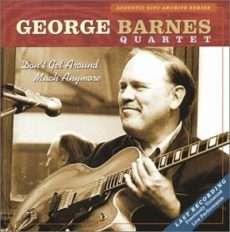
George Warren Barnes was born on July 17, 1921 in South Chicago Heights, Illinois. His father being a guitarist taught him to play the acoustic guitar at the age of nine. A year later, in 1931, Barnes’s brother made a pickup and amplifier for him. Barnes said he was the first person to play electric guitar.
From 1935~1937 he led a band that performed in the Midwest, 1938 he recorded the songs Sweetheart Land and It’s a Lowdown Dirty Shame with blues guitarist Big Bill Broonzy.
In doing so, it has been claimed that he became the first person to make a record on electric guitar, fifteen days before Eddie Durham recorded on electric guitar with the Kansas City Five, though the claim has been contested. In 1938, when he was seventeen, Barnes was hired as a staff guitarist for the NBC Orchestra, staff guitarist and arranger for Decca and recorded with Blind John Davis, Jazz Gillum, Merline Johnson, Curtis Jones, and Washboard Sam.
In 1940, Barnes released his first solo recording, I’m Forever Blowing Bubbles and I Can’t Believe That You’re in Love with Me on Okeh Records. Drafted in 1942 and serving in the Pentagon, after his discharge in 1946, he formed the George Barnes Octet and was given a fifteen-minute radio program on the ABC network.
In 1951, he was signed to Decca by Milt Gabler and moved from Chicago to New York City. In 1953, he joined the television orchestra on the show Your Hit Parade that was conducted by Raymond Scott and featured Barnes as a featured soloist. Working as a studio musician in New York City, playing on hundreds of albums and jingles from the early 1950s through the late 1960s. He played guitar on Patsy Cline’s New York sessions in April 1957.
In the Sixties, he recorded three albums for Mercury: Movin’ Easy (1960) with his Jazz Renaissance Quintet, Guitar Galaxies (1960), and Guitars Galore (1961). The latter two contained his orchestrations for ten guitars, known as his guitar choir, which used guitars in place of a horn section. The two albums employed a recording technique known as Perfect Presence Sound.
Barnes received the most attention as a jazz guitarist when he recorded as a duo with Carl Kress from 1961–1965. In 1969 Barnes formed a duo with jazz guitarist Bucky Pizzarelli that lasted until 1972. In 1973, he and cornetist Ruby Braff formed the Ruby Braff–George Barnes Quartet and recorded several albums.
He recorded seventeen albums as a leader and as a sideman, Barnes recorded another thirty-nine not limited to Louis Armstrong, Steve Allen, Tony Bennett, Jackie Cooper, Bob Dylan, Bud Freeman, Johnny Guarnieri, Dick Hyman, Betty Madigan, Wingy Manone, Carmen McRae, Jimmy McPartland, Sy Oliver, Don Redman, Buddy Rich, Gene Krupa, Jimmy Scott, Cootie Williams, and Joe Venuti.
As a studio musician, he also participated in hundreds of pop, rock, and R&B recording sessions. He played on many hit songs by the Coasters, on This Magic Moment by the Drifters, and on Jackie Wilson’s Lonely Teardrops. His electric guitar can be heard in the movie A Face in the Crowd.
He left New York City after his last European tour in 1975 to live and work in the San Francisco Bay area. Guitarist George Barnes, who was primarily a swing guitarist, passed away from a heart attack in Concord, California on September 5, 1977 at the age of 56.
More Posts: bandleader,composer,guitar,history,instrumental,jazz,music
Daily Dose Of Jazz…
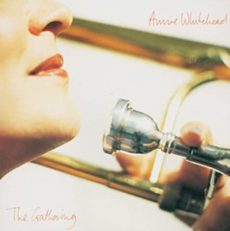
Annie Whitehead was born on July 16, 1955 in Oldham, Lancashire, England and learned the trombone in high school and participated in rock and jazz bands. At 16, she left school and became a member of a female big band led by Ivy Benson, playing with the band for two years before moving to Jersey.
Unhappy with the life of a musician, she quit music for almost six years, only to return in 1979 and start a ska band. Taking an interest in jazz again after moving to London two years later, Whitehead began performing in pubs. During the 1980s she toured with Brotherhood of Breath, a big band led by South African pianist Chris McGregor.
Over the course of her career, Annie has worked with …And the Native Hipsters, Blur, Carla Bley, Charlie Watts Orchestra, Jah Wobble, Jamiroquai, John Stevens, Penguin Cafe Orchestra, Smiley Culture, Spice Girls, and Working Week. She was a member of The Zappatistas, a Frank Zappa tribute band led by guitarist John Etheridge.
Trombonist Annie Whitehead, who has recorded five albums, her first, Mix Up in 1984 to The Gathering, her last in 2000, continues to compose and perform.
More Posts: bandleader,composer,history,instrumental,jazz,music,trombone