

Daily Dose Of Jazz…
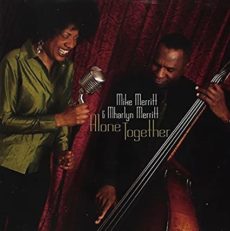
Mharlyn Merritt was born on March 30, 1950 in Philadelphia, Pennsylvania, the daughter of bassist Jymie Merritt. A vocalist rooted in jazz, R&B and classic soul, she has collaborated with her brother Michael on a recording titled Alone Together. She has paid tribute to cabaret with her Jukebox Reveries: Love Songs from the American Songbook as well as experimenting with other genres of music.
A novelist and poet with a Masters of Fine Arts in Creative Writing, Mharlyn is a recipient of a National Endowment for the Arts Fellowship in Jazz Performance and an Interdisciplinary Arts Fellowship from the Pennsylvania Council on the Arts.
Her band Messenger, she has opened fr Hugh Masekela, Eddie Palmieri, and Richard Beltzer among others. She has graced numerous sessions as a background vocalist at Sigma Sound Studios in Philadelphia. Having lived in New York and London vocalist Mharlyn Merritt currently resides in Philadelphia and continues to write, perform and record.

More Posts: bandleader,history,instrumental,jazz,music,vocal
Requisites
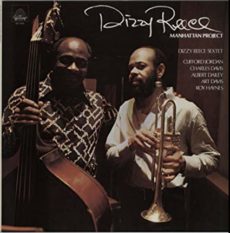
Manhattan Project is an album by Jamaican-born jazz trumpeter Dizzy Reece featuring performances recorded at Blue Rock Studio, N.Y.C. on January 17, 1978 and released on the Bee Hive label.
Track List | 47:16 All compositions by Dizzy Reece except as indicated- Con Man – 8:55
- Manhattan Walk – 7:59
- Yule On The Hudson – 9:05
- Woody ‘n’ You (Dizzy Gillespie) – 13:20
- One For Trane (Mickey Bass) – 7:57
- Dizzy Reece – trumpet
- Clifford Jordan – tenor saxophone
- Charles Davis – tenor saxophone
- Albert Dailey – piano
- Art Davis – bass
- Roy Haynes – drums
Manhattan Project ~ Dizzy Reece Sextet | By Eddie Carter
Submitted for your consideration now is an album by trumpet player Dizzy Reece. Manhattan Project (Bee Hive Records BH 7001) is the only album he recorded for the Evanston, Illinois label. Reece was born in Kingston Jamaica and attended the Alpha Boys School where he began playing the baritone sax before switching to the trumpet at the age of fourteen. It’s also during this time where he got his nickname Dizzy, which has nothing to do with Dizzy Gillespie. He became a professional musician by the age of sixteen and has played with some of the greatest jazz musicians in the United States, England, and France. On this date, he performs with an outstanding quintet; Charles Davis, and Clifford Jordan on tenor sax; Albert Dailey on piano; Art Davis on bass and Roy Haynes on drums. My copy used in this report is the 1978 Stereo album, the only release on LP.
Con Man, the first of three tunes from Reece’s pen starts Side One with a brief trio introduction that segues into the ensemble’s speedy theme. Dizzy begins a lengthy performance that swings with limitless energy convincingly. Clifford and Charles take the reins next for two incendiary solos of intense heat. Albert maintains the high-voltage current on the next reading with his fingers providing plenty of electricity. Roy adds a brisk footnote that glows brightly preceding the sextet’s lively closing chorus. Dizzy’s Manhattan Walk takes the sextet on an adventurous evening stroll through the city with the group speaking in unison on the modal melody led by the front line. Reece goes first, haunting the streets like a restless spirit but with a hypnotic emotion that’s irresistibly seductive. Jordan gets the next turn, revealing his abundant lyricism and Dailey follows exhibiting formidable creativity preceding the ensemble continuing their walk down the street into the fadeout. The first side closes with the third Reece tune; Yule on The Hudson flies from the opening notes of the trio’s introduction with an astounding workout by Roy into the ensemble’s high-powered theme treatment. Dizzy takes his trumpet for a thrilling ride on the first solo; Clifford illuminates the next interpretation with some splendid work. Charles takes over for a spirited presentation possessing equal amounts of speed and energy. Albert continues with an incisively, infectious exploration that takes hold of you and doesn’t let go. The front line reconvenes for an exciting conversation among themselves, then Roy joins them to wrap up the solos with a few final remarks of musical bliss before the climax.
The ageless jazz standard, Woody ‘n’ You by Dizzy Gillespie opens Side Two making a grand out-of-harmony ensemble entrance with Dizzy in front segueing into the familiar rapid melody pace. Reece takes off first with a supercharged solo establishing he’s in complete control of his instrument. Clifford offers an exceptional display of his mastery on the tenor sax with a radiant reading. Charles gives a breathtaking performance next that travels to stratospheric heights. Albert gives a brilliant solo that’s extremely clever and inspired by Art’s bouncy bass and Roy’s impeccable timekeeping. Dizzy launches his second reading like a rocket with an invigorating presentation, then shares the spotlight with Roy for a few red-hot exchanges into the out-of-step climax. One For Trane by bassist Mickey Bass is a blues dedicated to John Coltrane and the sextet turns the heat up on the uptempo theme collectively. Albert solos first, dispensing passionate fury that sinks its teeth into the opening statement with fiery intensity and joyous spontaneity. Dizzy steps into the spotlight next with an exhilarating account illustrating his flawless technique and stylistic versatility. Charles charges into the third solo with cheerful optimism, then Clifford wails his behind off on the next scintillating performance. Albert has the final word on a vigorously energetic presentation culminating with the ensemble’s stunning finish.
Manhattan Project was produced by Jim Neumann, a noted jazz record producer, and the founder of Bee Hive Records, and Fred Norsworthy whose excellent work as an engineer and producer can also be found on jazz recordings for Black Lion Records, Interplay Records, Jazzbank, Muse Records, PJL, Storyville and Trip Jazz. The album was pressed at Wakefield Manufacturing in Phoenix, Arizona. The lacquer was cut by Mastering engineer Brian Gardner who worked at Trident Studio in London, before working at Allen Zentz Mastering and Bernie Grundman Mastering in Hollywood, California. He currently owns Brian Gardner Mastering and the listener can tell a lot of care went into making the best sounding record at the time. Recording Note: To achieve a tight, cohesive sound, Dizzy removed some of the sound baffles in the studio. This creates a close blending of instruments not unlike some of the ’50s. The album has a superb soundstage throughout the treble, midrange and bass spectrum and delivers a crystal-clear sound of the instruments.
Dizzy Reece, now eighty-eight years young is still active as a musician and writer and has recorded albums for Blue Note, and other labels including Futura, Interplay Records, Jasmine, Jazz Vision, and New Jazz. On this album, the leader and his colleagues serve up a Hard-Bop feast with lots of energy that’s put together very well and shows these guys have a perfect balance of technique, intellect, and emotion. If you’re a fan of jazz trumpet, I invite you to audition Manhattan Project for a spot in your library. It’s a compelling album that’s sure to satisfy almost any jazz appetite by the other trumpeter named Dizzy whose recognition as a bandleader, composer, and gifted musician is long overdue.
Recording Note – Source: Album liner notes by Brian Davis Woody ‘n’ You – Source: JazzStandards.com, Wikipedia.org

More Posts: choice,classic,collectible,collector,history,instrumental,jazz,music,trumpet
Daily Dose Of Jazz…
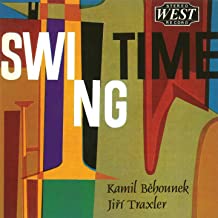
Kamil Běhounek was born on March 29, 1916 in Blatná, Czech Republic and was an autodidact on accordion, having learned to play by imitating recordings and BBC broadcasts. While studying law in Prague he began performing in clubs and recorded his first solo accordion date in 1936. By the late 1930s, he was working with the Blue Music Orchestra, Rudolf Antonin Dvorsky, Jiří Traxler, and Karel Vlach.
In 1943, he was forcibly compelled by the Nazis to go to Berlin and make arrangements for the bands of Lutz Templin and Ernst van’t Hoff. Upon returning to Czechoslovakia in 1945, he used some of these arrangements for his own band, then returned to Germany the following year, where he continued arranging for bandleaders such as Adalbert Luczkowski, Willy Berking, Heinz Schönberger, and Werner Müller.
He played with his own ensemble, including in Bonn, Germany and after 1948 he performed in West Germany at American soldiers’ clubs. Between 1968 and 1977 he recorded several albums of folk music but continued to play swing with his own groups. He also wrote an autobiography, Má láska je jazz (Jazz is my Love), which was published posthumously in 1986.
Bohemian accordionist, bandleader, arranger, composer, and film scorer Kamil Běhounek, who occasionally played tenor saxophone, passed away on November 22, 1983 in Bonn, Germany.
More Posts: accordion,arranger,bandleader,composer,film scorer,history,instrumental,jazz,music,saxophone
Daily Dose Of Jazz…
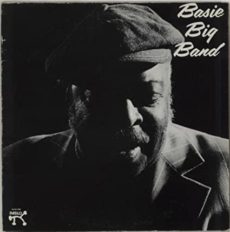
Bill Hughes was born William Henry Hughes in Dallas, Texas on March 28, 1930. His family moved to Washington, D.C., when he was nine years old where his father worked at the Bureau of Engraving and played trombone in the Elks Club marching band. He began learning to play the trombone around age twelve and was performing in Washington jazz venues by the age of sixteen. One of the clubs was the 7T Club, where he met and performed with saxophonist and flutist Frank Wess.
While students at Howard University, Hughes and Wess played in the Howard Swingmasters, along with bassist Eddie Jones. Though interested in music he originally wanted to pursue a career as a pharmacist and graduated from the University’s School of Pharmacy in 1952 and began working at the National Institutes of Health.
His career plans changed the following year when Wess, a member of the Count Basie Orchestra, suggested that Count Basie invite him to join the band. Also asked to join the Duke Ellington Orchestra, he declined and in 1953, he joined the Basie band where he already knew members Frank Wess, Eddie Jones, and Benny Powell. He played in a three-piece tenor trombone section with Powell and Henry Coker until 1957, when he decided to take a break from touring in order to help raise his family.
During this hiatus, Bill worked for the United States Postal Service and played trombone at the Howard Theater as well as with some small groups in Washington. A few years after returning to the band in 1963, he switched from the tenor to the bass trombone. In 2003 he took over leadership of the band following the death of Grover Mitchell. He retired from the band in 2010 and spent the last years of his life in Staten Island, New York with his wife and three children. On January 14, 2018 trombonist Bill Hughes passed away at the age of 87.
More Posts: bandleader,history,instrumental,jazz,music,trombone
Daily Dose Of Jazz…
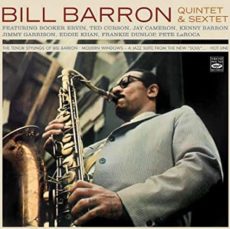
William Barron, Jr. was born on March 27, 1927 in Philadelphia, Pennsylvania where he spent his formative years. Moving to New York City in 1958 and came to the jazz world’s attention when he first appeared on a Cecil Taylor recording in 1959, later recorded extensively with Philly Joe Jones, after which he co-led a fine post-bop quartet with Ted Curson.
His younger brother, pianist Kenny appeared on all of the sessions that the elder Barron led. Other musicians he recorded with included Charles Mingus and Ollie Shearer.
Barron spent much of the remainder of his career as an educator, directing a jazz workshop at the Children’s Museum in Brooklyn, teaching at City College of New York, and becoming the chairman of the music department at Wesleyan University.
His day job made it possible for him to consistently record non-commercial music for Savoy, recording that label’s last jazz record in 1972, and Dauntless and Muse. The Bill Barron Collection is housed at the Institute of Jazz Studies of the Rutgers University Libraries,
Tenor and soprano saxophonist William Barron Jr., who never compromised his music or received much recognition, passed away in Middletown, Connecticut on September 21, 1989.
More Posts: bandleader,history,instrumental,jazz,music,saxophone