

Daily Dose Of Jazz…
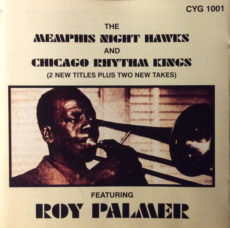
Roy Palmer was born on April 2, 1892 in the Carrollton neighborhood of uptown New Orleans, Louisiana. He learned to play violin, guitar, and trumpet and began his career in 1906 in the Big Easy as a guitarist with the Rozelle Orchestra. Leaving the orchestra he began playing the trombone in Storyville with Papa Celestin, Richard M. Jones, Freddie Keppard, Willie Hightower, during the DepressionTuxedo Brass Band, and Onward Brass Band.
In 1917 he left New Orleans and moved to Chicago, Illinois where he worked with King Oliver, Lawrence Duhe, and Doc Cook. From the 1920s on Palmer recorded with Johnny Dodds, Jelly Roll Morton, Ida Cox, the Alabama Rascals, and the State Street Ramblers. By the 1930s during the Depression, he curtailed his performing worked in a factory and began his career as a music teacher, which included students Preston Jackson and Albert Wynn.
Trombonist Roy Palmer passed away on December 22, 1963, in Chicago, Illinois.

More Posts: history,instrumental,jazz,music,trombone
Hollywood On 52nd Street
Senza Fine which translates in English to Endless was written by Italian singer-songwriter Gino Paoli, inspired by collaboration partner Ornella Vanoni, who was signed to Memory Records. The label wanted to rebrand the singer with a new sexy image, detaching her from her previous one. The song was composed in 1961, and not specifically for the movie Avanti! but was chosen to be the soundtrack.
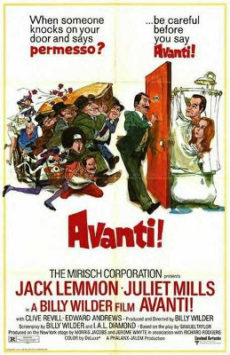
Senza Fine is performed in the 1972 film Avanti!, an American/Italian comedy film produced and directed by Billy Wilder. The film stars Jack Lemmon and Juliet Mills. The screenplay by Wilder and I. A. L. Diamond is based on the play of the same name by Samuel Taylor, which had a short run on Broadway in 1968. It was produced at a time when the censors were more lenient, allowing her naked breasts and his and her naked backside to appear in the film.
The Story Ten years have elapsed since Baltimore industrialist Wendell Armbruster, Sr. first began spending a month at the Grand Hotel Excelsior in the Island of Ischia on the Bay of Naples, in Italy allegedly to soak in the therapeutic mud baths for which the resort island is known. When he is killed in an automobile accident, his straitlaced son Wendell Armbruster, Jr. flies to Italy to claim his father’s body. Upon arrival, he discovers his father had a British mistress, whose free-spirited London shop girl daughter, Pamela Piggott, was fully aware of their parents’ clandestine romance. Wendell’s plan was to return his father’s body back to Baltimore in time for burial in just three days’ time for a huge funeral service. Complications arise including kidnapping, blackmail, murder, a host of government forms and an affair, but with the assistance of hotel manager Carlo Carlucci, they attempt to smooth things over, as he takes on all the arrangements for the body to be taken. J.J. Blodgett of the State Department gets a call from Jr.’s wife and flies in from Rome to come to the rescue. He moves to get the body back to the States for the funeral under the guise of Sr. being a diplomat. In the end, all works out and a new rendezvous is created.
The Cast starred Jack Lemmon as Wendell Armbruster, Jr., Juliet Mills as Pamela Piggott, Clive Revill as Carlo Carlucci, Edward Andrews as J.J. Blodgett, and Gianfranco Barra as Bruno. The supporting cast was Franco Angrisano as Arnoldo Trotta, Franco Acampora as Armando Trotta, Giselda Castrini as Anna, the waitress, Pippo Franco as Matarazzo, Janet Agren as Nurse, Giacomo Rizzo as Barman, Antonino Faà di Bruno as Concierge, Raffaele Mottola as Passport Officer, Harry Ray as Dr. Fleischmann, Ty Hardin as U.S.Navy first helicopter pilot.

More Posts: history,hollywood,instrumental,jazz,music,Street,vocal
Daily Dose Of Jazz
Harry Howell Carney was born on April 1, 1910 in Boston, Massachusetts and grew up close to future bandmate Johnny Hodges. He began playing the piano at age seven, moved to the clarinet at 14, and added the alto saxophone a year later. His first professional gig was in Boston clubs.
Early influences on Carney’s playing included Buster Bailey, Sidney Bechet, and Don Murray. He also reported that, for his baritone saxophone playing, he “tried to make the upper register sound like Coleman Hawkins and the lower register like Adrian Rollini”
After moving to New York City he played a variety of gigs at the age of 17, and soon Carney was invited to join the Duke Ellington band for its performances in Boston in 1927. In October the same year, he recorded his first session with the band and having established himself, stayed with it for the rest of his life.
The band began a residency at the Cotton Club in New York at the end of the year, and Ellington added more personnel in 1928. Carney’s main instrument became the baritone saxophone and he became a dominant figure on the baritone in jazz, with no serious rivals on the instrument until the advent of bebop in the mid-1940s. Within the overall sound of the Ellington band, Carney’s baritone was often employed to play parts of harmonies that were above the obvious low pitching of the instrument; this altered the textures of the band’s sound.
In 1938, Carney was invited to play with Benny Goodman’s band at Carnegie Hall and the recordings were released as The Famous 1938 Carnegie Hall Jazz Concert. By 1944 he added the bass clarinet, co-composed Rockin’ in Rhythm and was usually responsible for executing the bubbling clarinet solo on this tune. In 1957, he was part of a band led by pianist Billy Taylor that recorded the album Taylor Made Jazz.
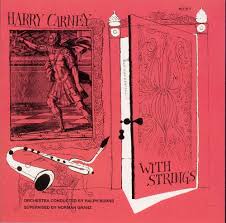
For over four decades Harry became the longest-serving player in Ellington’s orchestra. On occasions, he would serve as the band’s conductor, recorded one album as a leader and had many showpiece features written for him by the bandleader including his 1973 Third Sacred Concert built around his baritone saxophone.
Over the course of his career, he recorded with Rosemary Clooney, Ella Fitzgerald, Johnny Hodges, Jazz at the Philharmonic, and Billy Taylor. After Ellington’s death on May 24, 1974, some four months later baritone saxophonist and bass clarinetist Harry Carney, who was an early jazz proponent of circular breathing, passed away on October 8, 1974, in New York City.
More Posts: bandleader,history,instrumental,jazz,music,saxophone
Three Wishes
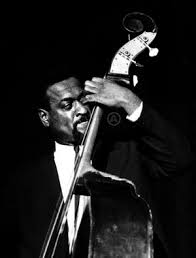
When the inquiry came his way from Pannonica, bassist John Ore gave his three wishes answer with:
-
-
“To be able to play – play well.”
-
“To be all over the world, in good health.”
-
“To have a time machine.”
-
*Excerpt from Three Wishes: An Intimate Look at Jazz Greats ~ Compiled and Photographed by Pannonica de Koenigswarter
More Posts: baroness,bass,history,instrumental,jazz,music,pannonica,three,wishes
Daily Dose Of Jazz…
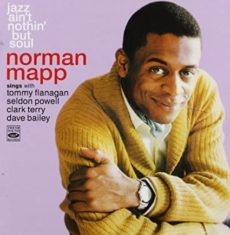
Born John Norman Mapp on March 31, 1928 and raised in Queens, New York. He started his music career as a singer with the U.S. Army band during World War II while stationed in Europe. Receiving his honorable discharge, he returned home to continue singing in New York City.
After an evening of performing, Dinah Washington went uptown to a Harlem night club to hear Norman sing at his debut. Impressed by his performance she adopted him as her protégé, encouraged him to continue singing and writing songs, and helped him start his career as a soloist and big-band musician.
As a composer, Mapp’s songs include Jazz Ain’t Nothin’ but Soul, I Worry ‘Bout You, Mr. Ugly, In the Night, Free Spirits, and Foul Play. His songs have been performed by Count Basie, Betty Carter, Marvin Gaye, Gigi Gryce, Peggy Lee, and Arthur Prysock.
Vocalist and composer Norman Mapp, who never regretted making music his career…because it brought him a wealth of experience, passed away in 1988.

More Posts: bandleader,history,instrumental,jazz,music,vocal