

Daily Dose Of Jazz…
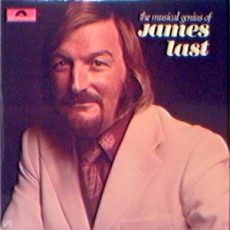
James Last was born Hans Last on April 17, 1929 in Bremen, Germany. He grew up in the suburb of Sebaldsbrück and began studying the piano at ageten, although he could play simple tunes when he was nine. He switched to the double bass as a teenager and entered the Bückeburg Military Music School of the German Wehrmacht at the age of fourteen and continued learning to play bass, piano and tuba.
After the end of World War II he joined Hans Günther Oesterreich’s Radio Bremen Dance Orchestra. In 1948 he became the leader of the Last-Becker Ensemble, which performed for seven years. He was voted as the best bassist in the country in a German jazz poll for 1950, 1951 and 1952. When they disbanded, he became the in-house arranger for Polydor Records, as well as a number of European radio stations. During the next decade he helped arrange hits for artists such as Helmut Zacharias, Freddy Quinn, Lolita, Alfred Hause and Caterina Valente.
He won numerous popular and professional awards, including Billboard magazine’s Star of the Year trophy in 1976, and was honoured for lifetime achievement with the German ECHO prize in 1994. In addition, Last sold an estimated 200 million records worldwide in his lifetime of which 80 million were sold by 1973 and won numerous awards including 200 gold and 14 platinum discs in Germany.
In February 2015, after almost 50 years on tour he announced that he was finally bidding adieu to the stage and the last concert of his farewell tour took place in Lanxess Arena in Cologne on April 26, 2015. Composer, bassist and big band leader of the James Last Orchestra, wose “happy music” made him a bestseller in Germany, died on June 9, 2015 in Florida at the age of 86.
More Posts: bandleader,bass,composer,history,instrumental,jazz,music
Daily Dose Of Jazz…
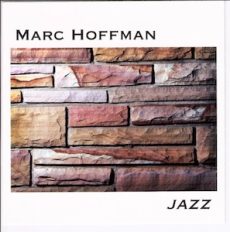
Marc Hoffman was born April 16, 1961 in Salisbury, North Carolina. He attended the North Carolina School of the Arts and received a degree in composition. He continued his education at The Dartington International Summer School of Music in Devon, England then studied film composition at the University of Southern California. He studied with David Ott, Sherwood Shaffer, Leo Arnaud and Neil Hefti.
Up until the early 1990s Hoffman wrote concert music, music for theater, pop, Christian music and film composition. Then he focused his attention on jazz and began writing original compositions, both instrumental and vocal, creating his own arrangements of jazz standards. Establishing his own label, Virillion Music, he recorded Long Way Home in 2003 followed by his sophomore album Christmas Time. In 2010 he released Curioso of all-original jazz.
As an educator and author he teaches and lectures on classical, pop and film music and has published two books. He also is an instructor of piano, composition, and voice at Bold Music in the Charlotte, NC area.
Pianist, composer and vocalist Marc Hoffman continues to write concert music, instrumental and vocal jazz pieces, film scores, as well as performing works solo, or with his trio, quartet or quintet and with four- or five-piece bands in a variety of venues.
More Posts: bandleader,composer,history,instrumental,jazz,music,piano,vocal
Jazz Poems
LEAVING SATURN
Sun Ra & His Year 2000 Myth Science
Arkestra at Grendel’s Lair Cabaret, 1986
Skyrocketed—
My eyes dilate old
Copper pennies.
Effortlessly, I play
*
Manifesto of the One
Stringed Harp. Only
This time I’m washed
Ashore, shipwrecked
*
In Birmingham.
My black porcelain
Fingers, my sole
Possession. So I
*
Hammer out
Equations for
A New Thing
Ogommetelli.
*
Ovid & Homer
Behind me, I toss
Apple peelings in
The air & half-hear
*
Brush strokes,the up
Kick of autumn
Leaves, the Arkestra
Laying down for
*
New dimensions,
I could be at Berkeley
Teaching a course—
Fixin’s How to Dress
*
Myth or Generations
Spaceships in Harlem
Instead, vibes from Chi-
Town, must be Fletcher’s
*
Big Band Music—oh,
My brother, the wind—
I know this life is
Only a circus. I’m
*
Brushed aside: a naïf,
A charlatan, too avant-
Garde. Satellite music for
A futuristic tent, says
*
One critic. Heartbreak
In outer space, says
Another, —lunar
Dust on the brain.
*
I head to New York
New York loves
A spectacle wet pain
Of cement, sweet
*
Scent of gulls swirling
Between skyscrapers
So tall, looks like war
If what I’m told is true
*
Mars is dying, it’s after
The end of the world.
So, here I am,
In Philadelphia,
*
Death’s headquarters,
Here to save the cosmos,
Here to dance in a bed
Of living gravestones.
MAJOR JACKSON
from Jazz Poems ~ Selected and Edited by Kevin Young

More Posts: book,classic,collectible,history,jazz,library,poet
Daily Dose Of Jazz…
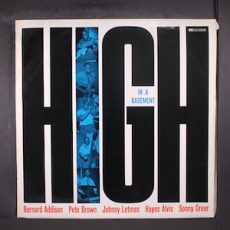
Bernard Sylvester Addison was born on April 15, 1905 in Annapolis, Maryland. At an early age, he learned mandolin and violin, and after moving to Washington, D.C. in 1920 he played banjo, initially with Claude Hopkins.
Moving to New York City he worked with Sonny Thompson and recorded for the first time in 1924. During the 1920s, he dropped the banjo for the acoustic guitar. The 1920s and 1930s saw Bernard playing with Louis Armstrong, Adelaide Hall, Fletcher Henderson, Bubber Miley, Art Tatum, and Fats Waller. Addison recorded with Red Allen, Coleman Hawkins, Horace Henderson, Freddie Jenkins, Sara Martin, Jelly Roll Morton, and Mamie Smith.
In 1936, John Mills of the Mills Brothers died, and Addison replaced him on guitar. For two years he toured and recorded with the Mills Brothers, increasing his popularity. After departing the Mills Brothers, he had little trouble finding work. He went on to record with Benny Carter and Mezz Mezzrow.
He played with Stuff Smith and recorded with Billie Holiday. In 1940, he recorded with Louis Armstrong and Sidney Bechet. He began to lead bands until he was drafted during World War II. In the late 1950s, he reunited with Henderson and played guitar for the Ink Spots. He performed at the Newport Jazz Festival with Eubie Blake in 1960 and recorded a solo album as a leader, Pete’s Last Date, and unfortunately was reissued under the name of saxophonist Pete Brown.
Guitarist Bernard Addison, who spent the remaining thirty years of his career teaching, died on December 18, 1990 at 85 in Rockville Centre, New York.
More Posts: guitar,history,instrumental,jazz,music
Daily Dose Of Jazz…
Greg Fugal was born on April 14, 1991 and started playing when he was twelve, receiving a zephyr saxophone from his great aunt. He began on alto then eventually played on all three saxophones.
He initially learned the classical genre but was introduced to jazz in his junior high years. Fugal became involved in a band that was organized outside of high school and called themselves the Rum House Jazz Mafia or R.H.J.M. as a baritone player in that band.
Having moved several times Greg played at three different high schools. Those schools being Uintah, Lehi, and Westlake high school, all based in Utah. During his senior year he was first chair and section leader and was rewarded the Louis Armstrong Jazz Award.
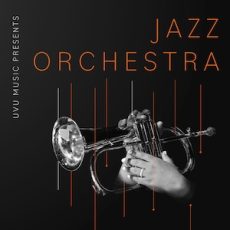
Graduated from Westlake High School in 2010, saxophonist Greg Fugal now plays for The Utah Valley University Jazz Band.
More Posts: history,instrumental,jazz,music,saxophone