

Daily Dose Of Jazz…
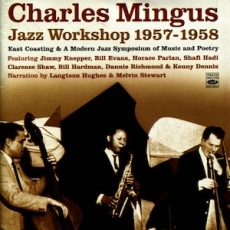
Shafi Hadi was born William Curtis Porter on September 21, 1929 in Philadelphia, Pennsylvania to William Porter and Harrietti Porter. He received piano lessons from his grandmother at age 6. He went on to study musical composition at Howard University and University of Detroit. He performed with rhythm and blues artists such as Paul Williams, Ruth Brown, and the Griffin Brothers.
He recorded with bassist Charles Mingus between 1956 and 1958. He also recorded with tenor saxophonist Hank Mobley. Hadi improvised the soundtrack music for John Cassavetes’s film Shadows, then returned to Mingus’s group in 1959. He also collaborated with Mary Lou Williams on her 1977 composition “Shafi”, although the extent of his contribution is unclear.
Between 1965 and 1969 Shafi co-wrote five songs with Lionel Hampton or Gladys Hampton: Bye, Bye, Hamp Stamps, No, Say No, A Sketch Of Gladys, and Mama Knows.
Tenor and alto saxophonist Shafi Hadi died in June 1976, at the age of 46.

More Posts: bandleader,history,instrumental,jazz,music
Daily Dose Of Jazz…
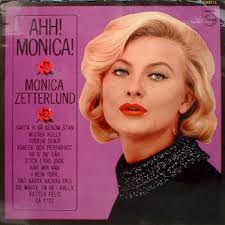
Monica Zetterlund was born Eva Monica Nilsson on September 20, 1937 in Hagfors, Sweden. She began by learning the classic jazz songs from radio and records, initially not knowing the language and what they sang about in English. Her hit songs included Swedish covers of Walking My Baby Back Home. Little Green Apples, Waltz for Debby, Hit the Road Jack, and Moon Over Bourbon Street, among many others.
She also interpreted the works of Swedish singer-songwriters Evert Taube, Olle Adolphson and Povel Ramel, as well as international jazz musicians/songwriters. She worked with Louis Armstrong, Bill Evans, Stan Getz, Steve Kuhn and Quincy Jones, and in the Scandinavian jazz world with people like Georg Riedel, Egil Johansen, Arne Domnérus, Svend Asmussen and Jan Johansson.
In 1964, she recorded the jazz album Waltz for Debby, featuring Bill Evans, and was the most proud of. Her professional skill was amply demonstrated in her performance of the challenging Harold Arlen song, So Long, Big Time. Her rendition of Once Upon A Time In Stockholm, though not suitable for the 1963 Eurovision Song Contest, remained successful in Sweden.
She suffered from severe scoliosis which began after a childhood accident, and as a result was forced to retire from performing in 1999. On May 12, 2005, vocalist Monica Zetterland, as awarded the Illis quorum by the government of Sweden, died probably due to her habit of smoking in bed following an accidental fire in her apartment in Stockholm, Sweden at age 67.
More Posts: bandleader,history,instrumental,jazz,music,vocal
Daily Dose Of Jazz…
Paul Hession was born on September 19, 1956 in Leeds, West Yorkshire, England where his parents bought him a guitar when he was seven and encouraged his musical development by getting him in the church choir. His first paid gigs were weddings. He started playing drums around fourteen and was mainly self taught working himself through the different musical genres until he reached jazz.
After several years of playing jazz he turned to free improvisation and formed Art, Bart & Fargo with saxophonists Alan Wilkinson and Peter Malham. While living in London, England he played with numerous improvisers and formed a trio with Chris Green and Roberto Bellatalla. Returning to Leeds in the mid-Eighties he continued playing and running music workshops.
By the time he turned thirty he made a solo recording and tour and continued to play and record solo. He started working with electroacoustic dimensions as a soloist. Hession went on to run the Improvised Music Workshop in the late 1980s and a decade later founded Improvised Music Leeds, a workshop that was founded to teach drumming to youth.
Paul created his next trio, Hession/Wilkinson/Fell which became his most prolific group. They recorded for the Canadian Broadcasting Corporation and broadcast on the radio program Two New Hours. He toured the United States and parts of Canada before returning to Europe and playing several cities and festivals.
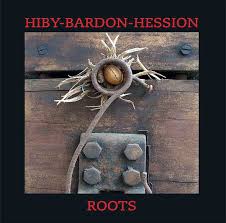
In 2018 he received his doctorate from the University of Leeds for research into augmenting solo percussion with analogue and digital electronics. Another trio later with Hans Peter Hilby and Michael Bardon, he remains active.
More Posts: bandleader,drums,history,instrumental,jazz,music
Daily Dose Of Jazz…
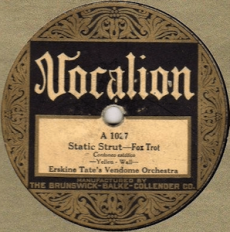
John L. Thomas was born September 18, 1902 in Louisville, Kentucky but relocated to Chicago, Illinois as a child where he received his formal education. He slid into on-stage trombone performances with the Clarence Miller Orchestra around 1923. Between 1927 and 1928 he worked with Erskine Tate, leading to Louis Armstrong’s Hot Seven. He continued freelancing with a wide range of classic jazz bandleaders Freddie Keppard, Tate and Reuben Reeves.
He was briefly with McKinney’s Cotton Pickers in the Thirties and in 1937 he was part of a touring revue fronted by pianist and singer Nat King Cole. Thomas was once again with Tate as well as drummer Floyd Campbell’s outfit. During WWII he gave up his trombone case for a tool box in a defense plant.
His performance hiatus from playing took place prior to dropping out completely during the ’50s, as he did gig once again in a group led by guitarist Walter Dysett in 1944. Trombonist John L. Thomas died on November 7, 1971 in Chicago, Illinois.
More Posts: history,instrumental,jazz,music,trombone
Daily Dose Of Jazz…
Charles Fowler Singleton Jr. was born on September 17, 1913 in Jacksonville, Florida. He attended several schools in and around the city and graduated from Stanton High School in 1935. Always interested in singing and dancing, by the time he left school he had become a proficient songwriter. He also produced shows and was responsible for several musical extravaganzas, including April Frolics, which was staged at a nightspot in LaVilla in Jacksonville. Singleton continued to work in Jacksonville into the 1940s.
The early 1950s Singleton moved to New York City and presented his lyrics to Decca Records, who signed him up as a songwriter. By 1954, he had teamed up with Rose Marie McCoy, and the pair went on to write successful hits for Joe Turner, Faye Adams and Ruth Brown. In 1956, Singleton and McCoy, as Charlie and Rosie, recorded a single together on RCA Victor.
Singleton went on to write songs for Pat Boone, Nat King Cole, Ella Fitzgerald, B. B. King, Peggy Lee, Johnny Mathis, Wayne Newton and Andy Williams. In the late 1950s and early 1960s, Singleton largely wrote songs without a writing partner, and also recorded an album, The Big Twist Hits, released in 1962 and credited to the Charlie “Hoss” Singleton Combo.
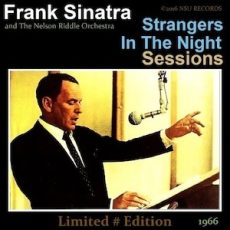
When the song Beddy Bye by Bert Kaempfert came to Frank Sinatra through his producer Jimmy Bowen, he asked the composer to tune it into a song. Bert engaged Singleton wrote the lyrics and Eddie Snyder adapted the music for what became Strangers in the Night and the song became a #1 hit for Sinatra.
He and Snyder had also reworked another Kaempfert instrumental called “Moon Over Naples” into the song Spanish Eyes. Composer and lyricist Charles Singleton, who was known as Hoss, and who also produced several platinum albums, died on December 12, 1985 in his home city.
More Posts: composer,history,instrumental,jazz,lyricist,music