

Daily Dose Of Jazz…
Rubin “Zeke” Zarchy was born on June 12, 1915 in New York City on June 12, 1915. He first learned the violin, but after a stint as bugler with his Boy Scout troop he switched permanently to trumpet while in his early teens.
Zarchy joined the Joe Haymes Orchestra in 1935, and the following year played with Benny Goodman, and then Artie Shaw. He was there through the end of the decade with Bob Crosby and Red Norvo, Tommy Dorsey, and then with Glenn Miller in 1940.
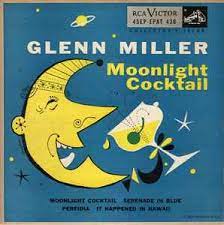
Between 1942 and 1945 he played in US Army bands of what became Miller’s Army Air Force Band, officially the 418th Army Band, playing lead trumpet as Master First Sergeant. Zeke’s trumpet can be heard on recordings as Benny Goodman’s Bugle Call Rag, Glenn Miller’s Moonlight Cocktail, and Bob Crosby’s South Rampart Street Parade.
After the war Frank Sinatra invited Zarchy to move to Los Angeles, California where he became a first-call studio musician. He played on numerous recordings, including those led by Boyd Raeburn, Jerry Gray, Sarah Vaughan, and Frank Capp. He appeared on film in The Glenn Miller Story and through both the 1940s and 1950s swing era, he included occasional doubling on instruments to some degree, the saxophone and trombone.
During the 1960s and 1970s, he played in the house bands of several CBS TV variety shows, including The Smothers Brothers Comedy Hour, The Danny Kaye Show and The Jonathan Winters Show, and was a member of the NBC Staff Orchestras in New York and Los Angeles.
In his later years, Zarchy toured several times in Europe, South America, and Australia, as well as thirty-two concert trips to Japan. He tutored several young trumpet players who became successful performers and studio musicians.
Trumpeter Zeke Zarchy, who was a lead player of the big band and swing eras, transitioned in Irvine, California, on April 11, 2009.

More Posts: history,instrumental,jazz,music,trumpet
Daily Dose Of Jazz…
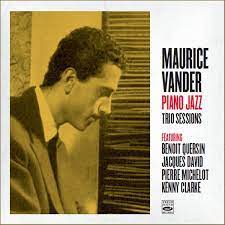
Maurice Vander born Vanderschueren, on June 11, 1929 in Vitry-sur-Seine, Val-de-Marne, France. He worked in the 1950s with Don Byas, Django Reinhardt, Bobby Jaspar, Jimmy Raney, Stephane Grappelli, Chet Baker, and Kenny Clarke.
In the 1960s he was a session musician for Roger Guerin, Pierre Gossez, and Boulou Ferré, and played with Claude Nougaro and Ivan Jullien. He won the Prix Django Reinhardt in 1962.
Playing with Baker again in the late 1970s he went on to work with Johnny Griffin. His later work included performing and recording with Clarke, Richie Cole, Art Farmer, and Benny Powell.
Pianist Maurice Vander transitioned on February 16, 2017 in Paris, France.
More Posts: history,instrumental,jazz,music,piano
Daily Dose Of Jazz…
Martin Abraham, better known as Chink Martin, on June 10, 1886 in New Orleans, Louisiana. He played guitar in his youth before settling on tuba as his main instrument. He played with Papa Jack Laine’s Reliance Brass Band around 1910, and worked in various other brass bands in the city in the 1910s.
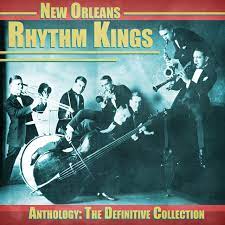
In 1923, he traveled to Chicago, Illinois and played with the New Orleans Rhythm Kings with whom he made his first records. He also recorded guitar duets with Leon Roppolo, but these unfortunately were never issued. Returning to New Orleans with the Rhythm Kings in 1925, Martin made further recordings with them.
He also played with the Halfway House Orchestra with which he recorded on both tuba and string bass, the New Orleans Harmony Kings, and the New Orleans Swing Kings. In the 1930s, Martin worked as a staff musician at WSMB radio. He continued to play tuba for his entire career, though he also played and recorded on the double-bass from at least the 1920s onward.
He played with dozens of noted New Orleans jazz musicians, appearing on record with Sharkey Bonano, Santo Pecora, Pete Fountain, Al Hirt, and others. Tubist Chink Martin, who released one album under his own name on Southland Records in 1963, transitioned on January 7, 1981 in New Orleans.
More Posts: bandleader,history,instrumental,jazz,music,tuba
Daily Dose Of Jazz…
James Pasco Gourley, Jr. was born June 9, 1926 in St. Louis, Missouri. He met saxophonist Lee Konitz in Chicago when both were members of the same high school band and credits Konitz with encouraging him to become a serious musician.
His father started the Monarch Conservatory of Music in Hammond, Indiana, though he didn’t teach and bought his son his first guitar. Jimmy took his first guitar classes at the school and became interested in jazz while listening to the radio, enjoying in particular Nat King Cole. For his first professional experience as a performer, he dropped out of high school to play with a jazz band in Oklahoma City, Oklahoma.
From 1944 to 1946 Gourley served in the U.S. Navy. Upon his return to Chicago, Illinois he met guitarist Jimmy Raney and wanted to play like him. He worked in bars and clubs with Jackie Cain & Roy Kral, Anita O’Day, Sonny Stitt, and Gene Ammons. Through the G.I. Bill he received tuition for three years to any college in the world.
Beginning in 1951, Jimmy spent the rest of his life in France, working with Henri Renaud, Lou Bennett, Kenny Clarke, Richard Galliano, Stéphane Grappelli, Bobby Jaspar, Eddy Louiss, Martial Solal, and Barney Wilen. He played with American musicians who were passing through, including Bob Brookmeyer, Clifford Brown, Stan Getz, Gigi Gryce, Roy Haynes, Lee Konitz, Bud Powell, Zoot Sims, Lucky Thompson, and Lester Young.
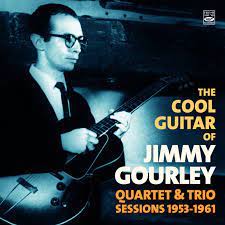
Guitarist Jimmy Gourley, who spent the better part of his life in Paris, France transitioned at the age of 82 on December 7, 2008 in Villeneuve-Saint-Georges, France.
More Posts: bandleader,guitar,history,instrumental,jazz,music
Daily Dose Of Jazz…
John Joseph Harold Holmes was born in Montreal, Canada on June 8. 1916 and began playing cornet at 10, briefly studying with C. Van Camp. After playing trumpet for a year in 1940 in a co-operative band, the Escorts, he took over its leadership 1941-50.
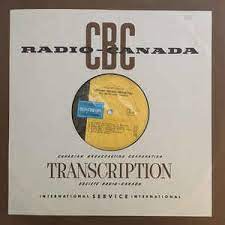
Under the name Johnny Holmes Orchestra, they played Saturday nights at Victoria Hall in Montreal, broadcasted on CBC radio, and occasionally toured Canada’s Quebec and Ontario. One of Montreal’s leading dance bands of the day, it boasted a healthy jazz quotient and benefited from Holmes’ ability to identify talented young musicians. His sidemen included, at various times, Nick Ayoub, Al Baculis, Percy and Maynard Ferguson, Bud Hayward, Art Morrow, and Oscar Peterson. Lorraine McAllister and Sheila Graham, in turn, sang with the band.
Retiring from music from 1951 to 1959, he reemerged and from 1959 to 1969 was heard on CBC radio in The Johnny Holmes Show, Broadway Holiday, and others. Holmes’ orchestras made several broadcast recordings between 1966 and 1973 for the CBC’s LM series. He continued to perform periodically until his final retirement from music in 1978.
Trumpeter, bandleader, arranger, composer Johnny Holmes, who wrote more than 40 songs and many arrangements for his orchestra and his radio shows and has no available recordings online, transitioned on June 11, 1989.
More Posts: arranger,bandleader,composer,history,instrumental,jazz,music,trumpet