

Requisites
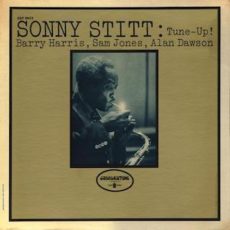
Tune~Up! ~ Sonny Stitt | By Eddie Carter
Sonny Stitt was equally fluent on alto sax (tracks: A2, A4, B2, B3) and tenor sax (tracks: A1, A3, B1, B3) with a pure tone that could be carefree, fiery, or seductive. This morning’s choice from the library is a superb example of him at his best. Tune-Up! (Cobblestone CST 9013) is an excellent 1972 quartet session anchored by Barry Harris on piano, Sam Jones on bass, and Alan Dawson on drums. Stitt’s birth name was Edward Hammond Boatner, Jr. and he came from a musical family. Sonny’s father sang baritone, was a composer, and was a college music professor. His mom taught piano, and his brother was a classically trained pianist. He was later adopted by a family named Stitt and gave himself the name Sonny. The musicians he’s played with reads like the encyclopedia of jazz. Stitt’s also recorded over one hundred albums as a leader and sideman. My copy used in this report is the original US Stereo album.
Side One opens with a speedy rendition of Tune-Up by Miles Davis. Sonny’s tenor sax is emotionally charged from the start of the melody. He launches a ferocious workout on the first statement at breakneck speed. Barry is up next for a vigorously energetic reading leading to a final heated discussion by the leader before the quartet’s exit. I Can’t Get Started by Vernon Duke and Ira Gershwin is a gorgeous song from the film, Ziegfeld Follies of 1936. Stitt’s on alto sax for this tune and shows profound respect to the standard beginning with a thoughtfully tender opening chorus and lyrically beautiful serenade. Harris indulges in nostalgic reminiscing and reflection on the second interpretation and Jones follows with a delicately pretty performance. Stitt makes a genuinely touching and gracefully poignant presentation into the group’s charming climax.
Idaho by Jesse Stone was composed in 1942 and pays homage to the state. This original starts at a jaunty tempo with a cheerful melody. Sonny steps up first with a high-spirited opening statement. Barry takes the reins next for a concise performance of nimble agility. The saxophonist adds a brief bit of fire to the tune with a fitting closer ahead of the quartet’s exit. Side One closes on an upbeat note with a popular song about two lovers who are now Just Friends. It was written in 1931 by John Klenner and Sam M. Lewis. Stitt leads the group through a brisk melody, then kicks it up a notch on the opening chorus with combustible bop chops. Harris fills the second solo with a restless, bristling energy, matched by the rhythm section’s swinging support. Stitt brings out the best on a few final vivacious thoughts preceding the quartet’s closing moments.
Side Two opens on the saxophonist’s slow blues tribute to Lester Young and Charlie Parker, Blues For Prez and Bird. The trio begins with a soulful introduction, then Sonny applies an appropriately warm tone to the melody and first interpretation. Barry is especially endearing on a short statement that swings softly. Stitt arrives at a beautiful conclusion after speaking with deep emotion on the finale. Dizzy Gillespie’s Groovin’ High is a 1945 uptempo standard from the book of Bebop. The quartet comes out cooking on the opening chorus, then Stitt shifts into another gear with a dazzling reading of sheer exuberance. Harris also shows remarkable nimbleness on the second performance matching the saxophonist step for step. Stitt slices through the closing statement with razor-sharpness before the ensemble’s vigorous climax.
I Got Rhythm by George and Ira Gershwin is a jazz standard that was introduced in the musical Girl Crazy (1930). The ensemble deceptively starts slowly at the song’s bridge, rather than the beginning. Sonny has the first solo, erupting on tenor sax with the dynamic force of an active volcano. Barry takes over on the second statement with a fierce intensity, then Stitt kicks up a storm on alto sax for the next presentation. Jones makes a concise comment preceding Stitt ending the song on tenor the way it began. Tune-Up! was produced by Don Schlitten and recorded by Paul Goodman. The album has an exceptionally good soundstage with great clarity throughout the highs, midrange, and bass. If you’re in the mood for an outstanding album of alto and tenor sax, I proudly recommend and submit for your consideration, Tune-Up! by Sonny Stitt. He’s in top form here, and every track’s a winner!
~ I Can’t Get Started, Just Friends, Groovin’ High, I Got Rhythm – Source: JazzStandards.com © 2021 by Edward Thomas Carter

More Posts: choice,classic,collectible,collector,history,instrumental,jazz,music,saxophone
Daily Dose Of Jazz…
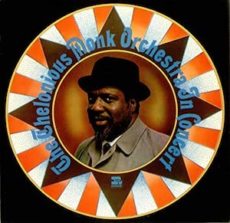
Eugene Sufana Allen was born on December 5, 1928 in East Chicago, Indiana. He began playing clarinet and piano as a child, and was playing with Louis Prima at age 15 in 1944. He stayed in Prima’s band until 1947, then worked with Claude Thornhill for two years in 1949, and from 1951 to 1953 he played with Tex Beneke.
In 1953 he began playing with the Sauter-Finegan Orchestra, playing with them intermittently until 1961, and also worked with Tommy Dorsey, Benny Goodman, and Hal McKusick in the 1950s. Toward the end of the decade, and into the early 1960s, Gene worked with Gerry Mulligan, Manny Albam, Woody Herman, Thelonious Monk, and Bob Brookmeyer.
His later associations include work with Urbie Green, Mundell Lowe, Rod Levitt, and Rusty Dedrick. In the calendar year of 1963, Allen successfully played in and recorded with the big bands of Benny Goodman, Thelonious Monk, and Woody Herman.
Baritone saxophonist and bass clarinetist Gene Allen passed away on February 14, 2008.

More Posts: clarinet,history,instrumental,jazz,music,saxophone

Daily Dose Of Jazz…
Herman Autrey was born into a musical family on December 4, 1904 in Evergreen, Alabama. He played alto horn before taking up trumpet as a teenager and performed locally in Pittsburgh, Pennsylvania and Florida. After Florida, he went on to work in Washington, DC, Philadelphia, Pennsylvania and New York City, where he played with Charlie Johnson in 1933.
He became well known through Fats Waller, who hired him in 1934 after signing a contract with Victor Records. He played with the drummer Harry Dial, guitarist Al Casey, and reedist Gene Sedric. Autrey went on to record extensively with Waller, Fletcher Henderson, and Claude Hopkins.
Into the 1940s Herman worked as a sideman with Stuff Smith, Sammy Price, and Una Mae Carlisle and his ensembles sometimes included pianist Herbie Nichols. By the early 1950s he was hurt in a car crash, sidelining his career for a year. He played with Saints & Sinners in the 1960s, including on their 1968/69 tours of Europe. In 1969, he played with Buzzy Drootin’s Jazz Family, which included Benny Morton, Herb Hall, pianist Sonny Drootin, and bassist Eddie Gibbs.
In the Seventies, he began to lose his playing capacity and spent more time as a vocalist. Trumpeter Herman Autrey passed away on June 14, 1980 in New York, at the age of 75.
More Posts: alto horn,history,instrumental,jazz,music,trumpet,vocal
Daily Dose Of Jazz…
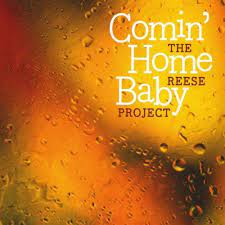
Laurie Haines Reese was born on December 3, 1961 in Lancaster, Pennsylvania. A sojourn to Miami, Florida she studied at the University of Miami~Coral Gables, earning a Bachelor in Music Performance, then a Master of Music Performance degree from the University of Southern California~Los Angeles, she studied the advanced classical cello repertoire with Eleanor Schoenfeld.
She played both classical & jazz, performing regularly with Ira Sullivan & Strings Attached. She also free-lanced extensively, playing in various symphony orchestras, doing studio work and working with a string quartet & a flute quartet.
Following her graduate work in Los Angeles, she went to Maui to work full-time as a professional musician. While there, she co-founded a trio called Chamber Jazz Maui, along with Jazlynn Woods & Tim O’Hara, that performed a variety of repertoire “from Bach to Beatles.” From there, she spent six months in Seattle, before heading back home to Pennsylvania where she has remained and co-founded The Reese Project with her husband Tom reese..
Adept and equally comfortable in the recording studio and on stage, Laurie has been performing professionally since she was seventeen years old. She has been nominated for a Grammy and recorded with several bands. Cellist Laurie Reese continues her session work..
More Posts: bandleader,cell,history,instrumental,jazz,music
Daily Dose Of Jazz…
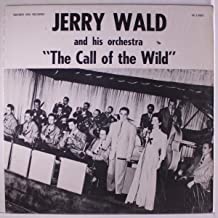
George Robert “Rob” Swope was born on December 2, 1926, in Washington, D.C., the younger brother of trombonist Earl Swope. In 1947 he played with Buddy Rich and recorded with Jerry Wald before playing and getting in the studio with Chubby Jackson in 1948-49.
He worked with Gene Krupa in 1949-50, then with Elliot Lawrence in 1950-51. Swope led his own trio in the D.C. area in the early 1950s, and was a member of The Orchestra, the band which accompanied Charlie Parker in 1953 and Dizzy Gillespie in 1955.
Spending time in New York City in the latter half of the Fifties, he played with Larry Sonn, Boyd Raeburn, Claude Thornhill, Jimmy Dorsey, and Louie Bellson. In the 1960s he worked in Washington, D.C. again, often as a leader. Trombonist Rob Swope passed away on January 9, 1967 in Washington, D.C.
More Posts: bandleader,history,instrumental,jazz,music,trombone