

Daily Dose Of Jazz…
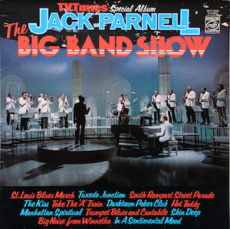
Jolyon Hunter was born on December 1, 1926 in Ealing, London, England and moved with his actor parents to America in 1935. He studied the French horn at two military schools before switching to trumpet. By 1943 he returned home to Britain and attended the Royal College of Music before joining the war effort in the British Army.
In 1950 Jo left Army service and joined the Kenny Graham Afro Cubists, working with them off and on until 1957. Departing the group, he then worked for a short time with Roy Fox, followed by a five year residence with the Jack Parnell Big Band. He went on to play with Oscar Rabin, replacing Jimmy Deuchar.
Moving to Brighton, he worked with local bands and was an active freelancer on both trumpet and piano. In his later years he worked on cruise ships and played harmonica. Trumpeter and pianist Jo Hunter, who also played pianist and harmonica, passed away on August 14, 2016 at the age of 89.
More Posts: harmonica,history,instrumental,jazz,music,piano,trumpet
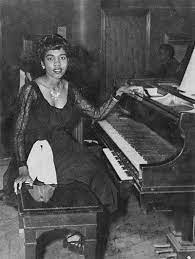
Three Wishes
While having girl talk between Nica and Terry Pollard she asked her what her three wishes would be if they could be granted:
- “A baby girl.”
- “Guaranteed good health.”
- “An un~segregated world.”
*Excerpt from Three Wishes: An Intimate Look at Jazz Greats ~ Compiled and Photographed by Pannonica de Koenigswarter

More Posts: baroness,history,instrumental,jazz,music,pannonica,piano,three,wishes
Daily Dose Of Jazz…
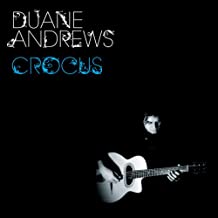
Duane Andrews was born November 30, 1972 in Carbonear, Newfoundland and Labrador and grew up exposed to the island’s mélange of cultural influences and his development as a guitarist reflects that. After graduating from the Jazz Studies program at St. Francis Xavier University with honours, he spent several years studying contemporary music composition at the Conservatoire International de Paris and at the Conservatoire National de Region in Marseille, France.
He combines traditional Newfoundland folk music with jazz similar to the way that guitarist Django Reinhardt infused jazz with Manouche influences. He is a composer for film and television, and has recorded thirteen albums as he continues to compose and explore music.

More Posts: bandleader,composer,guitar,history,instrumental,jazz,music
Daily Dose Of Jazz…
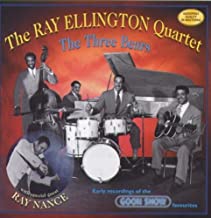
George Coleridge Emerson Goode was born on November 29, 1914 in Kingston, Jamaica. His father was a choirmaster and organist and his mother sang in the choir. Moving to Britain in 1934, the 19-year-old student at the Royal Technical College in Glasgow, Scotland and then went on to read for a degree in engineering at Glasgow University. Already proficient as an amateur classical violinist he turned to jazz and took up the bass after hearing the music of Count Basie, Duke Ellington, Billie Holiday and Louis Jordan and decided to embark upon a musical career.
His primary early influences as a bassist were Walter Page, Slam Stewart and Jimmy Blanton. In London during World War II, Coleridge worked with Johnny Claes, Eric Winstone, Lauderic Caton, Dick Katz, became a founder member of the Ray Ellington Quartet and recorded with Django Reinhardt in 1946, alongside Stephane Grappelli. He went on to play with Tito Burns’ sextet and led his own group, before being invited to join Joe Harriott’s new band in 1958.
By 1967 he was recording with Chris McGregor, Dudu Pukwana, Ronnie Beer, and Laurie Allan on Gwigwi Mrwebi’s Mbaqanga Songs. Through the decade and into the 1970s, Goode worked extensively with pianist/composer Michael Garrick, while performing in the house band at Laurie Morgan’s Sunday jam session into his 90s.
In 2002, he published his autobiography Bass Lines: A Life in Jazz, which chronicled the birth of free form jazz in Britain. He was honoured with the Services to Jazz Award at the Parliamentary Jazz Awards, and at the age of 100, double bassist Coleridge Goode passed away on October 2, 2015.
More Posts: bass,history,instrumental,jazz,music
Requisites
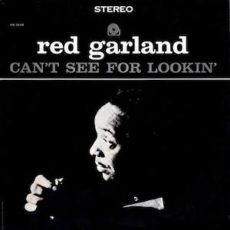
Can’t See For Lookin’ ~ Red Garland | By Eddie Carter
I was in the mood for some nice soothing music to enjoy after dinner a few nights ago when I came across this morning’s choice from the library by Red Garland. Can’t See For Lookin’ (Prestige PRLP 7276/PRST 7276) is his twelfth album and was recorded in 1958 but not released until 1963. William “Red” Garland was born in Dallas, Texas, and began playing the clarinet and alto sax before taking up the piano. He became famous in The Miles Davis Quintet from 1955 to 1958 and was well versed in the styles of Bebop, Hard-Bop, and straight-ahead jazz. After leaving Miles, he formed a trio and has recorded albums with Arnett Cobb, John Coltrane, Curtis Fuller, Jackie McLean, Charlie Parker, Art Pepper, Sonny Rollins, and Phil Woods. Here, he’s joined by Paul Chambers on bass and Art Taylor on drums. My copy used in this report is the 1972 US Stereo reissue (Prestige PRT-7276) by Fantasy Records.
Side One starts with a pretty song from the forties, I Can’t See For Lookin’ by Nadine Robinson and Dock Stanford. The trio begins an enchanting collective melody then Red glides into the first solo with a gracious amount of warmth and elegant simplicity. Paul walks through the second statement with a dreamy, rich tone revealing some intimate thoughts ahead of the trio’s delightful ending. Soon by George and Ira Gershwin began as a show tune from the musical, Strike Up The Band (1927). The ensemble gets things underway with a lively theme that’s passionate, enthusiastic, and extremely confident. Garland gives a stunning account on the opening solo with an energy that tweaks some new insights out of this old warhorse. Chambers makes his mark on the second reading with a showcase of incisively nostalgic ideas, and Taylor becomes a friendly sparring partner to the pianist on the closing statement.
Side Two opens with Blackout, a tune from the pen of Avery Parrish and Sammy Lowe beginning with an easy, caressing style by the ensemble on the melody. Red steps up first, establishing a nice momentum with a gorgeous opening statement. Paul approaches the next interpretation with great sensitivity and delicacy. Red returns to share a polite conversation with Art on the closing reading into a tender exit. Castle Rock by Al Sears brings the trio back to a brisk beat on the melody in unison. Garland leads off the opening statement with a light and nimble performance, then Chambers cooks up a tasty treat of cool jazz on the second solo. Taylor enters the spotlight last with Garland in a brief exchange into the closing chorus and happy ending.
Can’t See For Lookin’ was supervised by Prestige founder Bob Weinstock and Rudy Van Gelder was the man behind the dials. Both men are at the top of their game with a tremendous soundstage and incredible definition of each instrument. The piano has an amazing sound, and the bass and drums are perfectly balanced as if we’re in the studio while the musicians are recording. Red Garland recorded forty-six albums as a leader and was always good regardless of the setting or bandmates he appeared with. His career lasted over forty years and he continued recording until he suffered a heart attack, passing away on April 23, 1984, at age sixty. If you’re a Hard-Bop fan, enjoy Red Garland or jazz piano, I submit for your consideration, Can’t See For Lookin’. It’s thirty-five minutes of great music that you can file under “T” for terrific and perfect to enjoy while relaxing!
~ Soon – Source: Wikipedia.org © 2021 by Edward Thomas Carter

More Posts: <!-- wp:paragraph --> <p><strong>choice,classic,collectible,collector,history,instrumental,jazz,music,piano