

Daily Dose Of Jazz…
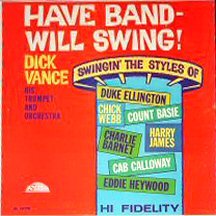
Dick Vance was born on November 28, 1915 in Mayfield, Kentucky, and raised in Cleveland, Ohio. He learned violin before concentrating on trumpet and by 1932 was playing with J. Frank Terry before joining Lil Armstrong’s band in 1934.
He moved to New York City and played with Willie Bryant, Kaiser Marshall, and Fletcher Henderson between 1936 to 1938. In Henderson’s band he was lead trumpeter and occasionally sang. By 1939 he joined Chick Webb’s orchestra, remaining in the group when Ella Fitzgerald took over leadership. His next move had him becoming the staff arranger for Glen Grey’s band and, in 1942, joined the Lucky Millinder Orchestra.
From 1944–45 he worked with Charlie Barnet, Don Redman, Eddie Heywood and Ben Webster. From 1944 to 1947 he studied at Juilliard, and moonlighted as a pit orchestra musician and an arranger for Harry James, Cab Calloway, Earl Hines and Duke Ellington. During this time Dick played on notable Broadway productions including Pal Joey, Beggar’s Holiday, and in the off-stage band for Streetcar Named Desire.
In 1950, Vance reunited with Fletcher Henderson, playing in his New York sextet. 1951 to 1952 saw him as a member of Duke Ellington’s trumpet section where he arranged most of the items for the album Ellington ‘55. In 1958 he co-composed Jazz Festival Suite with Ellington for performance at the Newport Jazz Festival. He led Sonny Stitt’s trumpet section on the 1962 album Sonny Stitt & The Top Brass. He toured abroad with his own band in 1969, which later appeared in the film L’aventure du jazz.
He toured with Redman in 1953 and was a regular at the Savoy Ballroom throughout the 1950s. He released two albums in the 1960s and toured with Eddie Barefield in 1969. He appears briefly in episode 9 of the music documentary series All You Need Is Love: The Story of Popular Music. In 1979, he composed for the documentary film No Maps On My Taps, starring Lionel Hampton and Howard Sims.
Trumpeter, vocalist, composer and arranger Dick Vance passed away on July 31, 1985 in New York City at the age of 69.
More Posts: arranger,bandleader,composer,history,instrumental,jazz,music,trumpet,vocal
Daily Dose Of Jazz…
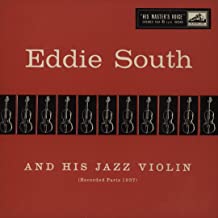
Edward Otha South, born November 27, 1904 in Louisiana, Missouri, studied classical music in Budapest, Hungary, Paris, France and Chicago, Illinois. In the 1920s he was a member of jazz orchestras led by Charlie Elgar, Erskine Tate, and Jimmy Wade.
In the early 1930s Eddie led a band that included Milt Hinton and Everett Barksdale. In 1937 he recorded in Paris with Stephane Grappelli, Django Reinhardt, and Michel Warlop. In 1945 he worked for the studio band at WMGM in New York City. During the 1950s, he was a guest on television with Fran Allison and Dave Garroway and on WGN in Chicago.
South was among hundreds of artists whose material was destroyed in the 2008 Universal fire. On September 2, 2020, The New York Times consulted violinist Mazz Swift, who selected Eddie South’s performance of Black Gypsy for a feature on 5 Minutes That Will Make You Love the Violin.
Violinist Eddie South passed away on April 25, 1962 in Chicago, Illinois.
More Posts: bandleader,history,instrumental,jazz,music,violin
Daily Dose Of Jazz…
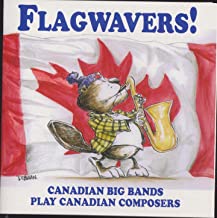
James Douglas “Trump” Davidson was born on November 26, 1908 in Sudbury, Ontario, Canada. He formed one of Canada’s earliest jazz bands in 1925, under the name The Melody Five. From 1929 to 1936 he played in Luigi Romanelli’s orchestra, then led a dance band from 1937 to 1942, which broadcasted on NBC and toured in the United Kingdom with Ray Noble in 1938–39.
In 1942 during World War II he worked in Horace Lapp’s orchestra in 1942, then led a dance band in Toronto, Canada at the Palace Pier from 1944 until 1962. This group appeared often on CBC radio and recorded several times during the 1960s. He led a big band from 1974 to 1978, also singing with this group.
Cornetist, singer and bandleader Trump Davidson passed away on May 2, 1978 at the age of 69 in his hometown.
More Posts: bandleader,cornet,history,instrumental,jazz,music,vocal

Daily Dose Of Jazz…
Paul Desmond was born Paul Emil Breitenfeld on November 25, 1924 in San Francisco, California. His father was a pianist, organist, arranger, and composer who accompanied silent films in movie theaters and produced musical arrangements for printed publication and for live theatrical productions. He started his study of clarinet at the age of twelve and continued while at San Francisco Polytechnic High School. During high school he developed a talent for writing and became co-editor of his high school newspaper.
As a freshman at San Francisco State College he began playing alto saxophone, however, he was drafted into the U.S. Army, where he spent three years in the Army band stationed in San Francisco. After his discharge in 1946 he legally changed his name to Desmond. Working in the San Francisco Bay Area as a backing musician, occasionally with Dave Brubeck.
Following a breakup and a reunion with Brubeck, the quartet became especially popular with college-age audiences, often performing in college settings like on their ground-breaking 1953 album Jazz at Oberlin at Oberlin College. The group played until 1967, when Brubeck switched his musical focus from performance to composition and broke the unit up. During the 1970s Desmond joined Brubeck for several reunion tours, with Brubeck’s sons Chris, Dan and Darius.
He worked several times during his career with baritone saxophonist Gerry Mulligan, guitarist Jim Hall, Chet Baker, and Ed Bickert. Alto saxophone and composer Paul Desmond, who was one of the most popular musicians to come out of the cool jazz scene, passed on May 30, 1977, not of his heavy alcohol habit but of lung cancer, the result of his longtime heavy smoking.
More Posts: bandleader,history,instrumental,jazz,music,saxophone
Daily Dose Of Jazz…
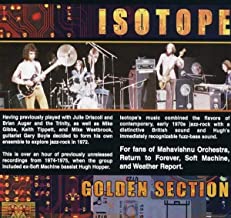
Gary Winston Boyle was born November 24, 1941 in Patna, Bihar, India. He attended the Leeds College of Music in the early 1960s and then joined the folk-rock band Eclection. He also played in The Echoes, Dusty Springfield’s band in the mid-1960s, and recorded with Brian Auger and Julie Driscoll.
In the early 1970s he worked as a session musician with musicians Keith Tippett, Mike Gibbs, Mike Westbrook, Stomu Yamashta, Bert Jansch and Norma Winstone.
In 1973, Boyle founded the jazz fusion band Isotope with bassist Jeff Clyne, keyboardist Brian Miller and drummer Nigel Morris. This line-up gigged around the United Kingdom extensively. Fusion guitarist Gary Boyle continues to perform and record.
More Posts: bandleader,guitar,history,instrumental,jazz,music