


The Jazz Voyager
The Jazz Voyager is off to Canada for a first time experience at Frankie’s Jazz Club in British Columbia. Located in Vancouver at 755 Beatty Street V6B 2M4. This week I’m going to witness three young up and coming musicians, guitarist Alvin Brendan, keyboardist Benjamin Millman, and drummer Trent Otter.
A home to live jazz and blues, Frankie’s features local, national and international world class musicians. They offer an evening of casual intimacy with a selection of spirits and wine coupled with an Italian menu to enjoy music to.
Frankie’s Jazz Club phone number is +1 604-688-6368. For more information on showtimes and tickets visit https://www.frankiesjazzclub.ca/
More Posts: adventure,album,club,drums,festival,genius,guitar,jazz,keys,museum,music,preserving,restaurant,travel
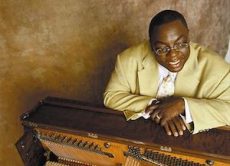
CYRUS CHESTNUT QUINTET
Freddie Hendrix – trumpet
Stacy Dillard – tenor saxophone
Cyrus Chestnut – piano
Gerald Cannon – bass
Willie Jones III – drums
Cyrus Chestnut, one of the great jazz pianists, leads an exciting quintet with trumpeter Freddie Hendrix, tenor saxophonist Stacy Dillard, bassist Gerald Cannon, and drummer Willie Jones III. “His brand of crisp articulation and blues-inflected harmony evokes another era… multifaceted and dynamic…” says The New York Times. Inspired by gospel music throughout his life, Cyrus draws on a range of musical influences while never straying too far from the blues, which The New York Daily News says makes him “the rightful heir to Bud Powell, Art Tatum, and Erroll Garner.”
LiveStream ~ $15.00 + fees
More Posts: adventure,album,club,festival,genius,jazz,museum,music,piano,preserving,restaurant,travel
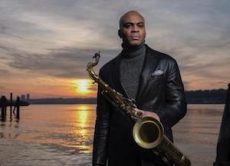
WAYNE ESCOFFERY
“Like Minds” Record Release
Wayne Escoffery – tenor saxophone
Nicholas Payton – trumpet
David Kikoski – piano
Ugonna Okegwo – bass
Mark Whitfield Jr. – drums
Saxophonist Wayne Escoffery celebrates the release of his anticipated new album Like Minds (Smoke Sessions) by performing the music from with a superb quintet—special guest trumpeter Nicholas Payton, pianist David Kikoski, bassist Ugonna Okegwo, and drummer Mark Whitfield Jr. Escoffery, a prominent protégé of the great Jackie McLean, faithfully channels his former mentor’s powerful approach. All About Jazz says, “Not since the works of bassist Charles Mingus and saxophonist John Coltrane has there been music so charged with emotion and so engulfed in spirituality.” Stereogum adds, “the leader’s playing has thoughtfulness and muscle in equal measure.”
“Every time he plays, saxophonist Wayne Escoffery brings a sense memory that includes early days in the church choir in New Haven, Connecticut; the wisdom and watchful eye of the legendary Jackie McLean; time spent with The Mingus Big Band, Ron Carter and Tom Harrell.” – Gary Walker, WBGO.org
LiveStream: $15.00 + fees
More Posts: adventure,album,club,festival,genius,jazz,museum,music,preserving,restaurant,saxophone,travel
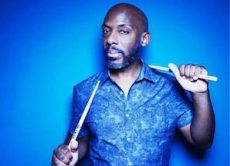
E. J. STRICKLAND
Jaleel Shaw – alto & soprano saxophone
Myron Walden – tenor sax & bass clarinet
Victor Gould – piano
Eric Wheeler – bass
E.J. Strickland – drums
Drummer E.J. Strickland leads an impressive quintet featuring saxophonists Jaleel Shaw and Myron Walden, pianist Victor Gould, and bassist Eric Wheeler. Strickland is a world-class, world-traveled drummer who has toured, performed, and recorded with some of the greatest names in contemporary music including Cassandra Wilson, Terence Blanchard, Lizz Wright, Wynton Marsalis, George Colligan, David Gilmore, Vincent Herring, and Nnenna Freelon. The Hartford Courant reports his drumming “has a rare balance of subtlety and power” while All About Jazz adds, “(he) belongs to a technically brilliant and forward-thinking group of young musicians.” And Downbeat says he emits “fields of cumulative energy, clouds of feather-touch and heavy-handed syncopations, latent with power like an oncoming storm.”
More Posts: adventure,album,club,drums,festival,genius,jazz,museum,music,preserving,restaurant,travel
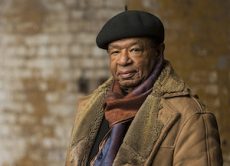
BUSTER WILLIAMS & SOMETHING MORE
“UNALONE” Record Release
Bruce Williams – alto saxophone
Stefon Harris – vibraphone
George Colligan – piano
Buster Williams – bass
Lenny White – drums
Bassist Buster Williams celebrates the release of his exciting new album, Unalome (Smoke Sessions), accompanied by his acclaimed quintet, Something More. This well-known and beloved ensemble features vibraphonist Stefon Harris, saxophonist Bruce Williams, pianist George Colligan, as well as fellow music legend, drummer Lenny White. The Guardian calls Williams “one of the great acoustic bassists,” and JazzTimes adds “Williams’ résumé ranks with that of any bassist in the modern era.” That resume includes working with Gene Ammons and Sonny Stitt when he was only 17; backing the singing legends Betty Carter, Sarah Vaughan, and Nancy Wilson in the ’60s; anchoring Herbie Hancock’s Mwandishi sextet into the ’70s; and co-founding the Timeless All-Stars and Sphere after that. As important as he is as a bassist, he is also well-known as a composer and bandleader. The New Yorker hails his music as “modern, mainstream at its best.”
LiveStream: $15.00 + fees
More Posts: adventure,album,bass,club,festival,genius,jazz,museum,music,preserving,restaurant,travel