

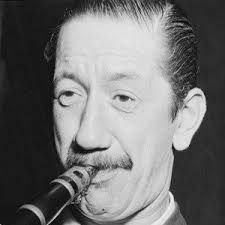
Three Wishes
When the Baroness asked Pee Wee Russell if he had the opportunity to get three wishes granted what would they be he responded with:
- “To make Monk happy on the stage at Newport.”
- “I’d like to become a better musician ~ providing I’m one now.”
- “To make enough to give my wife everything she desires.”
*Excerpt from Three Wishes: An Intimate Look at Jazz Greats ~ Compiled and Photographed by Pannonica de Koenigswarter

More Posts: baroness,clarinet,history,instrumental,jazz,music,pannonica,three,wishes
Daily Dose Of Jazz…
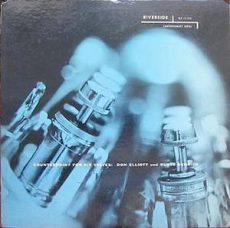
Lyle “Rusty” Dedrick was born on July 12, 1918 in Delevan, New York. His first call to jazz came when he was in a music store in Buffalo, New York and heard a Louis Armstrong record. So taken was he that he bought the record, then returned home to save money for a record player. After brief studies at Fredonia State Teachers College, he spent a two-year jazz apprenticeship working with the band known as “Mr. And Mrs. Swing,” the Red Norvo/Mildred Bailey Orchestra, featuring the arrangements of a young Eddie Sauter.
He followed this with two stints with Claude Thornhill (1941-42 and 1946-47) and the chance to play a book by Gil Evans. This experience, plus private studies with Paul Creston and Stefan Wolpe, were good preparation for a long career in the New York City jazz commercial music field.
His credits included writing and/or playing with Maxine Sullivan, Lee Wiley, Lionel Hampton and others, along with radio and television studio work with Arthur Godfrey, Ed Sullivan, Sid Ceasar and more. At the same time, Rusty was recording his own LPs.
In 1971 Dedrick joined the faculty of the Manhattan School of Music as Director of Jazz Studies. He guest conducted many all-county high school jazz bands, as well as the prestigious American Jazz Orchestra. Swing and bebop jazz trumpeter, arranger, composer and educator Rusty Dedrick, who recorded three albums as a leader, transitioned on December 25, 2009 in Summitville, New York

More Posts: arranger,bandleader,composer,educator,history,instrumental,jazz,music,trumpet
Daily Dose Of Jazz…
Hector Rodriguez was born on July 11, 1965 in Mexico City, Mexico. He began playing guitar at 14, which led to him playing rock covers in high school bands. By 18 he started privately studying with renowned Mexio City musicians and immersing himself in jazz and other genres.
After several years of studying and playing professionally in his hometown, he ventured to Berklee College of Music in Boston, Massachusetts, majoring in performance. With financial assistance from the World Scholarship Tour award, there he studied with a host of the faculty, graduating Summa Cum Laude with a Bachelor’s degree in performance in 2008.
Another scholarship led him to the New Egland Conservatory of Music in Harford, Connecticut studying with the likes of Jerry Bergonzi, Danilo Perez and Jason Moran among others. He graduated in 2011with a Masters in Jazz Performance.
Since then has performed at festivals in Central America, Mexico and the United States. Guitarist Hector Rodriguez continues to perform and conduct workshops and masterclasses.
More Posts: bandleader,composer,guitar,history,instrumental,jazz,music
Requisites
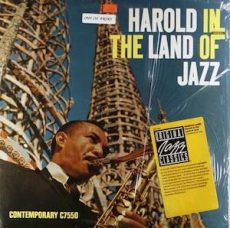
Harold In The Land of Jazz ~ Harold Land | By Eddie Carter
Harold Land steps into the spotlight this morning with his 1958 album, Harold In The Land of Jazz (Contemporary Records C7550/S7550). Harold was one of the best West Coast tenor saxophonists with fifteen albums as a leader and an extensive discography as a sideman to his credit. He was on track for more success in some of the best small jazz groups when an illness in his family caused him to leave the East Coast and return to Los Angeles in 1956. For his first date as a leader, Land’s assembled a splendid supporting cast; Rolf Ericson on trumpet, Carl Perkins on piano, Leroy Vinnegar on bass, and Frank Butler on drums. My copy used in this report is the 1984 Contemporary Records Original Jazz Classics US Stereo reissue (OJC-162 – C-7550).
Side One kicks off this trip with Speak Low by Kurt Weill and Ogden Dash. This jazz standard was introduced in the Broadway musical, One Touch of Venus (1943), and the quintet gets busy quickly with the melody. Harold heats up the lead solo vigorously. Rolf keeps up the exhilarating pace on the second statement. Carl enters next with enthusiastic energy, then Frank exhibits his wizardry ahead of the ensemble’s rousing finale. Up next is Delirium, a medium swinger by Harold Land. The trio makes the introduction, succeeded by the quintet’s theme. Harold begins cruising down the road at a comfortable speed, then Rolf picks up the journey at an unhurried pace. Carl gets the next spot for an impressive presentation that flows vibrantly, and Frank adds a brief footnote leading to the group’s exit.
You Don’t Know What Love Is by Don Raye and Gene De Paul was written for an Abbott and Costello comedy, Keep ‘Em Flying (1941). It didn’t appear in the film but became a jazz standard after Miles Davis recorded it a few years later on All-Star Sextet (1954). It’s a beautiful quartet performance by Harold and the trio. As the song’s only soloist, the tenor sax tells a poignant, bittersweet story reinforced by the rhythm’s serene support. Nieta by Elmo Hope takes us to a tropical climate with a cheerful introduction ahead of the ensemble’s happy theme. Harold partakes in the festivities on the first solo. Carl adds to the celebratory spirit in the next reading, and Rolf sinks his teeth into a spicy statement. Frank gets a brief moment to shine before the reprise.
Side Two opens with Grooveyard, a breezy blues by Carl Perkins who passed away two months later from a drug overdose on March 16, 1958. As a tribute to the pianist, Harold changed the album’s title to Grooveyard for the Stereo release. After the trio’s introduction, the quintet begins the charming melody. Carl opens with a delightfully mellow groove. Rolf takes over on the muted horn with a solo as relaxing as a cup of Chamomile Tea. Harold is up next with an exquisite display that builds to a satisfying peak. Leroy puts the cherry on top with a gorgeous reading. Lydia’s Lament is Harold’s tune named for his wife. It starts with a sublimely solemn collective melody. Harold is the only soloist, and he delivers a touching performance reminiscent of a faint and lamentable cry of sadness.
Smack Up by Harold Land wraps up our seven-song journey with Butler’s brisk introduction ahead of the ensemble’s theme. Harold sets the table with a spirited lead solo; next Rolf follows with a reading of pure delight. Carl shows off his impeccable chops then gives way to Frank’s rousing exchange with the front line into the close. Harold In The Land of Jazz was originally produced by Lester Koenig, and the engineers are Roy DuNann and Howard Holzer. Their work clearly shows in this OJC reissue because it possesses an excellent soundstage that transports the listener’s sweet spot to the studio surrounded by the musicians. Elmo Hope and Harold worked together on the arrangements of all seven tracks.
Harold Land had a lengthy career lasting nearly five decades and also taught jazz studies at the University of California. He passed away at age seventy-two from a stroke on July 27, 2001; but is still remembered for his robust tone and his skill as an improviser. If you’re in the mood for Hard-Bop, I offer for your consideration, Harold In The Land of Jazz by Harold Land. It’s a terrific album of wonderful performances that I happily recommend to anyone who loves jazz and should not be overlooked the next time you’re shopping for vinyl treasure!
~ Miles Davis All-Star Sextet (Prestige PRLP 182) – Source: Discogs.com ~ Speak Low, You Don’t Know What Love Is – Source: JazzStandards.com ~ Harold Land, Carl Perkins – Source: Wikipedia.org © 2022 by Edward Thomas Carter

More Posts: choice,classic,collectible,collector,history,instrumental,jazz,music,saxophone

Daily Dose Of Jazz…
Milton Brent Buckner was born July 10, 1915 in St. Louis, Missouri to parents who encouraged him to learn to play piano, but they both died when he was nine years old. Milt and his younger brother Ted were sent to Detroit where they were adopted by members of the Earl Walton band, trombonist John Tobias, drummer George Robinson fostered Milt and reedplayer Fred Kewley fostered Ted. He studied piano for three years from the age 10, then at 15 began writing arrangements for the band. He and his brother went on to become active in the Detroit jazz world in the 1930s.
He first played in Detroit with the McKinney’s Cotton Pickers and then with Cab Calloway. In 1941, he joined Lionel Hampton’s big band, and for the next seven years served as its pianist and staff arranger. Buckner was part of a Variety Revue of 1950 organized by Lionel Hampton at the Cavalcade of Jazz concert held at Wrigley Field in Los Angeles, California. He led a short-lived big band of his own for two years, but then returned to Hampton’s in 1950.
In 1952, Milt formed his own trio and pioneered the use of the electric Hammond organ. He often played in Europe in the late 1960s. His last studio session took place in Paris. France on July 4, 1977. He is also known for the use of his song The Beast in the title menu of the video game, Battlefield: Bad Company.
Pianist and Hammond B3 organist Milt Buckner, who pioneered the parallel chords style that influenced Red Garland, George Shearing, Bill Evans, and Oscar Peterson, transitioned from a heart attack on July 27, 1977, in Chicago, Illinois, at the age of 62.
More Posts: bandleader,hammond b3,history,instrumental,jazz,music,piano